


More news on this day
Travelers flying out of Tri-Cities Airport in Pasco, Washington, could see fewer winter ground delays as the airport moves forward with an expanded aircraft deicing area and related airfield work designed to speed up cold-weather departures.
Get the latest news straight to your inbox!
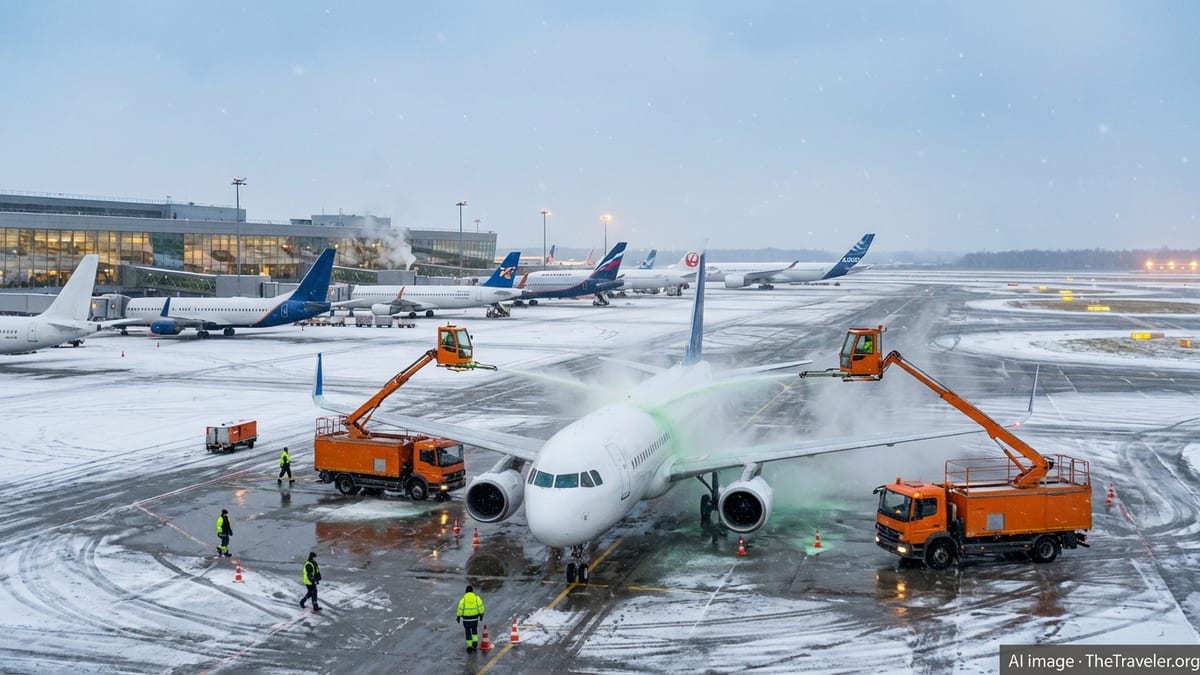
What is changing at Tri-Cities Airport
Published coverage indicates Tri-Cities Airport (PSC) has secured new federal Airport Improvement Program funding to expand its deicing facility, a project framed around improving efficiency during snow and freezing conditions. The work centers on enlarging the airport’s deicing pad footprint and adding supporting infrastructure so aircraft can be treated more quickly and move back into the departure flow with less congestion.
The current round of work is tied to a broader set of airfield improvements that, according to publicly available project descriptions, includes construction of new taxiway connections and the relocation of some Federal Aviation Administration weather and navigation equipment to accommodate the revised layout. Those airfield elements matter because deicing is only one part of the winter-delay chain: aircraft also need clear routing from gates to pads, pads to taxiways, and taxiways to the runway.
Federal grant listings for fiscal year 2026 also show a dedicated award for Pasco’s Tri-Cities Airport to construct a deicing pad and containment facility, along with an update to the airport’s pavement management plan. Separate procurement and bid documents published by the Port of Pasco also point to near-term construction activity for the deice pad expansion project.
Why deicing capacity can reduce snow delays
In winter operations, delays frequently build when multiple departing aircraft need treatment in a short window and there is limited space to stage them. Deicing fluids are time-sensitive: aircraft must depart within a defined “holdover time” after treatment, which can shrink in heavier snow. When aircraft wait too long in line, they can require another round of deicing, compounding both time and staffing demands.
By expanding pad capacity and improving the taxiway geometry feeding it, the airport can reduce bottlenecks that turn normal winter procedures into extended queues. The practical impact for passengers can include fewer late departures during snow events, fewer missed connections at hub airports, and less risk that crews “time out” and trigger cancellations after a long ground hold.
Operational changes are also influenced by the aircraft mix using the airport. Prior planning documents for PSC have described growth in air-carrier activity and a shift toward larger mainline jets, which can increase the time and space required for deicing operations. A larger pad and more efficient circulation can better accommodate those aircraft without slowing the entire departure bank.
The runoff and environmental piece travelers never see
Deicing expansions are not only about pavement. Publicly available project descriptions for PSC include containment and spent aircraft deicing runoff infrastructure, reflecting a common constraint: airports often must capture and manage glycol-laden runoff instead of letting it flow untreated into storm systems.
In earlier reporting focused on PSC’s deicing wastewater challenges, published coverage described a pilot treatment approach using a biological system to reduce the pollutant load of deicing discharge before it is sent to a local wastewater treatment plant. That kind of treatment and containment capacity can be a prerequisite for expanding deicing operations, because handling more aircraft typically means handling more runoff.
For passengers, this behind-the-scenes work can translate into reliability. When airports lack adequate containment or treatment capacity, they may face operational constraints during sustained winter conditions, even if they have enough staffing and equipment to apply deicing fluid.
What the timeline and funding signals suggest
Published coverage dated September 18, 2026, indicates PSC’s deicing expansion is being supported by more than $8.3 million in federal AIP funding, including a portion tied to the federal Infrastructure Investment and Jobs Act. The same coverage describes deicing-pad expansion as the central element and links it to broader airfield changes intended to improve winter efficiency.
FAA grant documentation for fiscal year 2026 lists a $4,785,897 award for Pasco’s Tri-Cities Airport for construction of a deicing pad and containment facility, alongside planning work for pavement management. While individual grant line items do not guarantee completion dates, they are a concrete signal that the project has moved beyond conceptual planning into funded delivery.
Separately, Port of Pasco capital budgeting documents have referenced deicing facility design work, and bid invitations for the deice pad expansion add another indicator of active procurement and construction sequencing. Together, these steps suggest the project is positioned for near-term implementation rather than long-range aspiration.
What travelers should watch for this winter
Even with expanded deicing infrastructure, winter performance still depends on storm severity, staffing, and regional air traffic constraints that can ripple into PSC from major hubs. Nationally, published coverage over the past year has highlighted how broader system pressures can amplify weather disruptions, turning localized snow events into network-wide delays.
For PSC specifically, the most visible near-term change for passengers may be fewer extended ground holds during snow or freezing precipitation, especially on mornings when multiple departures push at once. The biggest improvements tend to show up on “marginal” winter days when the airport is open and operating but deicing demand spikes, a scenario where added pad space and improved taxi routing can make the difference between manageable delays and cascading disruption.
Travelers planning winter trips can still reduce risk by choosing earlier departures, leaving extra connection time through hub airports during storm season, and watching airline notifications closely on days when freezing fog, snow, or mixed precipitation is forecast. The airport’s infrastructure upgrade is aimed at narrowing the gap between routine winter operations and the kinds of delay clusters that derail an entire day of flights.