


More news on this day
Travelers flying into Nashville International Airport on Friday, September 18, 2026, faced an FAA-issued ground delay program tied to staffing constraints, pushing back some arrivals and creating ripple effects across airline schedules.
Get the latest news straight to your inbox!
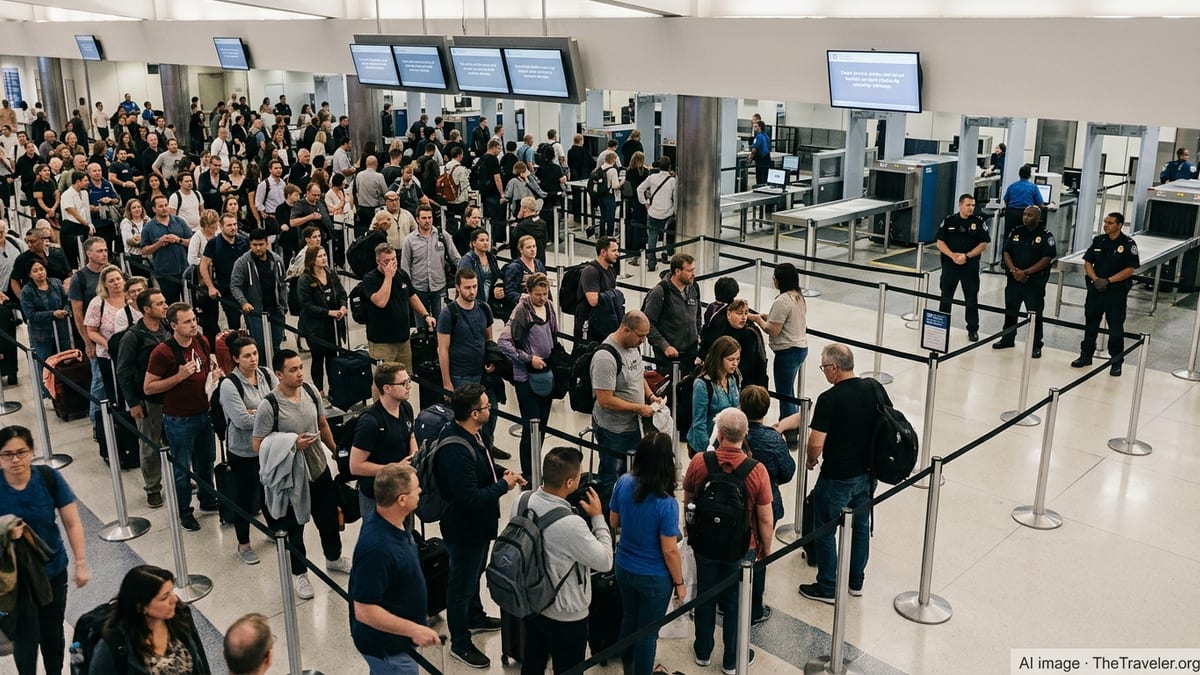
What the ground delay means for passengers heading to BNA
Publicly available FAA airport-status information for Nashville (BNA) showed a traffic management program in effect due to staffing, with some arriving flights delayed an average of 46 minutes. The same FAA status page indicated departure traffic destined for BNA was also experiencing average delays of 46 minutes, reflecting how these programs hold aircraft at their origin airports until a controlled arrival time is available.
Published coverage on Friday afternoon described the delay window as beginning at 5 p.m. local time and running through 10:59 p.m. local time, and indicated a maximum delay value of 97 minutes. Because airlines build aircraft and crew rotations throughout the day, even a destination-specific arrival delay can cascade into missed connections, late-night arrivals, and equipment swaps that affect later flights.
The FAA’s airport-status update on Friday evening also showed that general arrival delays at BNA were comparatively limited once aircraft were airborne, listed as 15 minutes or less, suggesting much of the impact was being managed on the ground before takeoff rather than through extended holding patterns near Nashville.
Timing and scope: Friday evening constraints and FAA planning notes
An FAA operations plan advisory for September 18 listed a BNA ground delay program implemented due to staffing, and separately referenced a staffing trigger tied to the BNA air traffic control tower (ATCT). The same FAA planning note listed the BNA ground delay program under terminal initiatives with an end time shown in the overnight hours, signaling that airspace managers were planning for constraints to persist into late evening operations.
These FAA planning advisories are designed to manage demand when an airport’s arrival acceptance rate must be reduced. In practical terms, that typically means flights bound for Nashville are assigned controlled departure times at their origin airports so that the flow of arrivals into BNA remains safe and orderly.
For travelers, the most important detail is that a ground delay program is not the same as a complete shutdown of operations. It is a managed slowdown, and it often affects inbound flights more directly than outbound flights leaving the impacted airport, though outbound schedules can still be disrupted by late-arriving aircraft and crews.
Why “staffing” can slow the system even without severe weather
While many high-profile disruptions are tied to thunderstorms, low visibility, or winter storms, Friday’s Nashville program was characterized in FAA status messaging as staffing-related. When staffing limits reduce capacity at a key facility such as an airport tower, the number of arrivals that can be safely handled per hour may be temporarily lowered, requiring broader traffic management steps across the network.
Nashville’s airport authority has also published guidance emphasizing that only the FAA has the authority to issue ground stops or ground delays. That distinction matters for travelers trying to figure out where to look for reliable status updates: the FAA controls the air traffic management initiatives, while airlines ultimately decide how to handle individual flights, including holding, canceling, swapping aircraft, or rerouting.
Even when the root cause is local, the effect can be national. A slowed arrival bank into BNA can impact flights and connections in major hubs feeding Nashville service, especially during busy evening periods when aircraft utilization is high and recovery options become more limited.
What travelers can do right now to reduce disruption
Because a ground delay program holds flights at their departure airports, travelers may see delayed boarding, gate changes, or revised departure times before they even leave for the airport. The FAA’s own airport-status page advises passengers to check directly with their airline to determine whether a specific flight is affected, since the FAA information reflects general conditions rather than flight-by-flight decisions.
For passengers already at an origin airport waiting to depart for Nashville, the most practical step is to watch for an updated departure time and any rebooking prompts inside the airline’s app. In many cases, airlines may adjust itineraries proactively when arrival slots tighten, including rerouting through different hubs or shifting to a later nonstop, depending on seats and aircraft availability.
For those connecting through Nashville, the risk is less about an inbound delay into BNA and more about late inbound aircraft disrupting the next departure. Travelers with tight turnarounds may want to consider alternate routings or later departures if options are available, especially during the evening window when FAA planning materials indicated constraints were expected to continue.