


More news on this day
Air travel across Dubai and the wider Gulf is facing fresh disruption as renewed hostilities between the United States and Iran, and President Donald Trump’s declaration that a fragile ceasefire is “over,” unsettle airlines, insurers and passengers already weary from months of tension.
Get the latest news straight to your inbox!
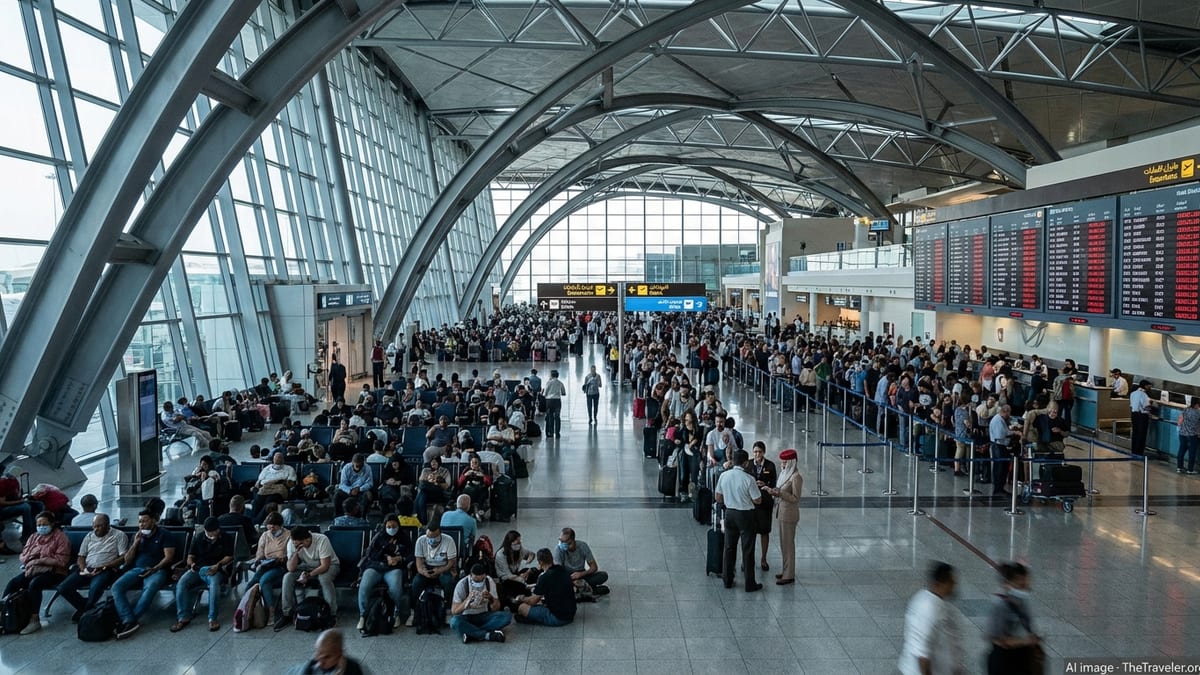
Gulf aviation on edge as conflict flares again
Commercial aviation in the Middle East has been operating in a state of heightened alert since the US and Israel began coordinated strikes on Iran earlier this year and Tehran retaliated against Gulf states. Industry data and regional coverage indicate that airspace closures and rapidly changing risk assessments have become a defining feature of flying to, from and over the Gulf.
Dubai, one of the world’s busiest hubs for international traffic, has already endured temporary suspensions of operations during earlier peaks in the crisis, with services curtailed as military activity intensified and nearby airspace was restricted. Airlines serving the emirate have repeatedly warned travelers that schedules can change at short notice and have urged passengers to monitor flight status closely.
The latest escalation, marked by new US strikes on Iranian targets and Iranian attacks aimed at Gulf-linked locations, has revived fears of a wider regional confrontation that could once again squeeze the vital air corridors around the Strait of Hormuz. Aviation analysts note that even limited military exchanges can trigger broader commercial responses if insurers reassess the risk of overflying contested areas.
While Dubai’s airports were operating at reduced but broadly stable levels heading into July, carriers are now reviewing contingency plans drawn up during earlier rounds of the conflict, including longer routings, last minute diversions and, in some cases, outright cancellations on routes judged too close to potential flashpoints.
Trump’s “ceasefire is over” message adds to volatility
The political backdrop has grown more uncertain since Trump stated publicly that the temporary ceasefire arrangement with Iran is “over,” following renewed exchanges of fire around the Gulf and attacks on commercial shipping in and near the Strait of Hormuz. International coverage describes an increasingly fluid situation in which diplomacy continues in the background even as both sides conduct new strikes.
Markets reacted swiftly to the latest rhetoric and military activity, with oil prices jumping and global equities slipping as traders reassessed the likelihood of a prolonged conflict affecting energy supplies and trade routes. For aviation, higher fuel costs combine with operational disruptions to create a challenging environment for carriers reliant on long-haul connecting traffic through Gulf hubs.
Trump’s comments have also cast doubt on earlier assumptions that the ceasefire could provide a durable framework for reopening some regional airspace. Policy analysts tracking the conflict suggest that the truce was already fragile, constrained by incidents at sea and in neighboring states, and that renewed hostilities now make a rapid, comprehensive de-escalation less likely.
The result is a planning dilemma for airlines: without clear timelines on any political settlement, route planners must assume that sudden restrictions or security advisories could emerge with little warning, particularly in corridors near the Strait of Hormuz and along key approaches into the Gulf.
How Dubai routes and passengers are being affected
Carriers based in the United Arab Emirates and international airlines serving Dubai have been adjusting routings since the Iran war began, in many cases avoiding sections of Iranian airspace and, at times, detouring around parts of Iraq and the northern Gulf. Aviation trackers show longer flight paths on a number of Europe to Asia and Asia to Atlantic services, with Dubai remaining a crucial transfer point despite the turmoil.
These longer routings add flight time and fuel burn, which in turn can reduce payload on the most marginal routes or force schedule changes to maintain aircraft utilization. In earlier spikes of the crisis, some airlines temporarily suspended services to certain Middle Eastern destinations or consolidated frequencies, and the latest flare-up is prompting a renewed review of such measures.
Passengers connecting through Dubai are already reporting more frequent delay notifications and gate changes as airlines juggle aircraft and crews around shifting departure slots and overflight permissions. Travel agents and booking platforms are recommending that customers allow longer connection windows and remain flexible about rebooking if itineraries are disrupted at short notice.
Airport authorities in the region have previously advised travelers not to head to terminals without confirmed departure information during periods of intense disruption, reflecting the risk that check-in counters could close quickly if flights are pulled for security or operational reasons. With tensions rising again, similar guidance could re-emerge if regional airspace conditions deteriorate.
Regional airspace closures and insurance concerns
The Middle East’s role as a crossroads between Europe, Asia, Africa and Oceania means that regional airspace closures can have outsized global effects. Previous stages of the 2026 Iran war saw multiple Gulf and neighboring states restrict or partially close their skies, pushing airlines to reroute via Turkey, Egypt or deeper into the Indian Ocean to maintain connectivity between continents.
Those diversions carry cost implications and place extra pressure on alternative corridors, where congestion and air traffic control constraints can lead to knock-on delays. Safety advisories from international aviation bodies have already urged caution in conflict-adjacent areas, and risk ratings for some parts of the Gulf have been elevated as missile and drone activity has edged closer to civilian flight paths.
Insurance is another critical factor. War-risk premiums on aircraft operating in or near the Gulf have increased since the conflict began, and any perception that the ceasefire framework has collapsed could trigger further adjustments. Higher premiums may encourage some operators to reduce frequencies into the region or redeploy aircraft to less exposed markets, particularly if passenger demand softens amid news of renewed fighting.
Industry specialists note that Dubai and other Gulf hubs have previously weathered periods of geopolitical tension by emphasizing robust safety protocols and close adherence to international guidance. However, they also acknowledge that persistent uncertainty over the status of the US Iran ceasefire and the security of the Strait of Hormuz makes long-term planning exceptionally difficult.
What travelers should expect in the coming days
For now, published schedules show Dubai remaining open as a key global hub, but conditions can change quickly in a conflict zone. Travelers with upcoming itineraries to or through the city are likely to see more frequent schedule adjustments, particularly on routes crossing the Gulf or skirting Iranian airspace.
Airlines are expected to continue offering flexible rebooking policies on affected routes, a practice that became commonplace earlier in the war when large numbers of flights were canceled or rerouted with minimal notice. Passengers are being urged by travel providers to supply up to date contact details so they can receive real time alerts if departure times or routings change.
Given Trump’s assertion that the ceasefire is effectively finished and public indications of further US strikes, aviation planners are working on the assumption that the security situation could deteriorate before it improves. That prospect raises the possibility of temporary suspensions on specific city pairs, especially where alternative routings are limited or overflight permissions are withdrawn.
Travel industry observers say the key variables to watch are any new announcements on airspace restrictions from Gulf and neighboring states, changes in official safety advisories for overflying parts of Iran and the Strait of Hormuz, and signals from major Gulf carriers about capacity adjustments. Until there is greater clarity on the trajectory of the conflict, flying through Dubai and the wider Middle East is likely to remain a calculated risk in a rapidly evolving environment.