


More news on this day
Flights to and through Dubai and key Middle East hubs remain significantly disrupted as many international and regional airlines keep routes suspended, even as recent United States attacks on Iran have come to a halt.
Get the latest news straight to your inbox!
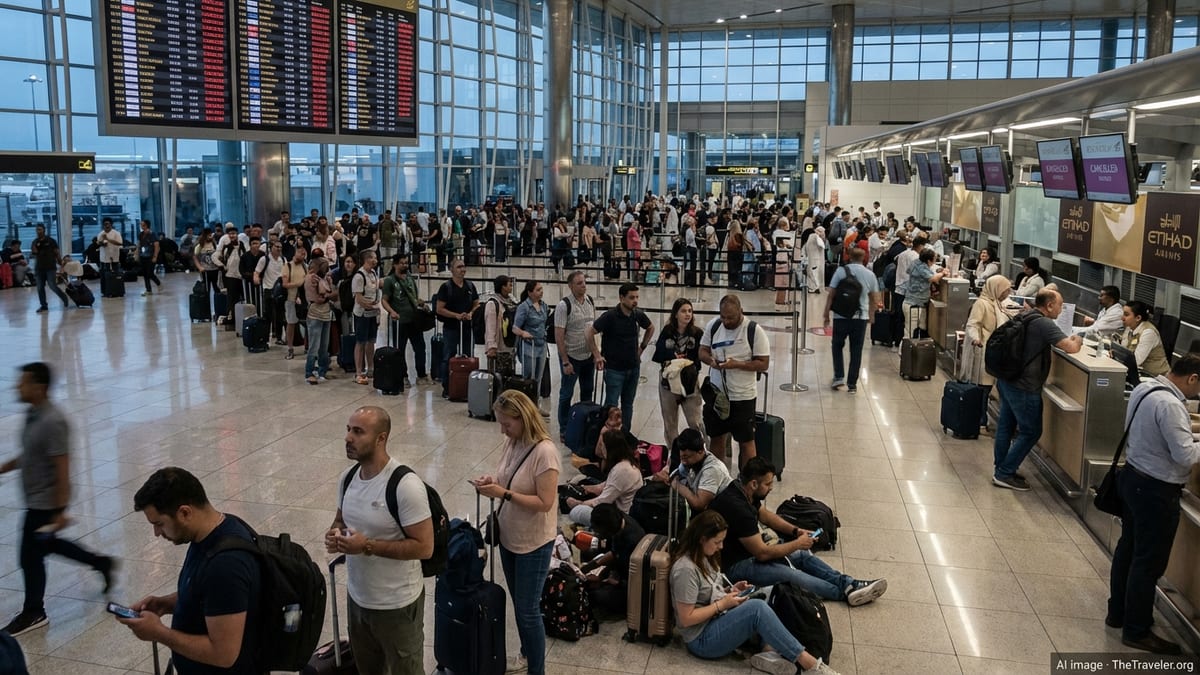
Routes remain suspended across major Middle East hubs
Publicly available flight information shows that services into Dubai, Abu Dhabi, Kuwait and other Gulf airports are still operating well below normal levels months after the sharp escalation in the Iran conflict. Schedules indicate that many point to point routes into the region have been removed from summer timetables, while a number of long haul carriers continue to avoid flying over Gulf and Iranian airspace.
Industry analyses describe the current disruption as one of the most severe shocks to Middle East aviation since the pandemic, with closures of key corridors between Europe, Asia and Africa forcing widespread cancellations and diversions. Air traffic data compiled in recent months highlights that capacity through Gulf hubs remains structurally lower, despite gradual reopenings and selective resumptions by some local carriers.
Reports from passenger forums and airline advisories point to lengthy suspensions on certain routes into Dubai and neighboring cities, with some carriers pushing back resumptions into August and beyond. Travelers continue to report last minute cancellations, reroutings via alternative hubs, and longer journey times due to detours around still sensitive airspace.
Operational updates from Gulf based airlines show that while core trunk routes are being prioritized, secondary regional links and some long haul services remain on hold. Reduced schedules are being maintained to manage limited airspace availability and to align with insurance and security constraints that remain in place across parts of the Middle East.
Pause in US strikes has yet to normalize aviation risk
Recent reporting from major news outlets details how the United States has ordered a halt to new large scale strikes on Iran after parameters were outlined for a potential deal to end active hostilities. This pause has eased immediate fears of further rapid escalation and has contributed to a pullback in oil prices and a calmer tone in financial markets.
However, aviation risk assessments suggest that the pause in US attacks has not yet translated into a full normalization of conditions for civil flights in the region. Analysts note that missile capabilities, drone activity and the possibility of localized incidents still factor heavily into routing decisions taken by airlines and air navigation authorities.
Specialist security briefings for operators continue to flag elevated risk levels on certain airways and in proximity to strategic infrastructure, including major airports and energy facilities. As a result, carriers appear reluctant to restore previous levels of overflight or to restart marginal routes until there is clearer evidence of a durable ceasefire and sustained deescalation.
The gap between the political narrative of a potential settlement and the on the ground requirements of commercial aviation means schedules are likely to lag any formal announcements. Insurers, regulators and airline safety departments typically require a prolonged period without incidents before approving a broad return to previously restricted skies.
International airlines extend Dubai related suspensions
Timetable changes filed by a range of international airlines show continued suspensions or reduced frequencies on services to Dubai and other Gulf destinations. Several European and Asian carriers have removed Dubai flights entirely for parts of the summer season, while others have scaled back to a limited number of weekly operations or shifted traffic to alternative hubs.
Information shared by travelers indicates that some airlines serving Dubai from Europe and Asia have advised that regular schedules will not return until late August or September, depending on how negotiations over the Iran conflict evolve. In parallel, ticketing rules have been loosened, with many passengers offered refunds, vouchers or free date changes when flights are canceled or rerouted due to the regional situation.
Observers note that network carriers with a heavy reliance on Gulf overflight for connecting traffic between continents are among the most affected. In some cases, airlines have resorted to long detours via Central Asia or the far north to maintain a minimum level of service, increasing flight times and fuel consumption and adding operational complexity.
While local giants based in the United Arab Emirates and Qatar have progressively rebuilt parts of their networks, their recovery remains uneven. Public communications from these airlines emphasize flexible rebooking policies and a focus on core routes, but also acknowledge that certain destinations linked to conflict affected airspace will stay suspended until risk thresholds are met.
Knock on effects for passengers and global connectivity
The continuing disruption in Dubai and the wider Middle East is reshaping travel patterns for millions of passengers who previously relied on Gulf hubs for convenient one stop connections. With fewer direct options into the region and constrained transfer capacity, travelers are increasingly being routed through alternative European, Asian or Turkish hubs, often at higher fares and with longer total journey times.
Travel industry commentary highlights that corporate itineraries, migrant worker flows and tourism from Europe and Asia into the Gulf states have all been affected. Some travelers have postponed or canceled trips entirely, while others have shifted to airlines whose home countries are less exposed to the conflict zone and can offer more predictable schedules.
The strain on remaining routes into Dubai is also evident in anecdotal reports of high load factors and limited availability on the flights that are still operating. With many airlines maintaining cautious capacity levels, short notice bookings into the region can be difficult to secure, especially in peak summer travel weeks.
Analysts suggest that global connectivity could remain reshaped even after a formal end to hostilities. Depending on fuel prices, insurance costs and passenger appetite for transiting previously exposed corridors, some airlines may permanently reorient networks toward alternative hubs, reducing the central role that Gulf megahubs played in pre conflict long haul travel.
What travelers should watch in the coming weeks
Travel advisories from governments and aviation regulators continue to warn that conditions in Middle East airspace can change at short notice, even as diplomatic activity seeks to lock in a ceasefire. Prospective passengers are being encouraged in public guidance to monitor airline status pages closely and to avoid assuming that a booked itinerary will operate exactly as ticketed.
Consumer advocates recommend that travelers heading to or transiting through Dubai and other Gulf cities check the flexibility of their tickets, including options for free date changes, refunds or rerouting via different hubs. Travel insurance policies should also be reviewed to confirm coverage for disruptions linked to conflict and airspace closures, as terms can vary widely between providers.
In the weeks ahead, airline schedule filings, insurance bulletins and airspace notices are likely to provide the clearest signals of whether the halt in US strikes is feeding through into a meaningful reduction in operational risk. A gradual restoration of overflight permissions and a measured increase in frequencies to suspended destinations would indicate growing confidence.
Until such indicators become consistent and widespread, most analysts expect Dubai and the wider Middle East to remain in a transitional phase of partial recovery. For travelers, that means continued uncertainty, the need for contingency plans, and close attention to the evolving security and aviation picture across the region.