


More news on this day
Flights between Dubai and India, one of the world’s busiest air corridors, are facing fresh turbulence as capacity caps and security-related restrictions extend until at least late May 2026, reshaping travel plans and tourism flows on both sides of the Arabian Sea.
Get the latest news straight to your inbox!
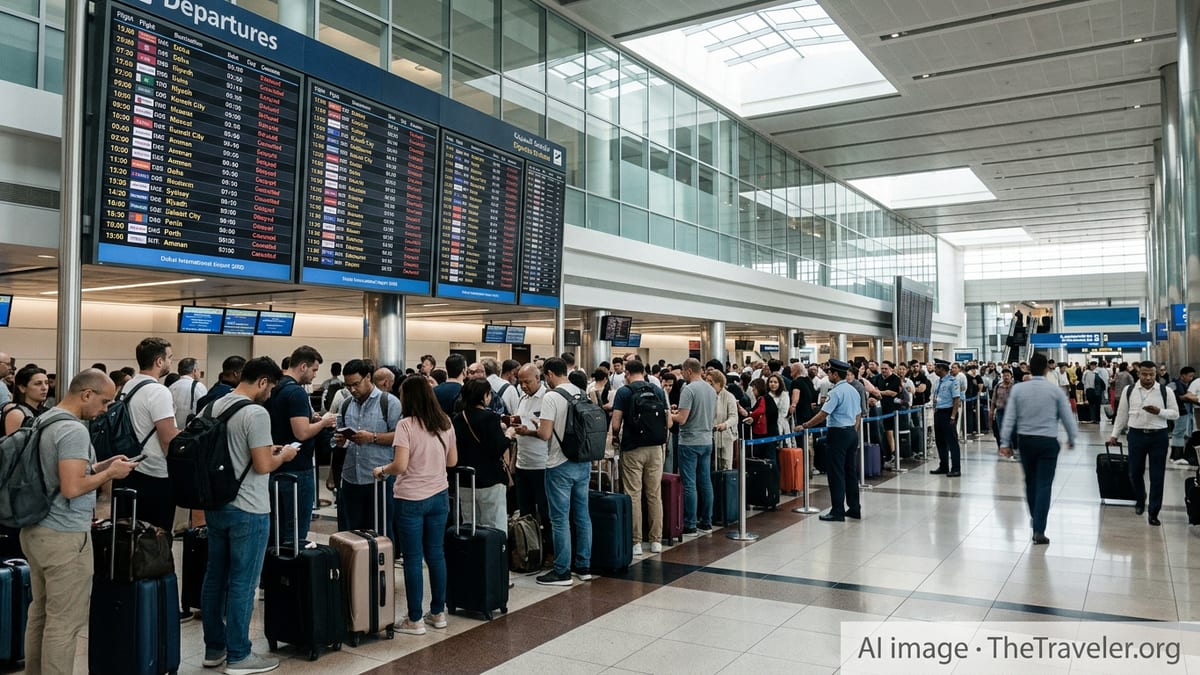
How the new caps are reshaping a vital air bridge
Recent operational notices seen by carriers indicate that foreign airlines serving Dubai are being restricted to a single daily rotation to either Dubai International or Dubai World Central between 20 April and 31 May 2026, significantly tightening available capacity at the emirate’s airports during a key travel window. Industry coverage links these measures to a broader regional security crisis that has already curtailed commercial flying across parts of the Middle East.
Publicly available schedules and airline advisories show that the curbs are landing on an already stretched Dubai–India market, where demand routinely exceeds the bilateral seat entitlements set under the air services agreement between the United Arab Emirates and India. Before the latest disruption, scheduled services between Dubai and multiple Indian cities were operating at or near full loads, with aviation consultancies and travel industry reports flagging persistent unmet demand.
While the current caps are formally framed as temporary operational constraints, they come on top of long running structural limits on the number of weekly seats that Indian and Dubai based airlines can offer. Carriers on both sides have repeatedly argued that the corridor has outgrown the existing quotas, and that any additional restrictions risk pushing more passengers onto longer and less convenient routings via third countries.
In practical terms, the combination of bilateral seat ceilings and the one rotation per day rule through late May 2026 means fewer nonstop options, tighter connection windows and a shrinking pool of reasonably priced tickets for leisure and business travellers alike.
Impact on Indian carriers, Gulf airlines and ticket prices
Indian airlines, including full service and low cost operators, rely heavily on Dubai as a high yielding short haul international destination and as a gateway to onward traffic connecting to Europe, North America and Africa. Industry body submissions and recent letters reported in regional media show Indian carriers urging New Delhi to resist any long term erosion of their share of traffic rights and to seek reciprocal limits on Gulf based airlines if unilateral caps persist.
For Dubai based airlines, India remains one of the largest source markets. Company reports and economic impact studies released over the past year highlight tens of millions of passengers carried on India bound routes and a sizeable contribution to tourism receipts and trade flows. Executives have publicly warned that frozen or reduced capacity on the India–Dubai corridor could constrain growth, reduce connectivity for smaller Indian cities and divert transit passengers to rival hubs in Doha, Riyadh or Istanbul.
For travellers, the most visible effect is on fares. Travel agent associations in the Gulf and India have for months pointed to record high prices on peak season departures, arguing that limited seats and booming demand are inflating costs even for passengers booking well in advance. With new caps now in force until at least the end of May 2026, analysts expect elevated fare levels to persist, particularly around school holidays, religious festivals and the early summer outbound rush.
Some relief is coming in the form of one off non scheduled flights approved by regulators to repatriate stranded passengers or cater to specific demand spikes. However, these ad hoc services are subject to slot availability and airspace constraints, and are unlikely to offset the structural squeeze created by the combination of bilateral ceilings and temporary caps at Dubai’s airports.
Tourism and business travel caught in the crossfire
The Dubai–India aviation link underpins a dense web of tourism, business and family travel. Dubai counts India as one of its largest visitor source markets, while Indian destinations such as Goa, Kochi, Delhi and Mumbai attract large numbers of UAE based residents seeking short breaks or home visits. Tourism authorities on both sides have in recent years promoted multi city itineraries that rely on easy, frequent flights between the two markets.
With flights capped and regional routes being rerouted or cancelled due to security concerns, tour operators report a rise in itinerary changes, cancellations and deferrals into late 2026. Travellers who once relied on plentiful daily frequencies are increasingly being pushed to accept less convenient departure times, longer connections through alternative hubs or higher cabin classes where economy seats have sold out.
Corporate travel is also feeling the strain. Indian companies with operations or investors in the UAE, and Emirati firms with interests in India, face fewer same day options for meetings and site visits. Business travel managers are being advised, through corporate travel bulletins, to book further in advance, budget for higher average fares and build in additional buffer time due to possible last minute schedule changes.
For the large Indian diaspora in the UAE, the restrictions cut into a crucial family and remittance lifeline. Limited seats and higher fares complicate travel for weddings, medical visits and emergencies, with social media posts and consumer forums filled with accounts of passengers struggling to find affordable last minute options back to Indian cities.
Policy debate over air rights and future capacity
The latest caps arrive amid a long running debate over how quickly to expand air traffic rights between India and the UAE. The existing bilateral framework allocates fixed weekly seat entitlements to designated airlines from each side, split by city pair. Aviation policy analyses note that these quotas, last significantly revised more than a decade ago, have not kept pace with the surge in outbound Indian travel, Gulf based expatriate populations and long haul transfer traffic.
UAE based carriers have publicly lobbied for a substantial increase in their permitted seats to and from Indian cities, arguing that more capacity would lower fares and stimulate tourism and trade. Indian carriers and some policy advisers counter that opening the floodgates too quickly could divert international traffic away from India’s emerging hubs and weaken the economics of the country’s own long haul ambitions.
Studies commissioned by airlines and tourism bodies suggest that, under current limits, a significant share of potential journeys between India and the UAE may go unserved over the coming decade. That prospect has fuelled calls for a phased expansion of rights tied to fleet growth and infrastructure upgrades at major Indian airports, along with safeguards to ensure Indian carriers secure a fair share of the additional capacity.
The temporary Dubai airport caps through May 2026 have sharpened this policy discussion. Analysts say they illustrate how quickly a combination of security events and tight bilateral quotas can overwhelm the system, prompting renewed arguments for more resilience and built in slack in one of the world’s most important short haul international markets.
What travellers should expect through May 2026
For now, publicly available schedules and airline advisories point to a leaner and less predictable flight network between Dubai and Indian cities at least until 31 May 2026. Airlines continue to adjust their timetables, consolidate frequencies and reroute certain services around affected airspace, resulting in longer journey times on some Westbound and Eastbound connections.
Passengers are being urged through travel updates and embassy notices to check their flight status frequently, register contact details with their airlines and allow extra time for airport formalities. Flexible booking policies, including complimentary date changes or refunds on disrupted services, remain in place on many affected routes, but the details vary by carrier and fare type.
Industry observers expect that, once the immediate security driven caps are lifted, the focus will shift back to longer term negotiations over expanding India–UAE traffic rights. Until then, the combination of hard capacity limits, high demand and regional instability means the Dubai–India corridor will remain a challenging environment for airlines, tourists and expatriate travellers alike.