


More news on this day
Hundreds of travelers have been left stranded across Colombia after a fresh wave of aviation disruption led to 77 flight delays and 43 cancellations at major airports in Bogotá, Medellín and Bucaramanga, affecting operations for Avianca, LATAM Colombia, JetSMART, Air Canada and several other airlines.
Get the latest news straight to your inbox!
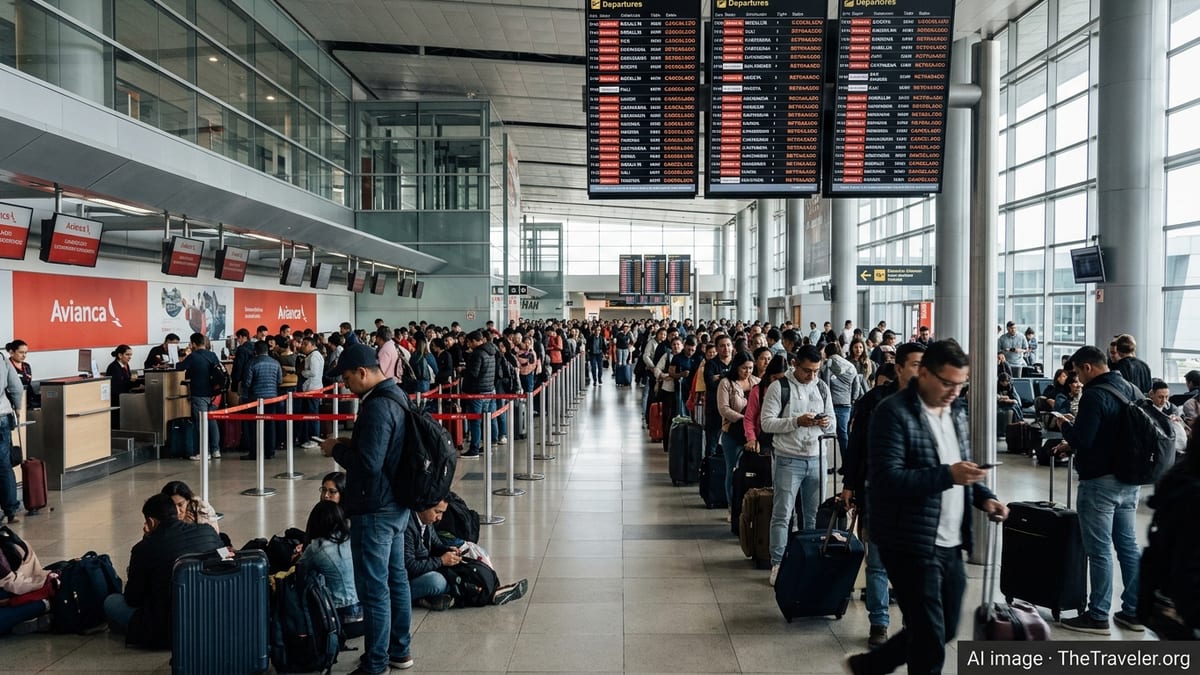
Widespread Disruptions Hit Key Colombian Hubs
According to publicly available airport and aviation tracking data reviewed on April 14, 2026, the latest operational disruption has rippled across El Dorado International Airport in Bogotá, José María Córdova International Airport serving Medellín, and Palonegro International Airport in Bucaramanga. The combined tally of 77 delays and 43 cancellations has left departure boards heavily impacted and passengers facing extensive unplanned waits.
The disruption involves a mix of domestic and international services, with flights to regional business centers and long haul connections all affected. Reports indicate that some passengers have missed onward connections to North America and Europe, while others have faced overnight stays in terminals or nearby hotels as they wait for rebooking options.
Local coverage in Colombia highlights that April has already been a challenging month for the country’s aviation network, with multiple recent days of elevated delays and cancellations at Bogotá and Bucaramanga. The new wave of irregular operations reported today appears to build on this pattern, straining airline schedules and airport capacity across the network.
Operational dashboards monitored by travel industry outlets show that Bogotá remains the hardest hit, reflecting its role as the country’s primary hub and a central node for both Avianca and LATAM Colombia. However, the spreading of disruption to Medellín and Bucaramanga underscores the vulnerability of Colombia’s interconnected domestic routes when congestion spikes at the main hub.
Flag Carriers and Low Cost Airlines Among Those Affected
The latest figures indicate that Avianca and LATAM Colombia, the country’s two largest players, are prominent among the airlines reporting disrupted operations. In recent weeks, publicly available reports have already documented Avianca canceling dozens of flights across Colombia in March, particularly at Bogotá and Medellín, amid a combination of adverse weather and schedule adjustments. Today’s irregularities appear to continue that pressure on the carrier’s network.
Alongside the big two, newer and low cost operators are also facing challenges. JetSMART, which has been expanding in the Colombian market, features among the airlines with delayed or canceled services in the current disruption, illustrating how network shocks now cut across legacy and budget models alike. Regional operators and smaller carriers linking secondary cities into Bogotá and Medellín have also seen schedules affected.
International services have not been spared. Air Canada, which connects Bogotá with North American hubs, is among the foreign carriers recorded with at least one canceled flight in the latest data set, following earlier episodes this month in which the airline also appeared in irregular operations tallies from Bogotá and Bucaramanga. Other foreign airlines serving Colombia have reported knock on delays where their aircraft or crews are caught in the congestion cycle.
Analysts following Colombia’s aviation market note that the mix of affected airlines reflects the country’s increasingly dense route map, where competition has grown quickly over the past decade. When large hubs experience performance drops, both established brands and newer entrants see their punctuality metrics erode, and passengers often struggle to distinguish between carrier specific issues and systemic constraints.
Weather, Capacity and Structural Strain Behind the Numbers
While a precise single cause for the 77 delays and 43 cancellations has not been identified in official bulletins, recent months of Colombian aviation coverage point to a familiar combination of factors. Periods of low visibility and changing weather conditions around Bogotá’s high altitude El Dorado airport have often triggered holding patterns and temporary ground stops, quickly feeding into delays and missed slots.
At the same time, capacity constraints at El Dorado have been under growing scrutiny. A February 2026 assessment released by an international airline association and Colombian aviation stakeholders described structural congestion at the Bogotá hub and called for operational optimizations and infrastructure upgrades. Travel industry observers note that when schedules are tightly packed, even relatively short weather restrictions can cascade into large numbers of late or canceled departures.
Regional airports such as José María Córdova and Palonegro can also be affected indirectly when aircraft and crew rotations are disrupted at the main hub. Publicly available flight statistics from previous months show that when Bogotá experiences significant disruption, secondary airports often see spikes in delays later in the day as crews and aircraft arrive out of sequence.
Consumer advocates in Colombia have long argued that the combination of structural congestion, rapid demand growth and periodic severe weather makes the system particularly sensitive to disruption. The latest irregular operations reinforce concerns that, without capacity enhancements and more resilient scheduling practices, similar episodes are likely to recur during peak travel periods.
Passengers Confront Missed Connections and Limited Rebooking Options
For travelers on the ground, the numbers translate into missed holidays, disrupted business trips and unexpected expenses. According to accounts compiled in local media and on social platforms, passengers at Bogotá, Medellín and Bucaramanga have reported long queues at airline desks as they seek new itineraries, vouchers or accommodation during the latest wave of disruption.
In March 2026, widely circulated online testimonies from travelers on Avianca and LATAM Colombia highlighted difficulties in accessing timely customer service or securing clear rebooking information when flights were canceled or heavily delayed. Similar frustrations are emerging again, with some travelers reporting that app based updates and online chat channels are overwhelmed during peak disruption, leaving airport counters as the primary point of contact.
Travel advisers often recommend that passengers caught in such situations document all additional costs, including meals and lodging, and review the regulations that apply to their ticket and route. In Colombia, passenger rights are framed by local aviation norms, while international journeys may also fall under foreign consumer protection regimes, such as those in Canada or the European Union, depending on the itinerary.
The latest wave of delays and cancellations is likely to prompt renewed debate about how well airlines serving Colombia handle large scale disruption, including whether they provide sufficient transparency around causes, compensation eligibility and alternative routing options, especially for travelers with tight time constraints or complex multi leg journeys.
Growing Spotlight on Punctuality in Colombia’s Aviation Market
The recurrent disruption episodes in 2025 and 2026 have pushed punctuality and reliability to the forefront of Colombia’s aviation conversation. Industry statistics circulating in recent months show Bogotá’s El Dorado regularly ranking among Latin America’s busiest airports by passenger volume, heightening the stakes when operations falter.
Global on time performance reports released in 2024 and 2025 already placed Bogotá under pressure to improve its average delay figures, and Colombian aviation authorities have periodically emphasized ongoing efforts to streamline airspace procedures and optimize runway use. However, with each new wave of delays and cancellations, travelers and business groups have raised questions about whether reforms are keeping pace with demand growth.
For carriers like Avianca, LATAM Colombia, JetSMART and their international counterparts, the latest disruption adds another stress test to operational resilience strategies. Network planners will be watching closely how quickly normal schedules can be restored after today’s irregular operations, and whether additional adjustments are needed ahead of upcoming holiday and vacation peaks.
For now, publicly available data suggests that hundreds of travelers remain in limbo across Bogotá, Medellín and Bucaramanga as airlines work through the backlog. With 77 delays and 43 cancellations recorded across these three cities in a single operational window, Colombia’s aviation system faces renewed scrutiny over how it protects passengers when the network comes under strain.