


Docking in Dubrovnik for a single day can feel overwhelming. Your ship ties up in Gruž, the working harbor a few kilometers from the famous Old Town, and suddenly you must decode shuttles, buses, city walls tickets, cable cars and crowds. This guide focuses on what cruise passengers actually experience today, with clear options, realistic timing and concrete examples so you can step off the gangway with a confident plan instead of wasting your precious hours figuring things out on the pier.
Get the latest updates straight to your inbox!
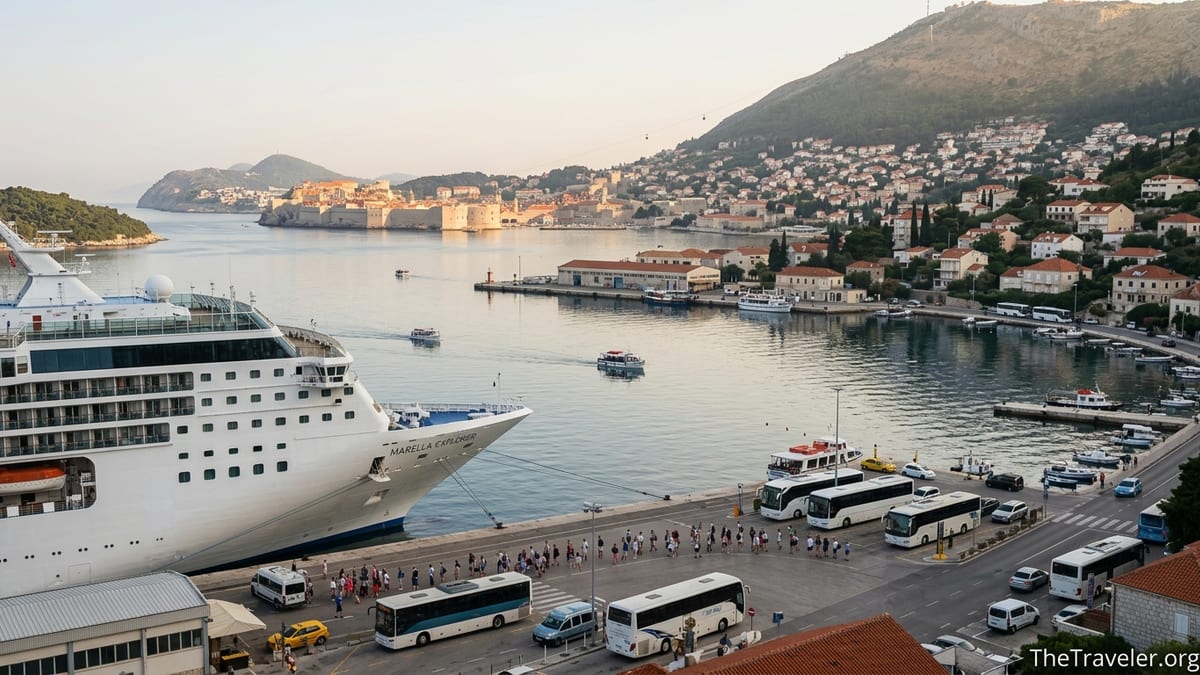
Understanding Gruž Cruise Port and First Steps Ashore
Most large cruise ships berth at the modern terminal in Gruž, a bay about 3 kilometers northwest of Dubrovnik’s walled Old Town. The harbor area is functional rather than pretty: a line of ships, a terminal building, long quays and a cluster of kiosks selling tours, boat trips and bus tickets. Expect a short walk along the pier before you exit through security and reach the main port forecourt where taxis, local buses and prebooked tours wait.
On a busy summer morning you may see two or three large ships alongside, each unloading thousands of passengers. Local authorities have capped daily cruise numbers and work with the “Respect the City” program, but between roughly 9 am and 3 pm you should still assume crowds at the port, at Pile Gate and on the city walls. Plan to move quickly through the initial bottleneck: know in advance whether you will take the ship’s shuttle, a taxi, the local bus or a prebooked transfer so you can bypass the confusion at the terminal doors.
Facilities at Gruž are straightforward. Inside or just outside the terminal you typically find a small information desk, ATMs dispensing euros, a café, public restrooms and tourism stands. Across the road, the main Dubrovnik bus station serves intercity routes, while Libertas city buses stop on the street closest to the port. If your ship docks very early, some indoor facilities may not yet be open, but bus services and taxis will already be operating.
Right next to the port is a supermarket cluster and a daily green market, useful if you want inexpensive bottled water, snacks or a takeaway sandwich before heading into the Old Town. Prices at the supermarket in Gruž tend to be lower than in the Old Town kiosks, so many experienced cruisers grab water and fruit here and then focus their money on experiences instead of basics.
Getting from Gruž to Dubrovnik Old Town
The distance from Gruž to Pile Gate, the main western entrance to the Old Town, is walkable but not ideal for most cruise passengers. The waterfront walk takes around 30 to 40 minutes at a moderate pace, with limited shade and some busy junctions. Given the heat in peak season and the value of your limited time, most visitors use a shuttle, taxi, bus or boat.
Many cruise lines operate their own shuttle buses from Gruž to a drop-off point just outside Pile Gate. These are usually frequent on heavy port days, with a ride time of about 10 to 15 minutes depending on traffic. Some lines provide this shuttle free of charge, while others charge something in the region of 15 to 20 euros for a round trip per person. Before you disembark, check the exact price and schedule in your daily program so you can judge whether it represents good value compared with local options.
Local public buses are often the most economical way into town. Libertas routes such as 1A, 1B and 3 commonly run between the Gruž area and Pile Gate. You can usually buy a single ticket from the driver for a few euros in cash, or slightly cheaper from a kiosk or ticket machine near the stop. The ride takes about 10 to 20 minutes depending on traffic and intermediate stops. On busy mornings the buses can be crowded, but they are straightforward: look for the digital display showing “Pile” or ask the driver to confirm you are heading to the Old Town.
Taxis wait in a rank right outside the cruise terminal. In light traffic, the drive to Pile Gate typically takes 10 minutes. Expect a metered fare somewhere around the low tens of euros each way, with higher totals at peak times or if traffic into the restricted zone is heavy. Rideshare apps like Uber and Bolt operate in Dubrovnik but cannot always drop directly at the gate due to local access rules, so a typical solution is to set a nearby park or landmark above the Old Town as your destination, then walk a few minutes downhill. This can save a few euros but may not be worth it if mobility is an issue or if the day is very hot.
Shuttle Boats, Lokrum Connections and Scenic Approaches
In recent seasons Dubrovnik has expanded its water connections between Gruž, the Old Town harbor and Lokrum island. One especially appealing option is the shuttle boat service sometimes branded locally as a “vaporetto,” which connects the Gruž harbor area with the Old Town and on to Lokrum. If operating on your visit and timed well with your ship’s schedule, this route turns a simple transfer into a short harbor cruise, with views of the Lapad peninsula, the city’s walls from the sea and the orange roofs of the Old Town as you approach.
Tickets for harbor shuttle boats are typically sold at small kiosks on the Gruž waterfront and near the Old Town harbor. Prices are usually higher than the bus but lower than a private boat charter. Cruise passengers often choose this option if they want to combine the ride into town with an easy connection to Lokrum, where a separate ticket or landing fee still applies on arrival. Because schedules can change seasonally, always confirm departure times both ways before committing, and give yourself a comfortable margin before your last all-aboard time.
The official ferry-like boats from the Old Town harbor to Lokrum run frequently in the main season. The crossing takes about 15 minutes each way, offering views back to the city walls and up toward Mount Srđ. Many cruise visitors choose a “half day Old Town, half day Lokrum” plan: morning on the walls and Stradun, then an afternoon swim in Lokrum’s rocky coves and shaded paths. If your ship is in port for 8 to 10 hours and the weather is good, this is a realistic and rewarding itinerary, provided you keep a firm eye on ferry times and walk back from the harbor to your return bus or shuttle.
Note that smaller independent boat operators sometimes cluster in the Old Town harbor offering their own transfers and short cruises. These can be enjoyable but are less standardized than the main shuttle or Lokrum boats. Negotiate clearly in advance, ask the exact return time and confirm whether the quoted price is per person or for the whole boat before stepping aboard.
Navigating the Old Town, City Walls and Cable Car in One Day
Once you reach Pile Gate, you walk through a stone arch and over a short bridge into the pedestrian-only Old Town. Stradun, the broad main street, stretches ahead, flanked by gleaming limestone and baroque facades. Even in the morning the pavement can be slick and polished from centuries of footsteps, so wear shoes with decent grip and be cautious on steps, especially after rain.
The single biggest paid attraction for most cruise passengers is the walk along the city walls. Adult tickets are currently among the most expensive city wall admissions in Europe, at around 40 euros per person. The same price also buys a Dubrovnik Pass of the same duration, which many visitors choose instead because it includes wall access plus entry to several museums and use of city buses within the validity period. If you plan to ride the local bus back to Gruž and perhaps duck into a museum or two for the air conditioning and restrooms, this pass can easily pay for itself.
The full circuit of the walls is roughly 2 kilometers and usually takes between 1.5 and 2 hours at a leisurely pace, more if you stop often for photos or climb every fortification. The stone reflects heat and shade is limited, so the best times for most cruise passengers are either as soon as the walls open in the morning or later in the afternoon after 4 or 5 pm. For example, if your ship is docked from 8 am to 6 pm, a practical pattern could be: bus to Pile by 9 am, walk the walls from 9:15 am to 11:30 am, enjoy lunch and a brief wander in the streets, then cable car or Lokrum in the afternoon.
The cable car lower station stands a short uphill walk from the northern edge of the Old Town. A round trip ticket for adults costs in the tens of euros, and prices are consistent across official sales points, though a small transaction fee can apply to some online or off-site purchases. The ride itself is only a few minutes, but queues build when multiple ships are in port or around sunset. At the top of Mount Srđ you have sweeping views over the Old Town, Lokrum and the Adriatic. If the line for the descent is long and you are fit, some visitors choose to hike down a rocky path that zigzags back toward town, but with ship schedules to keep in mind most cruise passengers prefer the predictability of the cabin down.
Timing, Crowds and Smart One-Day Itineraries
Dubrovnik’s peak cruise season runs roughly from May through October, with July and August the busiest months. On heavy days the Old Town can feel saturated between late morning and midafternoon, particularly when several large ships dock and tour buses arrive from regional resorts. Local authorities track the headcount in the core and may slow the flow of group tours or vehicle access when thresholds are approached, which can impact taxis and shuttles near Pile Gate.
To make the most of a single day, think in terms of “crowd waves.” Early morning before 9 am and late afternoon after 4 pm tend to be notably more pleasant for big attractions like the walls and Stradun. A realistic outline for a standard 8 to 10 hour port call might be: ride straight to Pile early, walk part or all of the walls before it gets too hot, then enjoy a coffee on a side street away from Stradun. Around lunch, wander the back lanes, perhaps visit a small museum included in the Dubrovnik Pass, and seek shade. In the later afternoon, head either for the cable car to Mount Srđ or the ferry to Lokrum, then return to the ship with ample buffer time.
Concrete example: if your ship is in port from 8 am to 5 pm with a last all-aboard at 4:30 pm, try to board the first or second shuttle from Gruž, reaching Pile by 8:45 am. Enter the walls via the Pile Gate entrance as close to opening time as possible, completing the circuit by 11 am. Grab an early lunch at a konoba in a side alley, then at around 12:30 pm either take the cable car up for views, budgeting at least 90 minutes for the round trip and photos, or walk to the Old Port for the Lokrum ferry and enjoy a short swim and stroll before catching a midafternoon return.
Weather should shape your plan. In high summer midday temperatures frequently climb well above 30 degrees Celsius, making the walls and exposed viewpoints punishing between noon and 3 pm. In that case prioritize indoor sights, cafés and shaded coastal viewpoints during the hottest hours. Out of season, some services such as the Lokrum ferry or harbor shuttles may run less frequently or pause for winter, while the walls may open shorter hours, so a flexible but informed approach is vital.
Money, Tickets and Avoiding Common Pitfalls
Croatia now uses the euro, so you will pay for buses, tickets and snacks in euros. Cards are widely accepted at official ticket offices, the cable car station, many cafés and restaurants, and larger kiosks. However, it is sensible to carry some small cash for local buses, modest purchases in Gruž market and small gelato or bakery stops. ATMs surround the port area and Old Town, but ship days can see queues at the most visible ones near Pile Gate.
A common mistake is underestimating the cost of admissions and transport and then feeling priced out of experiences. To avoid surprises, mentally allow for a walls ticket or Dubrovnik Pass, your chosen mode of transfer between Gruž and Pile both ways, and potentially the cable car or Lokrum ferry if these are priorities. For a couple doing “classic” Dubrovnik in 2026, it is not unusual for combined transport and main attraction costs to add up to well over a hundred euros for the day, even without an organized group tour.
Another pitfall is losing time in lines. At busy hours ticket queues for the city walls at Pile Gate and for the cable car can be long. Buying a Dubrovnik Pass in advance or at a less crowded location, or using a less obvious walls entrance when available, can shorten waits. For the cable car, if your schedule is tight, avoid arriving right at sunset when everyone else is heading up for photos. Similarly, leave the Old Town for your return transfer at least an hour before the stated all-aboard time, more if your ship is one of several large vessels in port.
Be wary of impromptu taxi offers inside the Old Town or from unmarked cars. Legitimate taxis queue at official ranks, typically outside Pile Gate and near Gruž port. If using a metered taxi, confirm it will run on the meter rather than a flat unofficial price. If you prefer fixed pricing, clarify the total cost to the cruise terminal before getting in. In recent years local oversight has improved and blatant scams are less common, but clear communication and a little caution are still wise.
What to Do with Just One Day in Port
With only one day in Dubrovnik from a cruise ship, try to accept that you cannot do everything and instead choose a focus: classic highlights, a slower cultural immersion, or a more active mix of viewpoints and swimming. The classic first-time experience centers on the Old Town and walls. You ride from Gruž to Pile, enter the Old Town through the gate, walk Stradun, climb the walls, visit a church or small museum, savor a long lunch and perhaps finish with a cable car ride. This gives you the essential postcard views and a sense of the city’s history and layout.
A slower approach might skip the cable car and even the full walls circuit, focusing instead on exploring off the main artery. You could wander the calmer lanes near the Jesuit Stairs, explore the old pharmacies and cloisters, duck into small art galleries and cool stone churches, and find a café on a quiet square. In the hot middle of the day you might seek out one of the cliffside bars outside the sea walls for a drink with a view, then retreat into the shade of a museum or your ship for a break before returning ashore for a final stroll if your schedule allows.
Active visitors might combine the walls with a swim and a short hike. One popular pattern is to walk the walls in the morning, then take the Lokrum ferry around midday. On Lokrum you can swim from the rocky shore, float in the small “dead sea” inlet, walk past peacocks in shaded gardens and explore the ruins of the old monastery. Back in Dubrovnik, if time remains, you could ride or hike up Mount Srđ for a different vantage point before returning to Gruž.
If you are traveling with children or older relatives, build in time for rest stops and bathrooms. The Old Town has many cafés where a simple coffee, juice or ice cream purchase earns you a comfortable seat and restroom access. Some museums included in the Dubrovnik Pass also offer clean facilities and air conditioning, which can be far more pleasant than the free public toilets at peak times. Having these quiet interludes helps everyone enjoy the spectacular but often crowded streets more fully.
The Takeaway
Dubrovnik rewards even a brief cruise visit, provided you plan with its realities in mind: the separation between Gruž port and the Old Town, the midday crowds, the heat on the walls and the limited hours of your call. By deciding in advance how you will travel between the ship and Pile Gate, whether you will prioritize the walls, the cable car, Lokrum or a mix, and how much you are prepared to spend on tickets, you can turn a potentially stressful rush into a memorable, balanced day.
Think in simple building blocks: transfer, Old Town orientation, one or two key experiences, and an unhurried return. Use the early morning and late afternoon for the most exposed sights, keep an eye on ship time rather than your phone’s roaming clock, and allow for a margin of error when coming back to Gruž. With these basics in place, the details fall naturally into place and Dubrovnik can shine as one of the standout ports of your cruise.
FAQ
Q1. How far is Gruž cruise port from Dubrovnik Old Town?
The port at Gruž is roughly 3 kilometers from Pile Gate, the main western entrance to the Old Town. By shuttle, taxi or bus the journey usually takes about 10 to 20 minutes, depending on traffic.
Q2. What is the easiest way to get from the cruise ship to Pile Gate?
For most cruise passengers the ship’s shuttle or a local taxi is the simplest option, because both drop you close to Pile Gate with no need to navigate bus routes or ticket machines, though local buses are often cheaper.
Q3. Are there public buses directly from Gruž to the Old Town?
Yes, city buses run frequently between the Gruž area and Pile Gate. Routes commonly used by visitors include lines that connect the main bus station next to the port with the Old Town in about 10 to 20 minutes.
Q4. How much time do I need to walk the Dubrovnik city walls?
Most visitors take between 1.5 and 2 hours for the full circuit of the walls, longer if they stop often for photos or rest. Very quick walkers can complete it faster, but rushing reduces the experience.
Q5. Is the Dubrovnik Pass worth it for a cruise passenger with one day?
If you plan to walk the walls and also ride city buses or visit a couple of museums, the Dubrovnik Pass is usually good value because it costs roughly the same as the walls ticket alone but adds extra benefits.
Q6. Can I visit Lokrum island and still see the Old Town in one day?
Yes, if your ship is in port for at least 8 hours and schedules line up. A common strategy is to explore the Old Town and walls in the morning, then take the short ferry to Lokrum for a swim and stroll in the afternoon.
Q7. Is the Dubrovnik cable car worth including on a short cruise stop?
If the weather is clear and you enjoy panoramic views, many visitors consider the cable car up Mount Srđ a highlight. It does take extra time and money, so it works best if you accept that you will see fewer other sights.
Q8. How bad are the crowds when several cruise ships are in port?
Between about 9 am and 3 pm on busy days the Old Town, city walls and cable car can feel very crowded, with lines for tickets and limited shade. Early morning and late afternoon are usually noticeably calmer.
Q9. Is it safe to walk on my own from the port to the Old Town?
The walk is generally safe, following main roads and seafront paths, but it is long, often hot and not very scenic compared with your limited time. Most cruise passengers prefer to save energy and time by using transport.
Q10. How early should I leave the Old Town to get back to my ship on time?
Plan to leave the Old Town at least one hour before your stated all-aboard time, more if several large ships are docked. This buffer allows for traffic delays, lines at bus stops or taxi ranks and the walk through the port.