


Ringed by stone walls and the deep blue Adriatic, Dubrovnik is the city that sells many travelers on Croatia. For first-time visitors it can also feel intense: crowded, hot, and surprisingly expensive compared with the rest of the country. This guide is designed to help you understand what Dubrovnik is really like in 2026, how to experience its Old Town and beaches without feeling overwhelmed, and how to fit it smartly into a wider Croatia trip.
Get the latest updates straight to your inbox!
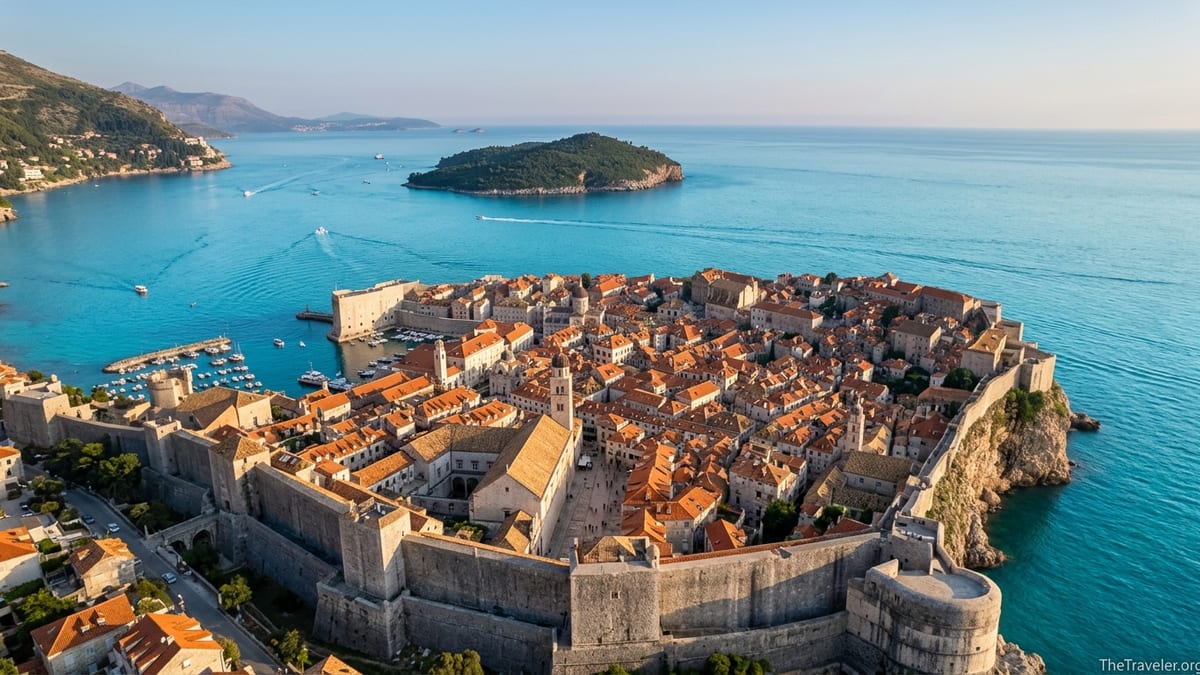
What and Where Is Dubrovnik?
Dubrovnik is a historic coastal city in southern Croatia, close to the border with Montenegro on the Adriatic Sea. Once the independent Republic of Ragusa, it grew rich as a maritime trading power, which is why its Old Town still feels like a compact Renaissance city-state: thick walls, polished stone streets, churches and palaces packed into a tiny peninsula. Today, it is one of the country’s busiest destinations and a major cruise port, drawing visitors who want a mix of history, sea views, and Mediterranean atmosphere.
On a map, Dubrovnik lies far down Croatia’s Dalmatian coast, separated from the rest of the country by a short stretch of Bosnia and Herzegovina. This means that reaching Dubrovnik usually involves either a direct flight into Dubrovnik Airport, a long coastal bus ride, or an overnight ferry or small-ship cruise that includes the city as its final or first stop. Many travelers pair Dubrovnik with Split, the islands of Hvar, Korčula or Mljet, or with nearby Kotor in Montenegro.
For first-time Croatia visitors, it helps to remember that Dubrovnik is both a living city and a stage set. Around 40,000 people live in the wider urban area, but the UNESCO-listed Old Town itself has a relatively small resident population and functions primarily as a historic and tourist core. Outside the walls, newer neighborhoods like Lapad, Babin Kuk and Gruž host most of the hotels, apartments and everyday life, connected to the Old Town by local buses and taxis.
Because of its international profile and heavy cruise traffic, Dubrovnik feels more “global” than many other Croatian towns. English is widely spoken in tourist areas, card payments are accepted almost everywhere, and you will see menus priced for visitors. If you are also planning to visit smaller coastal towns or inland regions, expect Dubrovnik to be your most crowded and expensive stop, but also one of the most visually memorable.
Inside the Old Town: Streets, Squares and Highlights
Most first-time visitors spend the bulk of their time in Dubrovnik’s walled Old Town. You enter through gates like Pile Gate on the western side or Ploče Gate to the east and find yourself on Stradun, the main limestone-paved street that runs straight through the center. In peak season the stone literally shines; it has been polished by centuries of footsteps, which makes it beautiful and slightly slippery after rain, so wear shoes with grip.
Key landmarks cluster close together. Near Pile Gate you will see the Large Onofrio Fountain and the Franciscan Monastery with its historic pharmacy. Walk down Stradun and you arrive at Luža Square, framed by the Church of St. Blaise, the Sponza Palace and the Orlando Column. Just behind is the Rector’s Palace, once the seat of the Ragusan government, now a museum that gives you a sense of the republic’s wealth and diplomacy. Many visitors also duck into Dubrovnik Cathedral and the Jesuit Stairs, the grand baroque staircase that has become a popular photo spot.
One of the best ways to explore the Old Town is to step off Stradun as soon as you can. Head up any of the side streets and you enter a vertical maze of stone staircases, tiny squares and residential alleys where laundry hangs over your head and you glimpse the everyday life that still exists inside the walls. Climb toward the northern side and you reach streets like Prijeko and the base of Minčeta Tower. Wander south and you eventually reach the city’s small cliffs and sea-facing terraces.
Old Town days can be intense, especially when multiple cruise ships are in port. Mid-morning to mid-afternoon, crowds pack Stradun and the main squares, and you may find lines at popular attractions. Early morning and late evening are when the city feels most magical. If your schedule allows, walk Stradun around 7:00 in summer or after 21:00, when day-trippers have left and the stone alleys glow softly under the lamps.
Walking the Famous City Walls
Walking Dubrovnik’s city walls is, for most first-time visitors, the single essential experience. The walls form a nearly 2-kilometer loop around the Old Town, with views over terracotta rooftops on one side and the Adriatic Sea, Lokrum Island and the Elaphiti Islands on the other. In 2026, an adult ticket for the walls in peak season is in the mid-30 euro range and is included in the main Dubrovnik Pass options, which many travelers choose because the pass also covers several museums and local buses.
There are three main entrances: near Pile Gate, Ploče Gate and by St. John Fortress overlooking the harbor. Most visitors start at Pile Gate and walk counterclockwise. The full circuit takes about 1.5 to 2 hours at a relaxed pace, longer if you stop frequently for photos. The highest point is Minčeta Tower on the landward side, which offers sweeping 360-degree views and is where many iconic rooftop photos are taken. Sections above the old harbor and by Fort Bokar are excellent for capturing the walls meeting the sea.
Practical timing matters. In summer, try to be at the entrance right at opening time in the morning or from late afternoon onward. Midday can be punishingly hot and crowded, especially on days when several cruise ships are docked. Many travelers choose to start around 8:00 or from about 17:30 to 18:00 in July and August, when the light is softer and the heat is less intense. Carry water, wear a hat, and apply sunscreen; the walls are almost entirely exposed and shade is limited to a couple of small cafes built into the ramparts.
If you are combining the walls with wider sightseeing, compare the standalone ticket price with the Dubrovnik Pass for your dates. For example, if the walls are around 35 euros and the one-day Dubrovnik Pass costs roughly 40 to 45 euros, the pass often represents better value because it includes the Rector’s Palace, some smaller museums and a city bus ticket that you can use to reach your hotel in Lapad or Babin Kuk. Families or couples can easily organize a day where the walls, a museum visit and two or three bus rides justify the pass cost.
Beaches, Sea Views and Where to Stay
Although Dubrovnik is best known for its Old Town, it also offers several appealing places to swim and relax by the sea. The most central is Banje Beach, just outside Ploče Gate. Here you will find a shingle beach with views back to the city walls and Lokrum Island, along with beach clubs renting loungers and umbrellas for prices that can feel high, especially in peak season. A more casual, local-feeling spot is Šulić Beach, a small cove west of Fort Lovrijenac, where people swim off rocks and a small strip of pebbles.
If you are staying outside the Old Town, Lapad Bay is one of the most popular areas for a beach-and-sleep combination. The pedestrian seafront promenade in Lapad has several small pebble and concrete beaches, cafes and family-oriented hotels. The water here is usually calmer than in the open Adriatic, and you will see both tourists and locals swimming before breakfast or at sunset. From Lapad, city bus line 6 typically runs to Pile Gate in around 10 to 15 minutes, making it practical for travelers who want daily access to the Old Town without paying Old Town hotel prices.
First-time visitors often debate whether to stay inside the Old Town walls, near them, or in areas like Lapad, Babin Kuk or Gruž. Staying within the walls is atmospheric: you wake up to church bells and step straight onto Stradun. However, rooms are often small, stairs are unavoidable and luggage has to be wheeled or carried over stone streets. Prices inside or just outside the walls are usually the highest in the city. By contrast, modern hotels in Lapad or Babin Kuk offer pools, larger rooms and easier vehicle access, often at a lower nightly rate, though you trade off the immediate historic atmosphere.
For many first-time Croatia trips, a balanced approach works well: two or three nights in or very close to the Old Town for the historic experience, followed by a couple of quieter nights in Lapad or even a nearby island like Lopud or Šipan for a slower beach-focused finale. If you are arriving on a late evening flight, consider booking your first night in Gruž or Lapad, which are closer to the main port and bus station, and then moving into the Old Town once you are rested and familiar with the local transit.
Restaurants, Cafes and Typical Costs
Dining in Dubrovnik ranges from simple bakeries and takeaway burek to fine-dining restaurants with sweeping sea views. In the Old Town, you will find narrow alleys lined with konobas (traditional taverns) and modern bistros. A typical sit-down meal with a main course of grilled fish or pasta, a shared starter and a glass of local wine might cost around 25 to 40 euros per person in 2026, depending on how central the location is and whether you add dessert or cocktails. Places with views of the harbor or the walls usually charge a premium.
Budget-conscious travelers can still eat relatively affordably with a bit of planning. Bakeries selling burek (flaky pastry filled with cheese, meat or spinach) and pekara sandwiches provide quick options for a few euros. A slice of pizza from a takeaway window in the Old Town might cost the equivalent of 3 to 5 euros. Simple cafes off the main tourist streets should serve espresso for around 1.5 to 2 euros and cappuccinos or lattes for a bit more. Ice cream prices have inched up in recent years, but you can still usually find a scoop around the 2.5 to 3 euro mark away from the busiest corners.
Alcohol and drinks add noticeably to bills in Dubrovnik. A glass of local wine in a mid-range restaurant might run 5 to 8 euros, while a craft cocktail in a bar tucked under the city walls or at a rooftop terrace can easily cost 12 to 16 euros. Beers from major Croatian brands like Ožujsko or Karlovačko are generally more affordable. Tap water in Croatia is potable, and locals often ask for “ordinary water” with meals, but many restaurants default to selling bottled still or sparkling water. If you prefer tap water, it is polite to ask clearly when ordering.
Overall, expect Dubrovnik to be more expensive than Zagreb, Split, Zadar or inland areas. Accommodation is where the difference is most striking, particularly in July and August. If you are planning a wider Croatia route, it can make sense to keep your Dubrovnik stay a bit shorter and shift more nights to places where your budget stretches further, such as Šibenik, Istria, or smaller islands, while still enjoying Dubrovnik’s highlights over two or three carefully planned days.
Getting There, Getting Around and Cruise Crowds
Most international visitors arrive via Dubrovnik Airport, located roughly 20 kilometers southeast of the city near Čilipi. From the airport, you can use an official shuttle bus service that runs into town and stops near the main bus station in Gruž and close to the Old Town, as well as local buses that connect to nearby villages. Taxis and app-based rides are common outside arrivals, and pre-booked transfers are popular with travelers staying in Lapad or Babin Kuk who want a straightforward door-to-door option.
Within the city, Dubrovnik’s public buses, operated under the Libertas brand, connect the Old Town, Lapad, Babin Kuk and Gruž. Routes like bus 6 from Lapad to Pile Gate are well-used by visitors. Tickets can usually be bought on board for a slightly higher price or at kiosks in advance for a small discount. For late-night returns from the Old Town to outlying neighborhoods in summer, it is wise to check the latest bus timetables or be ready to use a taxi if services thin out.
Cruise ships are a defining part of Dubrovnik’s visitor landscape. On heavy cruise days in summer, several thousand day-trippers disembark at the port in Gruž and are bused to Pile Gate. Local authorities have introduced measures to limit daily cruise passenger numbers, but Old Town streets still feel very full when multiple large ships are in. To manage this, many travelers now check the cruise schedule for their dates and plan Old Town sightseeing early in the morning or later in the evening on heavy ship days, using midday for beach time, a cable car ride, or a boat trip instead.
If you are arriving by cruise yourself, you will typically dock at Gruž and either join an organized shuttle, walk 30 to 40 minutes to the Old Town, or use the city bus. For independent cruisers, one common strategy is to head straight for the city walls at opening, then enjoy a late-morning coffee in a less crowded side street and leave midday for a swim at Šulić or a kayak tour. By mid-afternoon, when many fellow passengers are heading back to the ship, you can enjoy a quieter stroll through the back streets before returning to port.
How Much Time You Need and First-Time Croatia Tips
For most first-time visitors, two full days in Dubrovnik is enough to see the main sights at a comfortable pace, while three days allows time for a beach afternoon or a boat trip to Lokrum Island. A typical two-day plan might include the city walls, a walk through the Old Town and a museum or two on day one, then a half-day at the beach plus a cable car ride or coastal walk on day two. If you have an extra day, consider a day trip to the Elaphiti Islands, a wine region like Pelješac, or across the border to Kotor in Montenegro.
When fitting Dubrovnik into a broader Croatia itinerary, it often works well as either the start or end of your trip. Many travelers fly into Dubrovnik, spend two to three nights, then travel north by bus or catamaran via Korčula or Hvar to Split and on to Zagreb. Others do the reverse, finishing in Dubrovnik and flying out from there. Overland links exist, but summer bus journeys along the coast can take longer than expected due to traffic and border checks, so it is wise to leave a buffer day before your international flight home.
General first-time Croatia tips apply strongly in Dubrovnik. July and August are hot, busy and expensive; if your dates are flexible, consider June or September when the sea is still warm but the city is calmer and accommodation prices somewhat lower. Carry a reusable water bottle and refill at public fountains like the Onofrio Fountain. Dress codes are relaxed, but lightweight clothing and sturdy sandals or sneakers are more practical than flip-flops on polished stone steps. Tipping is appreciated but not mandatory; rounding up the bill or leaving around 10 percent in restaurants with table service is common practice.
Finally, remember that Dubrovnik is only one side of Croatia. It is perfectly possible to enjoy it intensely for two or three days, then move on to quieter coastal towns, inland national parks or capital-city life in Zagreb. If you find Dubrovnik’s prices or crowds daunting, treat it like you would Venice: a spectacular but intense place that repays smart timing, a clear budget, and a willingness to wander away from the busiest streets.
FAQ
Q1. How many days should a first-time visitor spend in Dubrovnik?
Most first-timers do well with 2 to 3 full days. Two days lets you walk the city walls, explore the Old Town and fit in some beach time; a third day adds space for a boat trip to Lokrum Island or the Elaphiti Islands or a relaxed museum visit without rushing.
Q2. Is Dubrovnik very expensive compared with the rest of Croatia?
Yes, Dubrovnik is generally one of the most expensive places in Croatia. Accommodation inside or near the Old Town, city wall tickets and meals in prime locations cost more than in cities like Zagreb or Split. You can still manage costs by booking rooms in Lapad or Gruž, eating at bakeries or simpler konobas, and using the Dubrovnik Pass to bundle attractions and bus transport.
Q3. When is the best time to visit Dubrovnik to avoid crowds?
June and September strike the best balance for many visitors: the sea is warm enough for swimming, but cruise and holiday crowds are lighter than in July and August. Even in peak summer, you can avoid the heaviest congestion by exploring the Old Town very early in the morning, resting or heading to the beach at midday, and returning in the evening.
Q4. Are the Dubrovnik city walls worth the ticket price?
For most travelers, yes. The walls offer unmatched views over the Old Town and the Adriatic, and walking the full circuit is a highlight of the city. Because the ticket costs as much as several basic meals, consider buying a Dubrovnik Pass that includes the walls plus museums and a bus ticket, which often provides better overall value.
Q5. Where should I stay as a first-time visitor: Old Town or Lapad?
Staying in or next to the Old Town gives you atmosphere and convenience: you can step outside early or late when streets are quiet. However, rooms are often smaller and more expensive. Lapad offers more modern hotels, pools and easier beach access, usually at lower prices, with bus connections to Pile Gate. Many visitors split their stay between both areas.
Q6. How do I get from Dubrovnik Airport to the Old Town?
From Dubrovnik Airport you can take an official shuttle bus that stops at the main bus station in Gruž and near the Old Town, catch a local bus to nearby towns, book a private transfer, or use a taxi waiting outside arrivals. For most first-time visitors staying near Pile Gate or in Lapad, the shuttle bus or a pre-booked transfer offers the simplest combination of price and convenience.
Q7. Do I need cash, or can I rely on cards in Dubrovnik?
Cards are widely accepted in hotels, restaurants and most shops. However, it is useful to carry some euros in cash for small purchases like bus tickets bought on board, drinks at simple beach bars or tips. ATMs are easy to find around the Old Town gates, in Lapad and at the port in Gruž.
Q8. Can I swim near the Old Town, or do I need to travel to beaches farther away?
You can swim quite close to the Old Town. Banje Beach lies just outside Ploče Gate, and Šulić Beach is a small cove west of Fort Lovrijenac. Both are within walking distance of the walls. For a more relaxed, resort-like atmosphere with several small beaches, cafes and promenades, head to Lapad Bay or Babin Kuk by city bus or taxi.
Q9. How can I avoid being overwhelmed by cruise ship crowds?
Check cruise schedules for your dates so you know which days are busiest. On heavy ship days, plan Old Town sightseeing early in the morning or after 16:00, and use the late morning and early afternoon for beaches, a cable car ride, or a boat trip. Even when thousands of day-trippers are in town, side streets and upper stairways inside the walls can feel much quieter than Stradun.
Q10. Is Dubrovnik a good base for exploring the rest of Croatia?
Dubrovnik works well as a base for nearby excursions to places like Lokrum Island, the Elaphiti Islands, Pelješac Peninsula or Kotor in Montenegro. For exploring wider Croatia, however, it is more practical to combine it with other hubs such as Split or Zagreb. Many first-time visitors treat Dubrovnik as the start or finish of a route that includes islands and inland highlights, rather than as their only base.