


More news on this day
Washington Dulles International Airport is confronting a fresh wave of disruption, with at least 71 individual operational snags converging into a day of mounting gridlock as federal air traffic managers struggle to keep the capital region’s travel network functioning.
Get the latest news straight to your inbox!
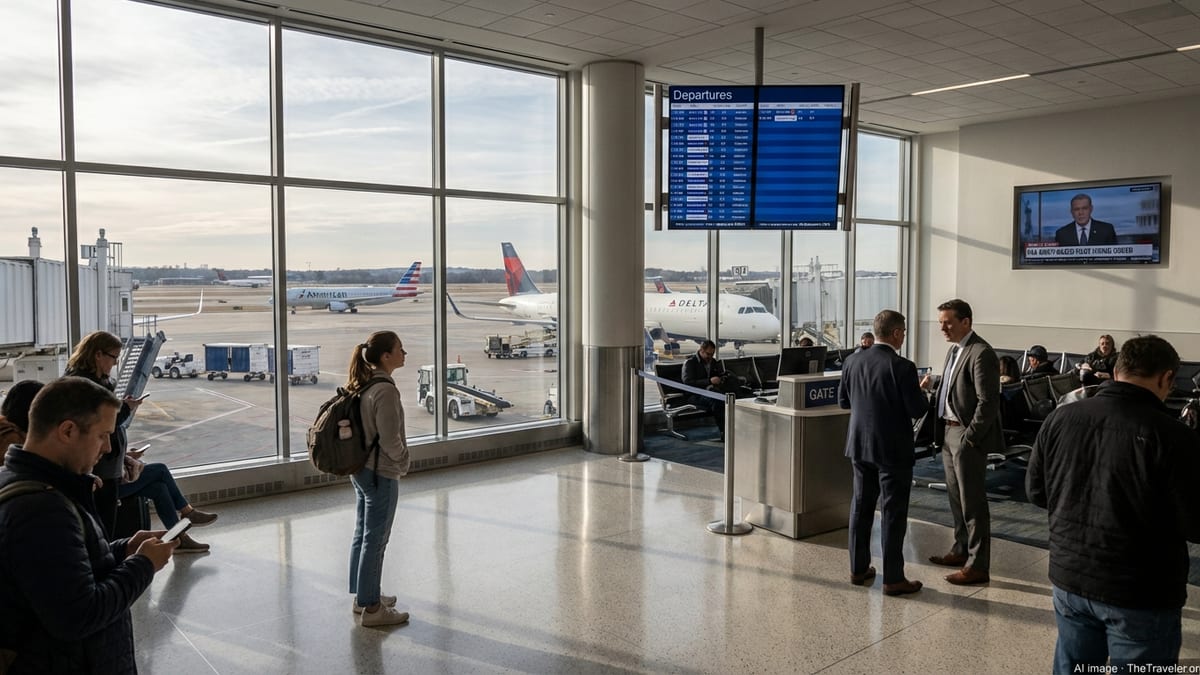
Capital Hub Under Intensifying Operational Strain
Publicly available traffic management data and airline status feeds indicate that Washington Dulles International is experiencing dozens of overlapping issues, from ground delays and equipment constraints to weather-related reroutings that have pushed the total number of operational disruptions above 70 events. These include departure holds, arrival metering, taxiway bottlenecks and knock-on delays from other congested hubs, all hitting during a peak early-summer travel period.
The situation comes as forecasters and travel organizations warn of record passenger volumes across the United States heading into the July 4 holiday, with more than 72 million Americans expected to take trips over a nine-day period. In that context, even routine slowdowns at a major hub such as Dulles can quickly escalate into broader gridlock as aircraft, crews and passengers miss their scheduled connections.
Flight status boards for United Airlines and other carriers that use Dulles as a key gateway show a patchwork of late departures, delayed arrivals and schedule reshuffles affecting both domestic and international routes. While only a fraction of services are outright canceled, the sheer volume of minor and moderate delays is compounding throughout the day, stretching airport resources and traveler patience.
Travel forums and live-tracking platforms have become an informal early warning system for many passengers, with users flagging creeping departure times and extended taxi sequences long before airlines issue formal advisories. That user-generated evidence aligns with the pattern visible in federal traffic management programs, which show repeated interventions for the Washington airspace.
FAA Traffic Management Tools Tested To The Limit
According to published FAA traffic management logs, air traffic controllers and system planners are relying heavily on ground delay programs, reroutes and flow restrictions to manage the load over the nation’s capital. These tools are designed to spread out demand and maintain safe spacing when weather, equipment outages or staffing limitations reduce available capacity.
In practice, such measures mean aircraft headed to Dulles often receive revised wheels-up times from their departure airports, holding them at the gate or on the ramp until the Washington-area airspace can accommodate more traffic. Once those aircraft arrive, the compressed flow can lead to congestion on the taxiways and at the gates, triggering further departure delays for flights trying to leave Dulles.
The FAA’s broader system is already under pressure from severe storms in other regions and a series of construction and modernization projects that have temporarily constrained runways and taxiways at key airports. Recent federal planning documents outline extensive work underway across the network, including multi-phase construction at Dulles that involves intermittent taxiway closures and overnight runway restrictions through late 2026.
When those planned constraints collide with unplanned factors such as convective weather or equipment outages, the available margin for handling surges in demand quickly narrows. The 71 disruptions logged at Dulles are scattered across multiple categories, but collectively they point to a system operating with little room for error.
Ripple Effects Across The Washington Airspace
The gridlock at Dulles is not occurring in isolation. The three-airport system that serves the nation’s capital, which also includes Ronald Reagan Washington National and Baltimore Washington International Thurgood Marshall, has experienced several region-wide stoppages and delay waves in recent months after technical issues at air traffic facilities and localized hazards forced temporary shutdowns.
Archived FAA advisories and regional coverage show prior instances where a single control facility incident led to ground stops at all three airports, with departures to the Washington area held for hours nationwide and average delays stretching beyond three hours. Even after those blanket restrictions were lifted, residual congestion often persisted into the following day as airlines repositioned aircraft and crews.
Today’s disruption pattern at Dulles is more fragmented but no less impactful for travelers. Flights connecting through Washington to international destinations in Europe, the Middle East and Asia are particularly vulnerable when departure slots compress, as missed long-haul connections can leave passengers stranded until the next day due to limited frequencies on certain routes.
Carriers serving the region have already been adjusting their Washington schedules in response to broader operational challenges, including high fuel prices and shifting demand. Some long-haul and transcontinental routes into Dulles have been trimmed or re-timed, which reduces overall resilience when irregular operations hit and leaves fewer options to rebook affected travelers.
Construction, Staffing And Weather Combine Into A Perfect Storm
Long-term planning documents released by federal aviation authorities highlight an intensive construction schedule at Dulles through the end of 2026, including phased closures of key taxiways and a major runway for weeks at a time. While much of the work is staged overnight or during historically quieter periods, even partial restrictions on the airfield surface can lengthen taxi times and reduce the number of movements the airport can handle per hour.
At the same time, a busy summer thunderstorm pattern across the eastern United States has repeatedly forced traffic managers to reroute flights around convective cells and temporarily halt departures during lightning and downburst activity. These weather-related pauses ripple straight into the Washington region, where Dulles functions as a key diversion and recovery hub when nearby airports face wind or visibility constraints.
Layered on top of those factors are ongoing staffing challenges in the national air traffic system. Public testimony and past shutdown planning documents describe how furloughs or unfilled controller positions can limit the number of arrival and departure “slots” that facilities can safely handle during peak periods. Even when skies are clear, those constraints can force the FAA to meter traffic into complex airspace such as Washington’s.
For passengers, the distinction between construction bottlenecks, staffing shortfalls and weather reroutes is largely academic. The net effect is the same: longer security lines, crowded gate areas and a higher risk that a routine connection through Dulles will be missed as small delays stack on one another.
Travelers Confront A New Normal Of Chronic Disruption
Consumer advocates and travel analysts have been warning that the combination of record demand, fragile airline schedules and constrained federal infrastructure would create a summer of chronic disruption for air travelers. The day of heavy gridlock at Dulles appears to fit that forecast, illustrating how quickly an already tight system can seize up when multiple stressors align.
Industry observers note that airlines have made progress in reducing outright cancellations compared with earlier crisis periods, instead leaning more heavily on schedule padding and rolling delays to keep aircraft and crews in position. While that strategy can reduce the headline cancellation numbers, it often shifts the burden onto passengers who endure hours-long waits and missed commitments.
For those passing through Washington today, basic preparation remains the most reliable defense. Travel experts generally recommend building in longer connection windows, monitoring flight status through both airline apps and independent trackers, and considering earlier departures when traveling to time-sensitive events. With disruptions at Dulles now measured in dozens rather than isolated incidents, the capital region once again demonstrates how vulnerable modern air travel remains to cascading shocks.