


More news on this day
A freight train derailed in southern New Mexico during a period of intense blowing dust, with early accounts suggesting that near-zero visibility and powerful crosswinds may have contributed to the crash and subsequent shutdown of a key transportation corridor.
Get the latest news straight to your inbox!
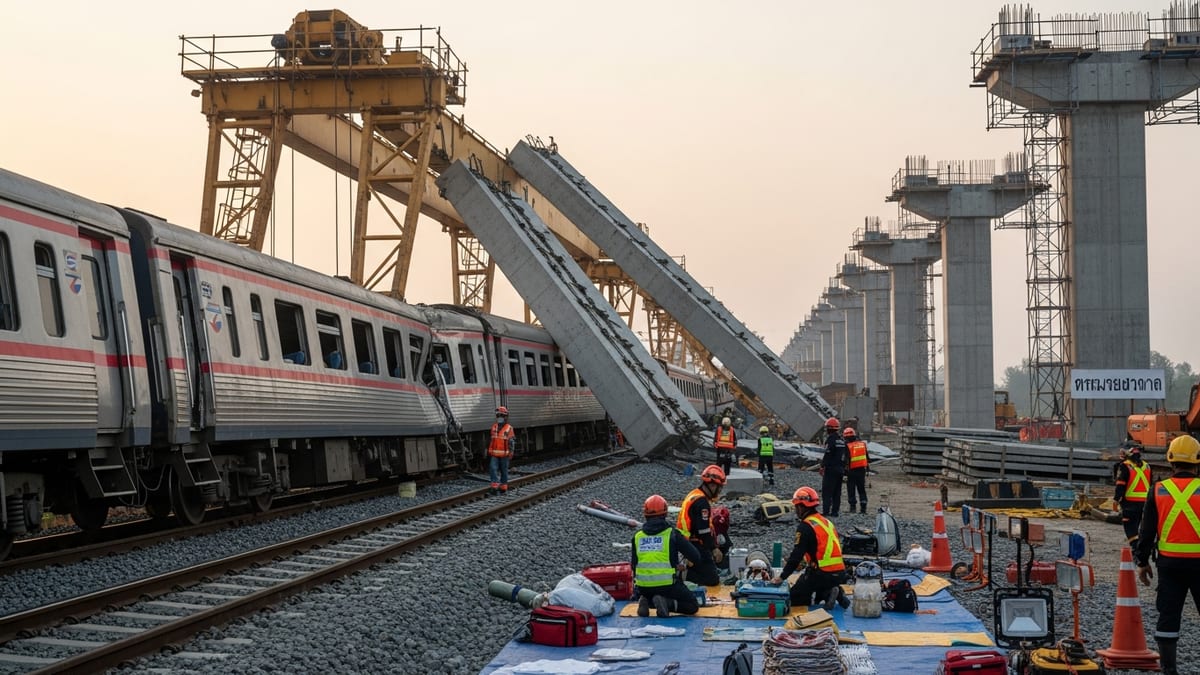
Freight Train Derails Amid Blowing Dust
Published coverage indicates that the derailment occurred along a busy east-west rail line in southern New Mexico, in an area that was experiencing strong winds and widespread dust. Video and roadside accounts circulating on social media show a towering dust cloud enveloping the tracks as railcars leave the rails and pile up, sending debris and soil into the air.
Preliminary information points to a mixed freight consist with multiple locomotives and dozens of cars, some of which jackknifed and overturned beside the right of way. Images from the scene show a tangle of railcars resting at sharp angles, with sections of track visibly twisted or displaced.
Traffic on a parallel stretch of interstate highway and adjacent local roads was disrupted as emergency responders and railroad crews moved into the area. Motorists described sudden drops in visibility as the dust storm swept across the corridor at roughly the same time the train derailed.
Railway technicians and hazmat teams were deployed to assess the equipment and any potential leaks, while road managers implemented detours around the impact zone. Early reports did not indicate widespread contamination, but a full assessment is expected to take several days.
Dust Storms and High Winds Under Scrutiny
Southern New Mexico is prone to powerful spring and early summer wind events that can loft desert soil and agricultural dust, at times reducing visibility to just a few meters. Publicly available weather observations from similar events in recent years have documented gusts surpassing 50 miles per hour, along with rapidly shifting wind directions and localized brownout conditions.
In such environments, long freight trains are exposed to significant lateral forces. Crosswinds can exert pressure along the length of container and boxcar sides, while wind-borne dust can obscure signals, crossings, and track conditions. Railroads operating across the Southwest typically rely on wind advisories and slow orders, but the severity and unpredictability of dust storms continue to pose safety challenges.
Transportation analysts note that the combination of high-profile rolling stock, heavy loads, and elevated track beds can make certain sections particularly vulnerable when gusts align at right angles to a moving train. When visibility drops abruptly, train crews may have only limited time to react to changing conditions, especially in relatively open desert terrain where there are few natural windbreaks.
According to regional climate summaries, multi-vehicle pileups on highways during dust storms have led to recurring calls for improved forecasting and warning systems. The latest derailment is likely to add freight rail operations to that broader discussion about how infrastructure in the Southwest adapts to extreme wind events.
Impact on Travel and Local Communities
The derailment temporarily severed a vital freight artery that supports commerce between the Southwest and other regions of the United States. Container traffic, bulk commodities, and consumer goods typically flow through this corridor, and any extended disruption can ripple through freight schedules for days.
Truckers and intercity travelers reported significant delays as a nearby stretch of interstate was intermittently closed or restricted to allow responders safe access and to minimize the risk of secondary crashes in the dust. Some travellers described detouring north and south on rural highways to avoid the combination of poor visibility and the rail incident.
Nearby communities experienced increased traffic on local roads as drivers sought alternate routes around closures. Local businesses that depend on timely freight deliveries may face temporary shortages or schedule changes, particularly if rail operators need to reroute trains or stage equipment for repairs.
Rail-focused travel, such as long-distance passenger services that share freight lines in the region, can also be affected. In previous disruptions along similar corridors, passenger trains have been forced to hold at intermediate stations, detour over secondary lines, or substitute bus transport while wreckage is cleared and inspections are completed.
Ongoing Investigation and Safety Questions
Railway investigators and safety specialists are expected to focus on several key factors as they work to determine what role the dust storm played in the crash. These typically include train speed, the condition of the track and roadbed, mechanical performance of the locomotives and cars, and the precise timing and intensity of the wind event.
Public documentation from past derailments in the American Southwest shows that extreme weather can be a significant contributing factor, particularly when high crosswinds coincide with heavy trains on exposed stretches of track. Investigators often compare train event data with meteorological records to understand whether sudden gusts or shifting wind directions correspond with the moment of derailment.
Another area of interest is operational decision-making leading up to the incident. Analysts reviewing earlier crashes have examined whether rail operators had access to the latest wind advisories, whether slow orders or temporary suspensions were considered, and how those policies were communicated to train crews already en route through affected areas.
Regulators and industry groups have increasingly emphasized the importance of integrating real-time weather intelligence into dispatching and speed-management systems, especially along corridors that regularly experience dust storms. The findings of the New Mexico investigation may inform future guidance on when and how trains should be slowed, staged, or rerouted in the face of rapidly deteriorating visibility.
Rail Operations in an Era of Weather Extremes
The incident in southern New Mexico highlights broader questions about how North American rail networks will adapt to a climate in which extremes of heat, wind, and precipitation are becoming more common. Freight lines crossing arid regions already contend with issues ranging from heat-related track expansion to washouts and flash flooding, and dust storms now feature more prominently in risk assessments.
Industry observers point to emerging technologies that could improve safety during severe wind events, including enhanced anemometer networks along rail corridors, automated speed restrictions tied to real-time gust measurements, and advanced imaging tools that detect airborne dust and sand encroaching on the right of way.
Communities along busy freight lines are paying close attention to these developments, as rail corridors often run near residential areas, schools, and critical infrastructure. Transparent reporting on derailments and their causes, along with clear communication of safety upgrades, is seen as increasingly important for maintaining public confidence in rail transport.
As crews in New Mexico work to clear damaged cars, repair track, and restore full service, attention will remain fixed on what investigators ultimately determine about the intersection of severe weather and rail operations. The outcome is likely to influence safety protocols not only in the desert Southwest but across other wind-prone sections of the national rail grid.