


More news on this day
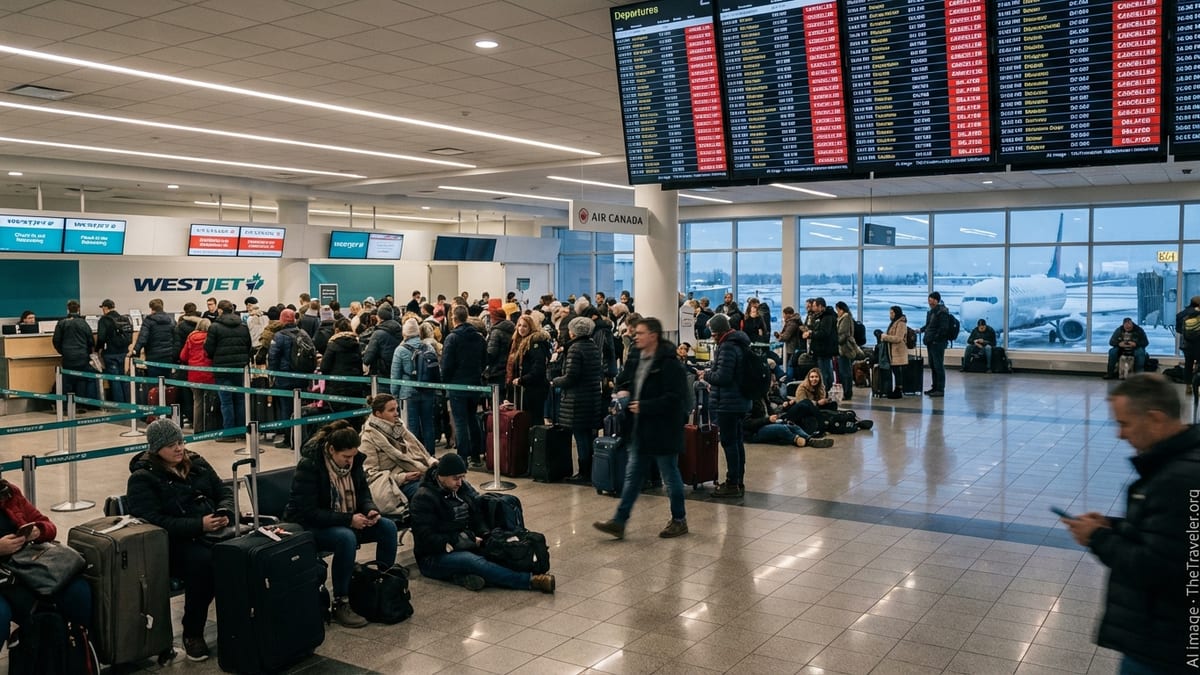
Travelers using Edmonton International Airport on July 9 are facing mounting disruption, with publicly available tracking data indicating four flight cancellations and 22 delays affecting a mix of domestic and transborder routes.
Get the latest news straight to your inbox!
Major Canadian Routes Among Those Disrupted
The latest tracking summaries for Edmonton International Airport show that several of the affected flights are on high-demand corridors linking the city with Toronto, Vancouver and Calgary. These routes carry a significant share of the airport’s daily passenger volume, meaning even a small cluster of cancellations and delays can quickly ripple through travel plans.
Services between Edmonton and Toronto are among those reporting schedule issues, with delays pushing departures and arrivals later into the day. Some passengers connecting onward to Eastern Canada and transatlantic flights may face missed connections or forced rebooking as revised timings narrow or erase connection windows.
Flights between Edmonton and Vancouver are also being impacted, adding pressure to one of Western Canada’s busiest corridors. Schedule changes on this route can create knock-on effects for travelers heading to Asia-Pacific gateways or continuing on to smaller British Columbia communities.
Closer to home, disruptions on the Edmonton to Calgary route are creating additional uncertainty for travelers who rely on the short hop to reach connections at Calgary’s larger network of domestic and international services. Even modest delays on this shuttle-style route can cause tight transfers to unravel.
Yellowknife and Las Vegas Travelers Advised to Watch Schedules
Beyond the country’s biggest hubs, the current pattern of disruption also reaches north and south of the border. Flights on the Edmonton to Yellowknife link are among those listed with schedule changes, complicating plans for travelers heading to or from Canada’s Northwest Territories at the height of the summer season.
For Yellowknife-bound passengers, delays in Edmonton can mean shorter turnaround times for ground transfers, tours and regional connections. In communities where flight options are limited and distances are large, even a single delayed leg can translate into an unplanned overnight stay or reworked itineraries.
Southbound travelers to Las Vegas are being urged to keep a close eye on real-time status tools as one of the headline leisure routes from Edmonton experiences delays. Summer is typically a busy period for vacation traffic, and any schedule changes on a popular route can lead to crowded rebooking desks and longer waits for alternative seats.
Published flight trackers show that, while some Las Vegas services are still scheduled to operate, their on-time performance is under pressure, reinforcing the need for passengers to monitor departure times and gate information in the hours before heading to the airport.
Potential Causes Range from Weather to Airline Operations
Publicly available information for Edmonton International Airport does not point to a single cause behind today’s mix of cancellations and delays. In recent weeks, travelers through the airport have reported a combination of operational factors behind disruptions, including high winds, aircraft availability, crew scheduling challenges and wider congestion across carrier networks.
Industry guidance notes that airlines may delay or cancel flights in response to local weather conditions, upstream disruptions at other airports, mandatory crew-rest rules or air traffic control restrictions along busy corridors. Any one of these factors can trigger schedule changes on individual services; when several coincide, the effect can multiply across a day’s operations.
Travel data services show that Edmonton’s typical departure profile features dozens of flights a day to Canadian and U.S. destinations. Against that backdrop, four cancellations may appear modest, but when paired with more than 20 delayed departures or arrivals, the cumulative impact on travelers’ plans becomes more significant, especially for those relying on tight connections.
Airport-focused analytics platforms also highlight that Edmonton International Airport often sees its busiest security and check in peaks in the early morning and late afternoon. Disruptions during those periods can exacerbate congestion at check in counters and security lanes as passengers on delayed flights overlap with those arriving for later departures.
What Today’s Disruptions Mean for Upcoming Trips
The current wave of schedule changes serves as a reminder for travelers with upcoming journeys through Edmonton to build additional time and flexibility into their plans. With key routes to Toronto, Vancouver, Calgary, Yellowknife, Las Vegas and other cities already experiencing issues today, similar pressures could reappear with little notice on subsequent days if underlying conditions persist.
Passenger advocates consistently recommend that travelers monitor flights directly through airline channels and trusted tracking tools rather than relying solely on printed boarding passes. Departure and arrival boards may update frequently as airlines adjust aircraft assignments and crew schedules in response to operational needs.
Those with same-day connections out of major hubs are often advised to favor longer layovers where possible during periods of irregular operations. A buffer of several hours between flights can reduce the risk of misconnecting if an Edmonton departure is pushed back.
For travelers heading to cruises, tours or special events, the pattern of cancellations and delays out of Edmonton highlights the benefit of arriving at the departure city at least a day early whenever budgets and schedules allow. This approach provides a margin to absorb unanticipated disruptions without losing the entire trip.
How Passengers Can Prepare Before Heading to YEG
With real time data already indicating a day of choppy operations at Edmonton International Airport, travelers yet to depart are being encouraged to take a few precautionary steps. Checking flight status repeatedly on the day of travel, including shortly before leaving home, can reveal early signs of trouble such as creeping delay estimates or aircraft changes.
Experts commonly suggest that passengers confirm contact details in their airline profiles so they can receive email or text alerts about schedule changes, gate moves or rebooking options. These alerts may arrive before updates reach airport display boards, giving travelers a small but valuable head start.
Arriving at the airport earlier than usual can also help. Guidance for Edmonton generally recommends reaching the terminal around two hours ahead of domestic flights and three hours before international departures; on days with multiple cancellations and delays, some travelers choose to extend that window to allow extra time for longer lines and unexpected schedule shifts.
Finally, passengers are urged to travel with essential items in their carry on bags, including medications, chargers and a change of clothes, in case a delay turns into an overnight disruption. With today’s cancellations and delays already affecting a cross section of Edmonton’s key routes, being prepared may make the difference between a stressful disruption and a manageable inconvenience.