


More news on this day
Lisbon, Madrid, Frankfurt Hahn, Berlin, Malaga and more than a dozen other European airports are emerging as new summer travel bottlenecks, as passport control disruption linked to the European Union’s Entry/Exit System coincides with peak holiday demand for UK tourists.
Get the latest news straight to your inbox!
Ryanair Highlights Expanding List of Delay Hotspots
Ryanair has placed a spotlight on a growing network of European airports where the Entry/Exit System, known as EES, is contributing to prolonged border queues and missed connections for UK travelers. According to recent public statements and media coverage of the airline’s warnings, Lisbon, Tenerife South, Madrid, Lanzarote, Alicante, Malaga, Milan Bergamo, Milan Malpensa, Verona, Paris Beauvais, Berlin, Cologne, Frankfurt Hahn, Krakow and Budapest are among the locations where delays have become particularly visible at the start of the main school holiday period.
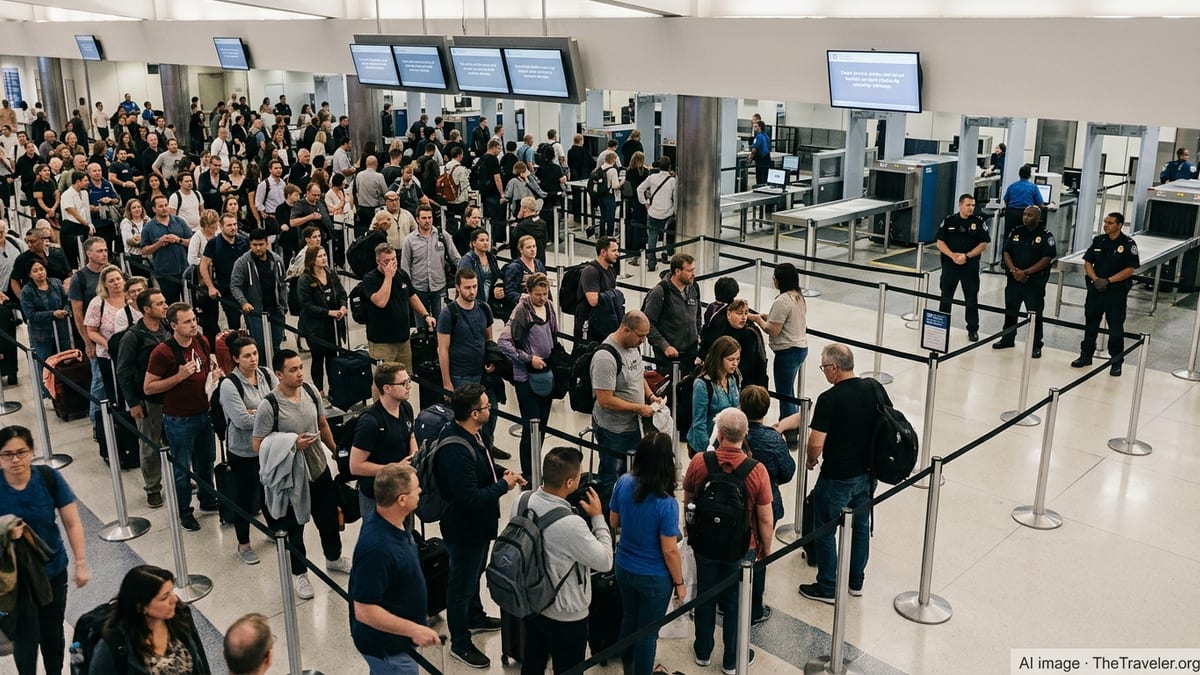
Reports indicate that in these airports, long lines often form at dedicated non-EU desks and biometric kiosks just as multiple UK flights arrive in short succession. Travel news outlets and airport passengers are describing waits that can stretch beyond an hour, with anecdotal accounts of families with children arriving in time for early boarding calls but reaching departure gates too late after being held up at border checks.
The pattern appears uneven, with queues reportedly worst at certain times of day or on particular travel peaks such as weekend changeovers. However, the combined effect of repeated bottlenecks at popular leisure hubs, including Lisbon, Malaga and Berlin, is turning previously straightforward city-break gateways into stress points for UK families seeking sun and short-haul escapes.
EES Implementation Strains Border Capacity
The Entry/Exit System was introduced to register non-EU nationals entering and leaving the Schengen area, using fingerprints and facial images aligned with passport details. Publicly available information from EU agencies and national authorities describes it as a cornerstone of a wider security upgrade, but initial operation is proving complex for both border forces and airports.
Travel industry briefings and recent European media coverage suggest the new procedures are significantly lengthening first-time registrations for UK and other visa-exempt travelers, particularly when equipment glitches or staffing gaps occur. Some passengers report that when biometric kiosks stall or fail to capture data correctly, they must repeat the process or queue again for manual processing, amplifying congestion at already stretched terminals.
EU-level assessments acknowledge teething problems and uneven readiness across member states, while consumer-facing travel reports note that airports in Spain, Portugal, France, Italy and parts of Central Europe are among the most challenged. The situation is especially sensitive this summer, because EES has moved from small-scale trials into routine use at a time when overall passenger numbers in key hubs are close to or above pre-pandemic levels.
Peak Holiday Season Exposes UK Tourist Vulnerability
The timing of these EES-related difficulties is proving particularly disruptive for UK travelers, who are navigating the system as families head abroad for school holidays. Surveys cited by travel companies show that a majority of British holidaymakers now expect some form of border delay linked to the system when entering the EU, with many adjusting arrival times and connection plans.
In destinations highlighted by Ryanair, such as Lisbon, Madrid and Berlin, UK passengers have shared experiences of arriving three hours ahead of departure only to find that a significant portion of that buffer is consumed at passport control. On busy days, queues at non-EU lanes often swell as several inbound flights land close together, which in turn puts pressure on outbound flows where departing passengers must clear border checks before reaching security or gates.
Reports from passenger forums suggest that younger families and older travelers are among the most affected, as they are less able to move quickly or stand for long periods in confined queuing areas. Missed flights and tight transfers have become a recurring theme in traveler accounts, even when flights themselves depart on time.
Lisbon and Other Southern Gateways Under the Spotlight
Lisbon Airport has become one of the most closely watched case studies of how EES is reshaping passenger flows. Recent travel community reports describe a two-track system in which UK and US arrivals are funneled through a separate passport control area from other long-haul passengers. When EES kiosks and manual booths in the dedicated area reach capacity, queues reportedly spill into corridors and holding zones, slowing both arrivals and subsequent departures.
Similar stories have emerged from Spanish holiday gateways such as Malaga and Tenerife South, where high volumes of seasonal charter and low-cost services intersect with new biometric procedures. At times of heavy inbound traffic, local media and passenger reports point to queues lasting 60 to 90 minutes, with crowding most acute where infrastructure was originally designed for lower volumes of third-country traffic.
In Germany, Berlin Brandenburg and Frankfurt Hahn are also drawing attention for a mix of EES-related pressure and traditional operational issues. Passengers have reported extended waits at border lines in Berlin alongside separate episodes of long flight delays, while Frankfurt Hahn’s role as a low-cost hub means that many of its peak-day arrivals consist of non-EU leisure travelers who must all pass through the new system.
Calls Grow for Temporary Flexibility and Better Communication
Within the aviation sector, airlines and trade bodies have been urging European governments to introduce additional flexibilities during the high summer season. Industry-focused coverage of these appeals notes requests for extended transitional measures, more staff at border posts, and additional kiosks in terminals that handle large volumes of UK passengers. Some operators argue that the full, continuous application of all EES rules should be postponed until after the main holiday peak, to reduce the risk of headline-grabbing queues.
Travel rights organizations and consumer commentators, meanwhile, are emphasizing the importance of clear and timely communication for passengers. Airport websites, airline notifications and travel agents are being encouraged to provide realistic guidance on how early travelers should arrive, what documents they need ready at border control and how EES procedures work in practice. Where such information is sparse or inconsistent, confusion at the passport lines can add further minutes to already long waits.
For now, the practical advice circulating among travel experts and passenger communities is for UK holidaymakers heading to affected airports such as Lisbon, Madrid, Frankfurt Hahn, Berlin and Malaga to build in extra time, avoid the tightest connections, and be prepared for queues that may be considerably longer than in previous years. With the summer peak still under way, Europe’s new border technology remains under intense scrutiny from airlines, airports and travelers alike.