


More news on this day
Ryanair is warning summer travelers to brace for “significant” delays and long queues at a cluster of major European airports, citing ongoing problems with the European Union’s new Entry/Exit System and surging school-holiday traffic.
Get the latest news straight to your inbox!
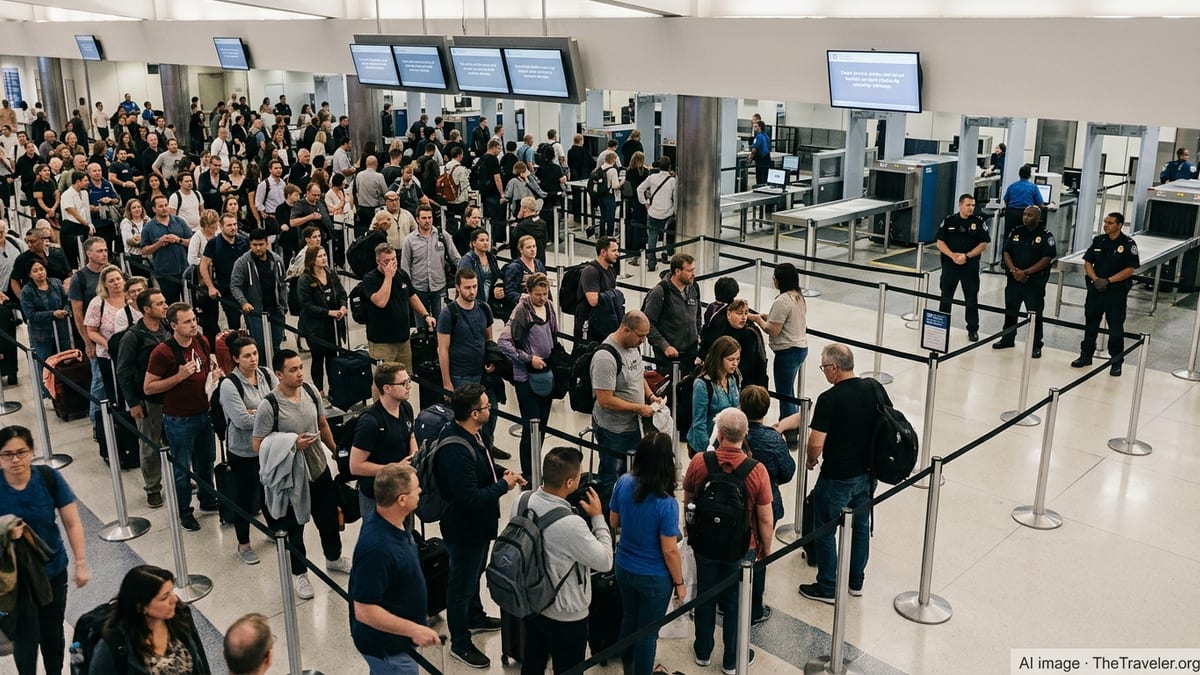
Nine airports flagged as congestion hotspots
According to recent public statements and media coverage, Ryanair has identified nine airports where non-EU passengers are facing particularly long waits at border control. These include Spanish holiday gateways such as Tenerife South, Palma de Mallorca, Alicante-Elche and Málaga-Costa del Sol, as well as Milan Bergamo in Italy, Kraków John Paul II in Poland, and Paris Beauvais in France. Reports indicate that some passengers have missed flights after spending extended periods in passport queues on both arrivals and departures.
Coverage from European travel outlets indicates that the list, initially highlighted as seven locations, has effectively expanded to a larger group of problem airports as the summer peak has built. Together they form a network of high-traffic, leisure-focused hubs that are especially popular with UK and Irish holidaymakers. Ryanair traffic data in recent years shows strong growth on routes into Spain, Italy, Poland and France, intensifying pressure on these points of entry at the busiest time of the year.
Ryanair’s warning is focused primarily on third-country travelers, including many UK nationals who are now processed as non-EU arrivals and departures. Industry briefings note that these passengers are subject to more detailed checks under the EU’s new border regime, which can sharply increase processing times when flights arrive in quick succession.
While local authorities and airport operators have implemented various measures to manage flows, reports from consumer travel sites and passenger forums continue to describe queues stretching across immigration halls and, in some cases, causing families to abandon or rebook their trips at short notice.
Entry/Exit System blamed for slower border checks
Much of the pressure at these nine airports is being linked to the roll-out of the EU’s digital Entry/Exit System, widely known as EES. Publicly available information on the scheme indicates that it requires non-EU travelers to submit fingerprints and facial images, alongside passport data, at their first entry point, creating a more time-consuming process than traditional document stamping.
Ryanair and several aviation industry groups argue that the system is not yet fully optimized for the reality of peak summer travel. Trade associations for airports and airlines have repeatedly warned in open letters and position papers that the additional biometric steps can create bottlenecks at busy leisure hubs where arrivals often concentrate within narrow time windows.
European Commission briefings cited in recent coverage suggest that average EES processing times are gradually improving, but even small delays per passenger can translate into long queues when planeloads of holiday travelers converge at the same passport control. At airports handling high volumes of short-haul flights, these delays can quickly cascade into missed connections and knock-on disruption for the rest of the day’s schedule.
Public commentary from airport and airline representatives stresses that the EES is intended to improve security and border management in the long term. However, there is a growing consensus in the sector that further staff reinforcement, better layout of checkpoints and more flexible contingency measures will be needed to prevent recurring congestion at the identified hotspots.
Peak holiday rush intensifies risk of missed flights
The timing of the latest Ryanair warning coincides with the main school-holiday period in the United Kingdom and much of northern Europe, when outbound leisure demand reaches its annual high. Passenger forecasts published by airports and tourism boards show that July and August remain the busiest months for flights to Mediterranean destinations, particularly Spain’s island and coastal resorts.
With aircraft operating close to full capacity and schedules tightly timed, any delay at passport control or security can quickly threaten a traveler’s ability to reach the gate before boarding closes. Travel news reports in recent weeks describe cases where passengers who arrived at the airport well in advance nonetheless missed flights after queuing for extended periods at border checkpoints.
Ryanair’s own operational updates indicate that it is seeking to build in more buffer time on the ground. From November 2026, the airline plans to close airport check-in and bag drop 60 minutes before departure, up from the current 40-minute cut-off, a move it links directly to longer queues at security and passport control. That policy change is framed as an attempt to reduce the number of passengers who reach the gate too late after being held up in upstream checks.
Consumer advice columns in European media now frequently recommend that travelers flying from the affected airports arrive earlier than they might have done in previous years, especially if they need to check bags or are traveling with children or elderly relatives who may move more slowly through crowded terminals.
Calls grow for temporary flexibility and extra staffing
Ryanair’s latest warning aligns with broader appeals from the aviation sector for more flexibility around EES implementation during peak periods. Airline associations and airport groups have urged national governments and EU institutions to allow temporary easing measures, such as selectively suspending EES checks when queues reach critical levels or deploying additional border officers to hard-hit terminals.
Recent reports highlight examples where member states have already sent extra staff to specific airports to help clear backlogs, and where local authorities have reorganized passenger flows to separate first-time EES registrations from returning travelers whose data is already stored. Industry observers note that such steps can make a visible difference to queue lengths, but may be difficult to sustain across the entire summer without longer-term staffing solutions.
Public documents from Ryanair and other carriers also emphasize the financial and operational impact of sustained disruption. When passengers miss flights because of airport-controlled processes, airlines can face pressure to rebook travelers, handle complaints and manage aircraft rotations that are thrown off schedule by delayed boarding or departure slots.
At the same time, airports warn that their own resources are stretched by the need to manage crowded terminal spaces, maintain security standards and respond to rising passenger frustration. Analysts argue that a coordinated approach between national border agencies, the European Commission, airports and airlines will be crucial if the nine highlighted airports are to avoid recurring episodes of gridlock throughout the remainder of the summer season.
What travelers can do before heading to the airport
Against this backdrop, travel experts are advising passengers to take practical steps to reduce their exposure to delays where possible. Guidance from consumer organizations and travel insurers typically includes arriving at the airport earlier than usual, checking ahead for any specific advice about the departure terminal, and ensuring that travel documents are ready for inspection to avoid losing time at the front of the queue.
For non-EU citizens, understanding that the first EES registration is likely to be the most time-consuming phase can help in planning. After the initial record is created, subsequent crossings should, in theory, be faster, though reports indicate that processing times still vary significantly between airports and times of day.
Passengers are also being encouraged to build extra buffer time into their itineraries, particularly if they need to connect to onward travel such as ferries, trains or domestic flights. Insurance specialists note that policies often distinguish between delays caused by airlines and those linked to airport or border control processes, making it important for travelers to review coverage details before departure.
As the summer peak continues, Ryanair’s warning about significant delays and long queues at nine key European airports underscores a wider transition period for the continent’s border infrastructure. Until staffing levels, technology and procedures catch up with demand, holidaymakers are being urged to factor in additional time and patience when planning journeys through the busiest gateways.