


More news on this day
Egypt, the most populous country in the Arab world and a historic crossroads between Africa, the Middle East and Europe, is navigating a period of economic adjustment, infrastructure expansion and resurgent tourism while managing internal pressures and regional security challenges.
Get the latest news straight to your inbox!
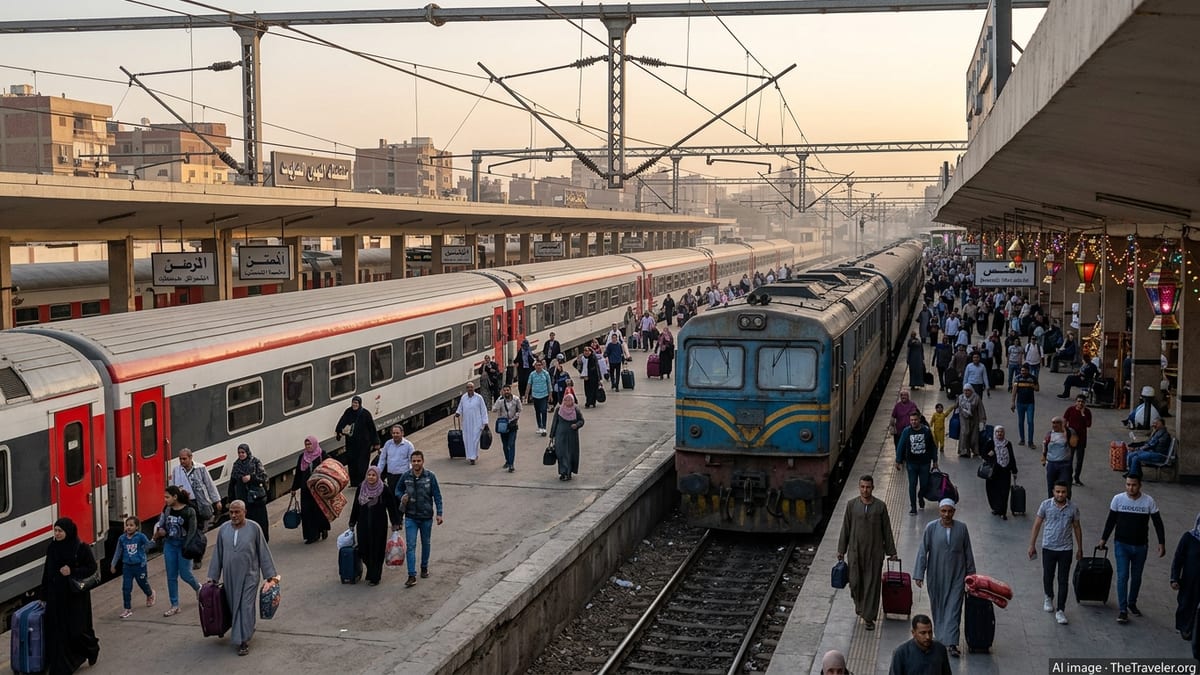
Geography, population and political landscape
Stretching from the Mediterranean coast to the Red Sea and deep into the Sahara, Egypt occupies a strategic position that has shaped its role as a regional transit hub and cultural center. Most of its more than 112 million people live in a narrow strip along the Nile Valley and Delta, where dense urban centers such as Cairo and Alexandria contrast with vast desert hinterlands.
Publicly available demographic data indicate that Egypt’s population continues to grow rapidly, with a relatively young age structure placing pressure on job creation, housing and services. The country’s human development indicators show gradual gains in education access and basic infrastructure, but also highlight persistent gaps between urban and rural areas and between the Nile corridor and outlying governorates.
Egypt is governed as a republic with a presidential system, and the current political order has consolidated power around the presidency, security institutions and allied economic entities. International assessments of political rights and civil liberties continue to classify Egypt as having significant restrictions on dissent, association and media, even as the authorities promote a narrative of stability and modernization.
The country’s foreign policy has emphasized its role as a pivotal state in Arab and African affairs, including mediation efforts in regional conflicts and participation in multilateral forums. At the same time, Egypt’s security posture remains shaped by concerns over instability in neighboring Libya and Sudan, tensions in the Red Sea and Eastern Mediterranean, and the protracted crisis surrounding the Gaza Strip and the Rafah crossing.
Economy under strain and international support
Egypt’s economy is diversified across services, industry, agriculture and extractive sectors, but has been challenged in recent years by high inflation, currency pressures and a sizeable public debt burden. Published economic analyses describe a period of macroeconomic stress following external shocks, including the pandemic and disruptions to trade and capital flows, which affected growth and living standards.
In response, the government has engaged in an extended reform program supported by international financial institutions. Public information on these programs points to a focus on tightening monetary and fiscal policies, improving foreign currency liquidity and encouraging greater private sector participation. Recent reviews by global lenders report an easing of inflation from previous peaks and a gradual recovery in real GDP growth, alongside efforts to narrow the current account deficit.
Despite these improvements at the macro level, many Egyptians continue to face high prices, low real wages and pressure on household budgets. Independent and multilateral scorecards highlight ongoing structural issues, including the large footprint of state and military-affiliated enterprises, regulatory hurdles for smaller firms and limited labor market opportunities for women and youth.
Government planning documents for the 2025 to 2026 period set out targets to expand electricity generation, upgrade water and wastewater systems and support strategic sectors such as information technology and manufacturing. These plans aim to reduce energy losses, improve service delivery and create jobs, particularly in regions that have historically seen lower investment.
Tourism resurgence and cultural assets
Tourism remains one of Egypt’s most visible and economically important sectors, leveraging its archaeological heritage, Red Sea resorts and religious and cultural sites. Official statistics for 2023 and 2024 show record visitor numbers, with international arrivals surpassing pre-2011 peaks and generating critical foreign currency at a time of fiscal pressure.
Reports from the Ministry of Tourism and Antiquities and global travel industry monitors indicate that more than 14.9 million tourists visited in 2023, with subsequent estimates for 2024 climbing higher as demand recovered from the pandemic downturn. Government statements for 2024 refer to around 17.5 million tourist arrivals, underscoring how quickly the sector has rebounded compared with the early 2020s.
Investment has concentrated not only on iconic sites such as the Giza Plateau, Luxor and Aswan but also on coastal destinations along the Red Sea and Mediterranean. Large museum projects, expanded airport capacity and upgraded visitor infrastructure in cities like Sharm El Sheikh and Hurghada are presented domestically as key components of a strategy to lengthen stays and raise per capita spending.
At the same time, tourism remains vulnerable to regional security developments and global economic conditions. Travel advisories, conflict in neighboring countries and concerns about environmental stress on the Nile and Red Sea ecosystems create potential headwinds. Egyptian planners have increasingly framed sustainable tourism, including better resource management and heritage conservation, as essential to protecting the sector’s long-term prospects.
Infrastructure corridors and megaprojects
Egypt has embarked on an ambitious series of infrastructure initiatives designed to reposition the country as a global logistics and investment hub. Central to this effort is the Suez Canal, through which a significant share of world maritime trade passes, linking Europe and Asia via the Red Sea. A major expansion completed in the mid-2010s created additional capacity, and subsequent development has focused on industrial zones, port upgrades and new logistics corridors around the canal.
Recent project updates from the Suez Canal Authority describe trial operations of new waterway segments in the southern sector, aimed at improving safety and shortening transit times for ships. Agreements with international partners include grant financing for specialized vessels to support canal maintenance and rapid response to grounding incidents, reinforcing the canal’s role as a critical global chokepoint.
Beyond Suez, the government has promoted the vast New Administrative Capital east of Cairo as a symbol of modern state institutions and a way to ease congestion in the existing metropolis. The project forms part of a broader Egypt Vision 2030 strategy, with plans for phased expansion, high-speed rail connections and new residential and commercial districts. While authorities highlight the city as an engine of growth and urban renewal, critics and some analysts argue that the cost and debt implications are heavy for an economy already under strain.
Complementary initiatives encompass high-speed rail lines linking the Mediterranean and Red Sea coasts, upgraded highways and a network of tunnels and bridges around the Suez Canal Economic Zone. These investments are intended to integrate Sinai more closely with the mainland, enhance trade flows and attract manufacturing and logistics operations that can serve markets in Africa, the Middle East and beyond.
Social development, inequality and outlook
Alongside headline infrastructure and macroeconomic reforms, Egypt faces complex social challenges that shape the outlook for inclusive development. Poverty and vulnerability remain widespread, particularly in Upper Egypt and informal urban settlements, where access to quality education, health care and formal employment is often limited.
National strategies framed around sustainable development emphasize expanding social protection programs, improving housing and utilities, and investing in healthcare and education systems. Official communications highlight increases in drinking water and sanitation coverage since the mid-2010s, along with targeted projects to clean polluted lakes and rehabilitate drainage and irrigation networks that are vital for agriculture.
International assessments, including those by United Nations agencies and development partners, note progress in some human development indicators while also pointing to persistent gender gaps in the labor market and constraints on civic participation. Civil society organizations and independent observers often draw attention to concerns over freedoms of expression and association, which they argue limit the space for public debate about economic and social policy choices.
Looking ahead, Egypt’s trajectory will depend on its ability to translate large-scale investment and macroeconomic stabilization into broad-based improvements in living standards. The combination of a young population, strategic geographic location and rich cultural heritage offers significant potential, but sustained reforms, stronger governance and attention to social equity are likely to be critical in shaping the country’s profile over the coming decade.