


More news on this day
EgyptAir is set to launch new nonstop service between Cairo and Los Angeles in 2026, adding a rare ultra long haul link between North Africa and the U.S. West Coast and intensifying competition with major Gulf and Turkish carriers that already funnel traffic between the two cities via their hub networks.
Get the latest news straight to your inbox!
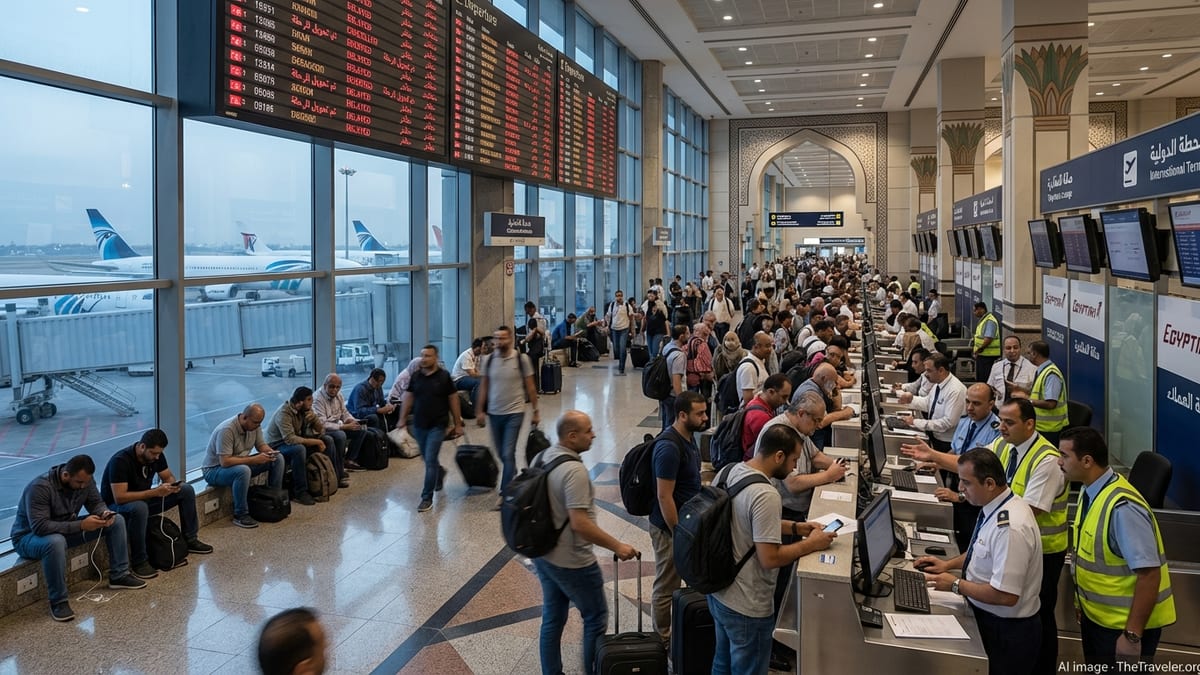
New Nonstop Route Reconnects Cairo and Southern California
According to publicly available industry filings and airline announcements, EgyptAir plans to begin three weekly nonstop flights between Cairo International Airport and Los Angeles International Airport from late May 2026, using Airbus A350-900 aircraft. Published timetables and route summaries indicate that the service is scheduled to restart a city pair that last had direct service in the late 1990s, before being withdrawn after the crash of EgyptAir Flight 990.
Coverage from aviation analysts notes that the planned flight time will exceed 15 hours westbound, placing Cairo–Los Angeles among the longest routes in EgyptAir’s network. The A350-900, a fuel efficient widebody, has been highlighted as a key enabler for making such ultra long haul services more commercially viable compared with earlier aircraft types.
Reports indicate that the new Los Angeles route forms part of a broader U.S. expansion that also includes Cairo–Chicago O’Hare, reinforcing Cairo’s role as EgyptAir’s primary long haul hub. The move aligns with a wider trend of African and Middle Eastern carriers adding direct links to North America as demand for leisure, VFR, and business travel continues to rebound.
Regional media and industry commentary also suggest that the Los Angeles launch carries symbolic weight. It signals renewed confidence in transcontinental demand and a willingness by Egypt’s flag carrier to compete more assertively on routes historically dominated by one stop itineraries through Gulf and European hubs.
Emirates, Qatar Airways, and Turkish Airlines Set the Competitive Context
While EgyptAir prepares to fly nonstop, the market between Cairo and Los Angeles is already well served by one stop itineraries on several major carriers. Emirates sells routings that combine Cairo–Dubai and Dubai–Los Angeles segments, leveraging its large A380 and other widebody operations at Los Angeles International Airport. Public booking displays show multiple daily options via Dubai, giving travelers flexibility on departure times and connection windows.
Qatar Airways has long marketed Doha–Los Angeles as one of its signature long haul routes, and network information and schedule updates indicate that the carrier continues to adjust frequencies and aircraft types on this corridor in response to operational and geopolitical factors. For travelers starting in Egypt, journeys typically involve an initial Cairo–Doha sector before connecting to the nonstop Doha–Los Angeles flight, adding competition on both price and total journey time.
Turkish Airlines has also built a strong position shuttling passengers between Africa, the Middle East, and North America through its Istanbul hub. Flight schedules and route maps show that the airline offers Cairo–Istanbul links timed to connect with transatlantic departures to Los Angeles, making Istanbul an alternative gateway for Egypt based travelers heading to the U.S. West Coast.
Together, these hub carriers have accustomed Cairo and wider regional markets to one stop connectivity to Los Angeles. EgyptAir’s entry with a true nonstop introduces a structurally different product that competes less on connection variety and more on elapsed travel time and the appeal of a single flight number between the two cities.
Shorter Journeys and New Itinerary Choices for Passengers
Nonstop Cairo–Los Angeles flights are expected to trim several hours off typical one stop itineraries, which often involve total travel times exceeding 20 hours when connections are included. Route comparisons drawn from published schedules suggest that eliminating the intermediate hub could reduce total journey times by two to four hours, depending on carrier and layover length.
For Egypt based travelers, the new service offers a direct option to Southern California without transiting the Gulf, Europe, or Turkey. Industry commentary notes that this may be especially attractive for families, tour groups, and older passengers who prefer to avoid long overnight layovers or multiple security screenings. It may also provide a time saving alternative for business travelers with meetings in the U.S. West Coast who previously routed through New York, Washington, or European gateways.
On the U.S. side, the nonstop opens new possibilities for travelers originating in Los Angeles and surrounding regions. Instead of backtracking through East Coast hubs or connecting in Europe or the Gulf, passengers will be able to board in California and arrive in Cairo without changing aircraft. From there, EgyptAir’s regional network, together with partner and subsidiary carriers, offers onward access to leisure destinations such as Luxor, Aswan, Sharm El Sheikh, and Hurghada, as well as points across North and East Africa and the Middle East.
Travel agents and online booking platforms are likely to position the nonstop as a premium time saving option alongside often cheaper, but longer, one stop itineraries on Emirates, Qatar Airways, Turkish Airlines, and European competitors. This dynamic could foster a clearer segmentation of the market between travelers who prioritize speed and convenience and those focused on price or loyalty program benefits.
Strategic Implications for Cairo as a Long Haul Hub
By adding Los Angeles to its U.S. network, EgyptAir is extending Cairo’s reach deeper into North America and positioning the city as a more compelling connecting point between Africa, the Middle East, and the western United States. Publicly available route analyses highlight that the carrier has been steadily rebuilding and expanding its long haul portfolio, with the A350-900 fleet expected to underpin further network developments.
The new transpacific facing corridor strengthens Cairo’s role relative to rival hubs in the region. While it is unlikely to displace Dubai, Doha, or Istanbul in overall connectivity in the near term, analysts suggest that targeted long haul additions can help EgyptAir capture more sixth freedom traffic, particularly from secondary cities in Africa that lack their own nonstop U.S. links.
Investment commentary also points to tourism and trade benefits. Easier access from Southern California and the broader U.S. West Coast could support Egypt’s visitor economy, cruise and Nile tourism, film and media collaboration, and educational exchanges. For American businesses, more efficient links to Cairo and onward African markets may improve the attractiveness of regional headquarters or project bases in Egypt.
However, observers note that the economics of ultra long haul routes are sensitive to fuel prices, currency movements, and demand patterns. Successful execution will depend on EgyptAir’s ability to maintain strong load factors in both directions, secure corporate and leisure partnerships in California, and coordinate schedules to maximize connecting flows to and from its regional network.
Competition and Collaboration in a Shifting Transcontinental Market
The entrance of a new nonstop option between Cairo and Los Angeles adds another layer to an already competitive long haul market that includes Middle Eastern, Turkish, European, and North American carriers. While EgyptAir will compete directly with one stop offerings from Emirates, Qatar Airways, and Turkish Airlines, publicly available commentary suggests there may also be room for cooperation through interline and codeshare arrangements that broaden customer choice.
Passengers loyal to Gulf and Turkish carriers may continue to favor their existing frequent flyer programs and extensive global networks, especially when traveling beyond Los Angeles or Cairo. At the same time, price promotions or schedule advantages on the nonstop could prompt some travelers to switch, particularly those whose journeys begin or end in Egypt or neighboring countries with strong ties to Cairo.
For Los Angeles International Airport, the new route contributes to a growing roster of ultra long haul services connecting Southern California to Africa and the Middle East. Airport traffic reports and planning documents have emphasized the importance of such links in supporting tourism, diaspora travel, and cargo flows, as well as diversifying the airport’s airline portfolio.
As 2026 approaches, booking trends, schedule refinements, and aircraft deployment decisions will reveal how EgyptAir calibrates its Cairo–Los Angeles operation in response to demand and competitive pressure. The interplay between the new nonstop and entrenched one stop networks from Emirates, Qatar Airways, and Turkish Airlines is likely to be closely watched by aviation analysts and travelers seeking the most efficient way to cross continents between Egypt and the U.S. West Coast.