


More news on this day
United Airlines will restore daily nonstop flights between Houston and Caracas in August, reconnecting two key energy and diaspora hubs and marking one of the most significant steps yet in rebuilding direct air links between the United States and Venezuela after nearly a decade of disruption.
Get the latest news straight to your inbox!
Daily Nonstop Service Returns on August 11
Publicly available information from United Airlines and Houston Airports shows that the carrier plans to resume daily nonstop service between George Bush Intercontinental Airport in Houston and Simón Bolívar International Airport serving Caracas on August 11. The route will be operated with Boeing 737 MAX 8 aircraft, offering business and economy cabins on a flight of just under five hours.
The relaunch represents United’s first scheduled passenger service to Venezuela since 2017, when U.S. authorities halted direct commercial flights amid security and operational concerns. Industry coverage notes that the new operation will initially focus on a single Houston–Caracas rotation each day, designed to plug directly into the airline’s bank of Latin American and transcontinental connections at its Texas hub.
Schedules released in aviation reporting indicate that the Houston departure will leave in the late morning, arriving in Caracas in the mid afternoon, with the return leg operating in the early evening to reach Houston at night. This timing is aimed at facilitating same-day onward travel to destinations across the United States, Canada and parts of Europe.
Advance ticket sales are expected to open in the coming days through United’s regular channels, with the route subject to standard government approvals and operational checks that accompany U.S.–Venezuela flying at present.
Reconnecting a Critical Energy and Business Corridor
Analysts note that the reinstated Houston–Caracas link carries particular significance for the energy sector. Houston is a global capital for oil and gas companies, many of which historically maintained extensive operations and partnerships in Venezuela. Coverage of the announcement highlights expectations that the route will once again become a key shuttle for technical staff, executives and contractors moving between corporate headquarters and production sites.
Business groups tracking the route revival suggest that increased connectivity could help support emerging efforts to stabilize and gradually rebuild Venezuela’s oil output, following recent shifts in sanctions and economic policy. Direct flights reduce travel time and logistical complexity for energy firms that, in recent years, were forced to route personnel through third countries such as Panama, the Dominican Republic or Colombia.
The Houston–Caracas corridor is also viewed as an important trade channel beyond hydrocarbons. Observers point to pent-up demand in sectors such as engineering services, logistics, consumer goods and financial consulting, where face-to-face contact remains important. Direct air service is widely seen as a prerequisite for deeper commercial engagement, especially in a country where ground transport between major cities and the main international airport can be unpredictable.
Airport authorities in Houston have framed the route’s return as part of a broader strategy to strengthen the city’s role as a primary North American gateway to Latin America and the Caribbean. With the addition of Caracas, Houston regains a connection to another regional capital, reinforcing its position in corporate travel itineraries and cargo planning.
Boost for Families, Diaspora and Tourism
Beyond boardrooms and oilfields, the renewed nonstop flights are expected to carry substantial social impact. Community organizations that track migration patterns note that tens of thousands of Venezuelan nationals have settled in Texas and neighboring states during the past decade, many of them in the greater Houston area. For these residents, the return of a direct link to Caracas simplifies journeys to visit parents, children and extended family.
Travel industry reports indicate that demand from the Venezuelan diaspora has often supported near year-round high load factors on routes connecting to Caracas via regional hubs. The new nonstop option from Houston could redirect a portion of that traffic away from connecting itineraries, while also attracting U.S. travelers who may have been reluctant to navigate multi-stop journeys.
Tourism specialists caution that Venezuela’s broader visitor economy still faces challenges, including infrastructure constraints and lingering perceptions about security and political risk. However, they also note that the country’s natural attractions, from Caribbean beaches to Andean peaks and the Orinoco basin, retain significant long-term potential. Improved air access from a major U.S. gateway is seen as a necessary step if tour operators are to contemplate more structured programs for international travelers.
Observers add that the presence of a large U.S. network carrier on the route can offer passengers additional reassurance on safety protocols, customer service standards and options for onward connections compared with more fragmented regional alternatives.
Symbol of Thawing U.S.–Venezuela Aviation Ties
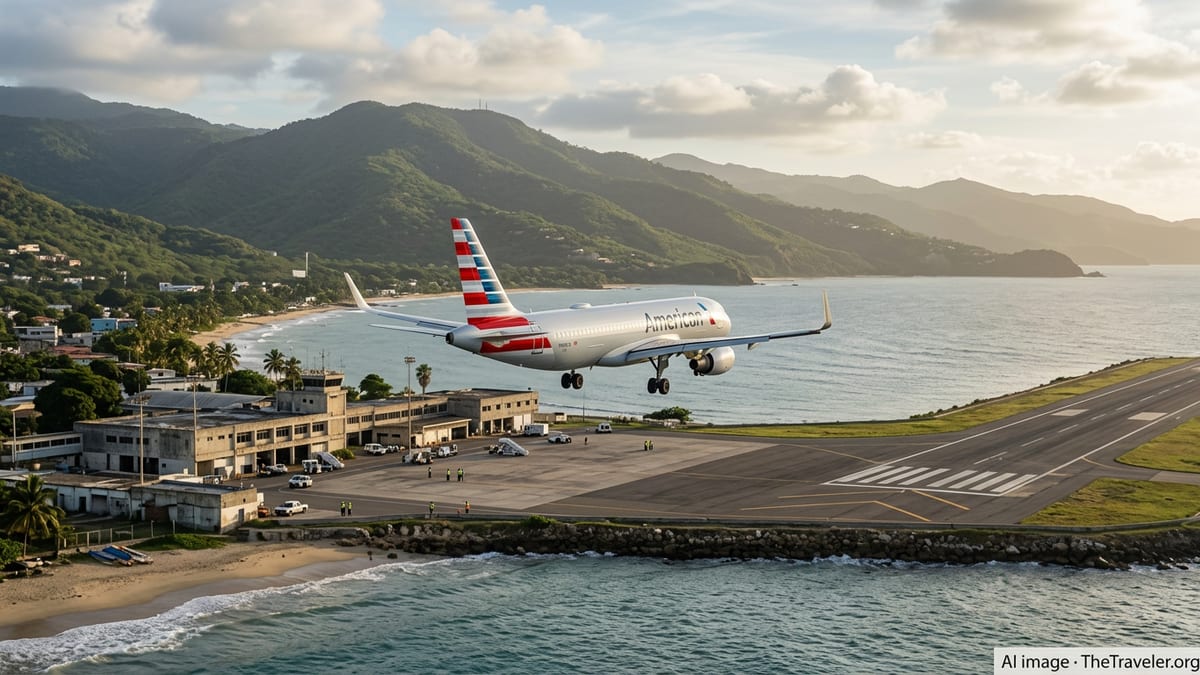
United’s return to Caracas comes only weeks after American Airlines reinstated service between Miami and the Venezuelan capital, which marked the first direct commercial flight between the two countries in seven years. According to international news coverage, those flights signaled a gradual easing in restrictions that had effectively isolated Venezuela from U.S. skies since 2019.
Policy analysts interpret the renewed Houston–Caracas service as another tangible outcome of shifting diplomatic and economic dynamics between Washington and Caracas. While broader political tensions remain, U.S. authorities have in recent months allowed a cautious reopening of passenger links, framed as part of a wider effort to support economic stabilization and manage migration pressures.
Aviation experts emphasize that resuming flights requires a complex checklist of security, airworthiness and infrastructure assessments, in addition to commercial forecasting. The approval of daily operations by a major U.S. airline is therefore being read as a sign that regulators see sufficient improvements in operational conditions at Caracas’ main international airport and in the airspace that serves the country.
For Venezuela, the restoration of U.S. links by both Miami and Houston carriers helps to diversify its limited portfolio of long-haul connections. The country’s network had become heavily dependent on regional and European partners, some of which have intermittently suspended service in recent years amid safety assessments and economic volatility.
Competitive Landscape and Next Steps
With both United and American Airlines now mapping out their Venezuela returns, industry watchers are closely monitoring how the competitive landscape will evolve. Miami–Caracas is expected to cater heavily to South Florida’s Venezuelan community, while Houston–Caracas positions itself as the primary channel for energy, business and connecting traffic from across the United States and beyond.
Some aviation analysts suggest that the success of these initial routes could open the door to additional capacity, schedule adjustments or even new city pairs over the medium term, provided that demand proves resilient and the regulatory environment remains stable. However, they also stress that airlines are likely to proceed cautiously, given the financial and operational risks associated with any market that has recently experienced prolonged disruption.
For travelers, the immediate impact is a broader range of options and potentially more competitive fares compared with the era when journeys relied on multi-stop itineraries via third countries. Travel agencies and online booking platforms are expected to highlight the renewed nonstop services as soon as they appear in reservation systems, particularly targeting passengers who have been waiting for easier access to family or business contacts in Venezuela.
As United moves toward the August launch date, the Houston–Caracas route will serve as a high-profile test of whether restored air connectivity can support both economic goals and human ties in a relationship that is still in the process of being recalibrated. The stakes are considerable, but so too is the demand from travelers who have spent nearly a decade without a direct bridge between these two cities.