

More news on this day
Emergency crews mounted a large-scale response on Friday evening after two commuter trains collided on a main rail line north of London, disrupting rush-hour travel and leaving multiple passengers needing medical attention, according to early reports.
Get the latest news straight to your inbox!
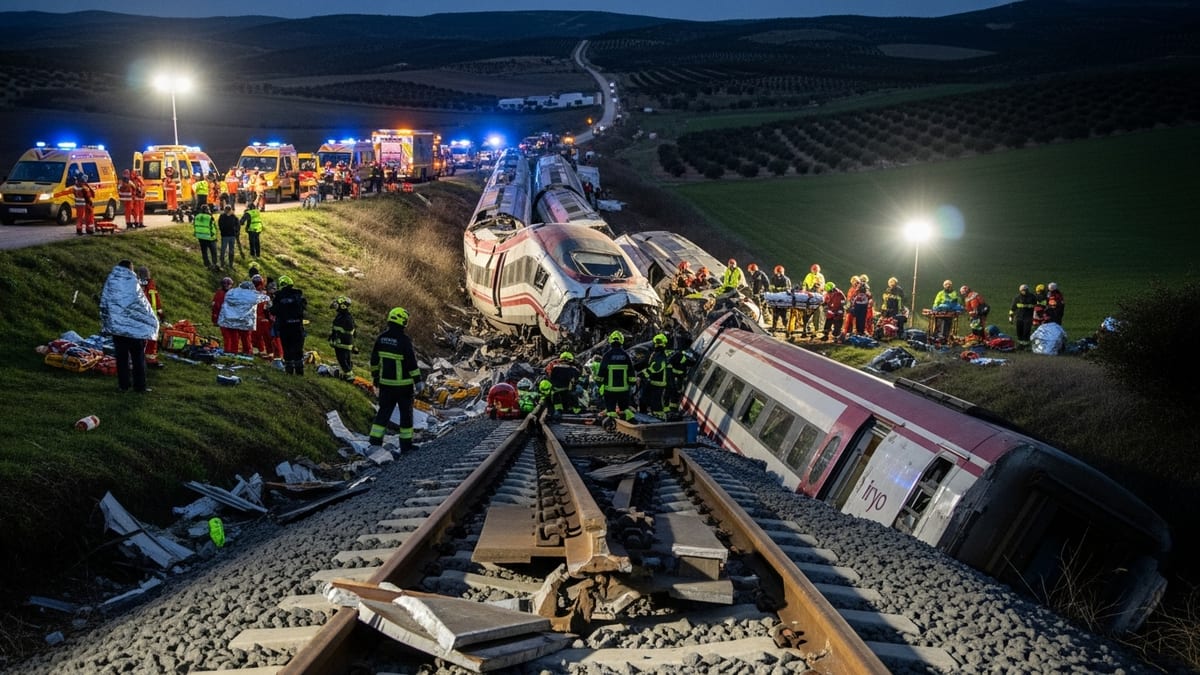
Collision on Key St Pancras Corridor
Initial reports indicate the collision occurred on Friday 19 June on tracks south of Bedford, along the electrified corridor linking London St Pancras with towns and cities in the East Midlands. The route carries frequent East Midlands Railway and Thameslink services and is one of the capital’s busiest commuter and intercity corridors.
Coverage from international and UK outlets describes a crash involving two passenger trains travelling on the same line, with one service apparently running into the rear of another. Rail-tracking data referenced in published coverage suggests a Nottingham to London St Pancras service was involved alongside a Corby to London commuter train, both heading toward the capital.
Images shared on social media and carried by news organisations show two damaged trains still upright and on the tracks, with visible crumpling to at least one cab and a significant emergency presence around the site. The apparent rear-end nature of the impact and the fact that carriages remained on the rails are being cited in public commentary as factors that may have limited the scale of structural damage.
The incident occurred in the early evening period when many commuters travel home, heightening the impact for passengers both on the trains involved and across the wider network. According to passenger accounts shared online, services on the route quickly came to a standstill as emergency protocols were activated.
Major Multi‑Agency Emergency Response
Publicly available information indicates that Bedfordshire Fire and Rescue Service, ambulance crews and police were among the first responders dispatched to the scene after the collision was reported around early evening. Photographs distributed by news agencies show long lines of emergency vehicles positioned along nearby access roads and fields as teams reached the line.
Images and passenger reports circulating on social channels describe medics treating people at the trackside and in makeshift triage areas, with some travellers seen with bandages and makeshift slings. Media coverage notes that local hospitals were placed on alert to receive multiple casualties, with one regional hospital reportedly preparing for the possibility of dozens of injured arrivals.
Rail staff are reported to have assisted with evacuating passengers along the track to safer assembly points while emergency teams assessed the scene. Air ambulances and rescue helicopters were spotted overhead by residents and travellers, reflecting the scale of the response and the concern for potential serious injuries.
As of the latest updates available, detailed information on the number and severity of injuries has not been comprehensively confirmed in public reporting. However, early descriptions from passengers reference a mix of walking wounded and more seriously hurt travellers being aided by paramedics and fellow passengers.
Disruption for Travellers North of London
The collision has caused significant disruption along the Midland Main Line linking Bedford, Luton, and other East Midlands destinations with central London. According to rail disruption summaries published soon after the incident, services between London St Pancras and points to the north were suspended or heavily reduced while the emergency response and initial examinations of the site took place.
Passengers already en route reported being held in trains for extended periods as signallers stopped movements around the affected section of track. Others described being diverted onto alternative lines or advised to return to London by different routes when possible. Replacement road transport options were expected to be constrained given the timing and the volume of travellers who rely on the line for daily commuting.
Travel updates shared by operators and rail information services advised passengers to check for the latest status before attempting journeys on Friday evening and into the weekend. Knock-on delays and cancellations were anticipated as damaged rolling stock is recovered, track and signalling assets are inspected, and the scene is secured for investigators.
The disruption is particularly impactful because the corridor supports both long-distance intercity trains and stopping commuter services, with many communities along the line limited to this single fast connection into central London. Travellers have been urged via public channels to consider alternative stations and other mainlines where available.
Early Focus on Safety Systems and Next Steps
While the cause of the collision has not yet been formally established, rail commentators and specialist forums quickly turned attention to the signalling and train protection systems on the route. Some publicly available analysis points to the possibility that a safety system fault may have brought one train to a standstill before it was struck from behind, though this remains to be confirmed by official investigations.
According to standard practice in such incidents, the UK’s dedicated rail accident investigation body is expected to open an inquiry to examine technical data from the trains, trackside signalling records, and driver and crew actions in the moments leading up to the crash. Investigators typically focus on whether any equipment malfunctioned, whether operational rules were followed, and how the design of rolling stock and infrastructure influenced the outcome for passengers.
Rail safety in the United Kingdom is often described in published assessments as among the strongest globally, with serious collisions relatively rare compared with historic levels. Recent high-profile incidents elsewhere in Europe and beyond, however, have kept attention on how even advanced signalling and protection systems can be undermined by human error, maintenance issues, or complex technical failures.
Any formal findings from the Bedfordshire collision are likely to feed into wider discussions about investment priorities on core commuter routes serving London, including the pace of deploying newer digital signalling and the resilience of existing safety layers on busy mixed-traffic lines.
Implications for Rail Travellers and Regional Connectivity
For travellers, the immediate concern is the condition of those injured and the restoration of a dependable timetable on one of the main arteries linking central England with the capital. The route not only supports daily commuting but also underpins tourism flows into and out of London, connecting visitors with destinations in Leicestershire, Nottinghamshire, and beyond.
Published commentary from local representatives frames the collision as a serious incident on a heavily used line at a peak travel time, with families and workers across Bedfordshire and neighbouring counties relying on these services. The psychological impact on passengers who experienced the crash is also a consideration, with rail operators typically offering support and information in the days following such events.
From a wider travel perspective, the incident highlights the ongoing vulnerability of high-density corridors to single-point disruptions. Even when collisions do not result in large numbers of severe casualties, the combination of damaged rolling stock, track inspections, and investigative work can lead to reduced capacity for days, reshaping journey plans for thousands of people.
As services gradually resume, public information from train operators and national rail platforms will be key for visitors and commuters alike weighing whether to proceed with trips, rebook, or consider alternative routes. The Bedfordshire collision is likely to remain a reference point in discussions about rail reliability and safety for travellers to and from London in the coming months.