


More news on this day
Emirates and Etihad Airways have extended cancellations and suspensions on selected flights to Kuwait and Bahrain, as ongoing security concerns and fluctuating airspace restrictions continue to unsettle travel plans across the Gulf.
Get the latest news straight to your inbox!
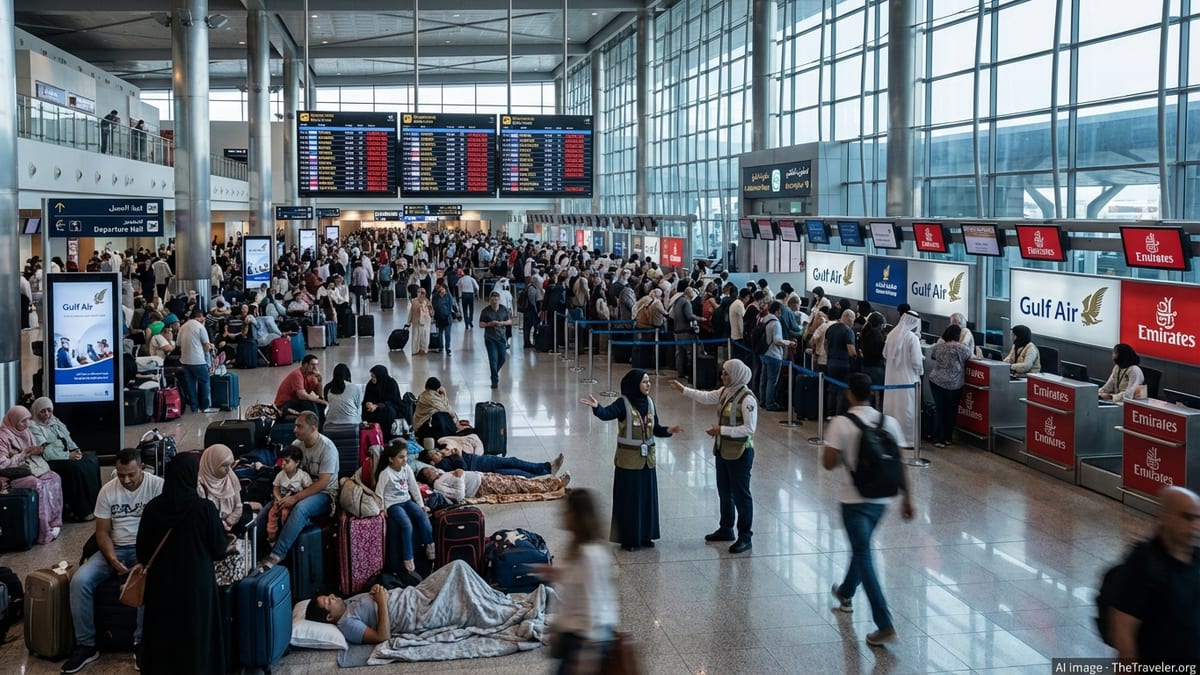
Extended cancellations reflect volatile security backdrop
Publicly available airline advisories and regional aviation updates indicate that both Emirates and Etihad are maintaining a cautious stance on services to Kuwait and Bahrain, extending previously announced cancellations instead of rapidly restoring full schedules. The latest updates point to a continuation of reduced or suspended operations on certain rotations, rather than a swift return to pre-disruption frequencies.
The move follows months of instability affecting Gulf airspace, with Kuwait and Bahrain among the states most exposed to recent tensions linked to the wider Iran-related conflict. Industry analyses describe a patchwork of temporary airport closures, route suspensions and last minute schedule changes across the upper Gulf, resulting in a challenging planning environment for carriers and passengers alike.
Aviation data compiled in mid-2026 shows that while some Gulf airports have gradually reopened, Kuwait’s operations in particular remain constrained, with partial service resumption and heightened security procedures. Bahrain has seen more consistent activity but continues to be listed in several operational bulletins as subject to potential short-notice disruption, which has influenced airline scheduling decisions.
Against this background, Emirates and Etihad have opted to prioritize route stability and risk management, extending cancellations on selected services to Kuwait and Bahrain rather than operating into what analysts describe as an unpredictable operational landscape.
Impact on passengers across the Gulf and beyond
The extended cancellations are reverberating well beyond Kuwait City and Manama. According to published coverage and customer advisories, travelers connecting through the carriers’ hubs in Dubai and Abu Dhabi are seeing disrupted itineraries, particularly those relying on Kuwait and Bahrain as final destinations or regional connection points.
Travel discussion forums and regional news reports highlight a steady stream of rebookings and reroutings, with some passengers shifted to alternative Gulf gateways such as Riyadh or Doha before continuing on to their end destinations. Others have been encouraged to travel on national carriers based in Kuwait or Bahrain where those operators are able to maintain limited services under local constraints.
For travelers originating in Europe, North America, Asia and Australasia, the extended cancellations mean fewer one-ticket options into Kuwait and Bahrain via Emirates and Etihad. Industry observers note that the reduced connectivity could temporarily weaken the role of Dubai and Abu Dhabi as seamless super-hubs for the wider Gulf, especially for business travelers who depend on predictable schedules and short transfer times.
Travel agents and corporate travel managers are reportedly building in longer buffers, encouraging clients with essential trips to Kuwait and Bahrain to opt for routings that allow flexible rebooking or to consider postponing non-urgent journeys until schedules stabilize.
Operational priorities: safety, routing flexibility and fleet use
Operational updates from the Gulf region suggest that safety, airspace availability and efficient fleet deployment are guiding the extended cancellations. Analysts point out that providers of long haul services like Emirates and Etihad must constantly adjust routings around restricted or high risk airspace, with each adjustment affecting crew hours, aircraft rotations and turnaround times.
In the current environment, aviation consultancies describe a complex routing puzzle in which airlines are lengthening some flights to bypass sensitive zones while simultaneously suspending others to avoid over-stretching crews and equipment. Routes into airports that have recently been affected by drone or missile incidents, or where airspace status can shift quickly, are particularly likely to face extended suspensions or sharply reduced frequencies.
By prolonging cancellations on selected Kuwait and Bahrain flights, Emirates and Etihad free up aircraft and crews for more stable routes, helping them preserve broader network integrity. Industry commentary suggests that this approach can reduce knock on disruption elsewhere in their global networks, limiting the number of passengers affected by missed connections and rolling delays.
However, the same strategy concentrates disruption on travelers to and from Kuwait and Bahrain, who must contend with fewer options and a higher likelihood of rebooking, especially on short notice.
Regional aviation recovery uneven and highly conditional
Broader assessments of Middle East aviation recovery in 2026 show a highly uneven picture. Some major hubs across the region have restored a large share of pre-crisis capacity, but reports note that the upper Gulf remains more vulnerable to sudden changes in airspace status and security assessments.
Data from freight and passenger capacity reports indicates that Bahrain’s main airport is operational but continues to face variable restrictions, while Kuwait’s airport is in a phased recovery amid lingering security concerns and infrastructure damage. As a result, international carriers have been slower to fully reinstate services compared with their approach to more stable markets.
Analysts tracking airline schedules point out that the pace of recovery is tightly linked to the perceived durability of any ceasefire or de escalation in the broader regional conflict. Where airport operations and airspace classifications are updated only incrementally, airlines tend to prefer gradual capacity increases over abrupt returns, which can quickly be reversed if conditions worsen.
Within that context, the decision by Emirates and Etihad to extend cancellations to Kuwait and Bahrain is being interpreted by sector commentators as a sign that, despite some improvement in regional conditions, the risk profile for these specific markets remains elevated compared with other Gulf destinations.
What travelers should do if booked to Kuwait or Bahrain
Consumer guidance drawn from airline advisories and travel industry briefings emphasizes preparation and flexibility for anyone booked on Emirates or Etihad flights to Kuwait or Bahrain in the coming weeks. Passengers are being urged to monitor their booking status frequently, as schedules in the affected markets continue to evolve on short notice.
Travel experts recommend that travelers ensure their contact details in airline profiles are current so they can receive rebooking offers or disruption notices quickly. Where possible, passengers may wish to consider fully flexible fares or tickets that allow changes without significant penalties, given the potential for further adjustments.
For essential travel, some corporate travel departments are advising staff to explore alternative routings, including travel via other Gulf or regional hubs served by different carriers, while taking into account any separate security advisories that may apply to those countries. For non-essential trips, postponement remains an option many organizations are considering until operational patterns in Kuwait and Bahrain show greater stability.
While there is no clear timeline yet for a full restoration of Emirates and Etihad schedules to the two countries, aviation reporting suggests that carriers will continue to recalibrate their operations in line with updated security assessments and regulatory guidance. Travelers are likely to see a series of incremental schedule changes rather than a single definitive announcement that services have fully returned to normal.