


More news on this day
Passengers on an Emirates Boeing 777 service from Delhi to Dubai faced an overnight disruption of around 17 hours after a bird strike on arrival from Dubai reportedly damaged the aircraft’s nose cone and forced an extended inspection and repair at Indira Gandhi International Airport.
Get the latest news straight to your inbox!
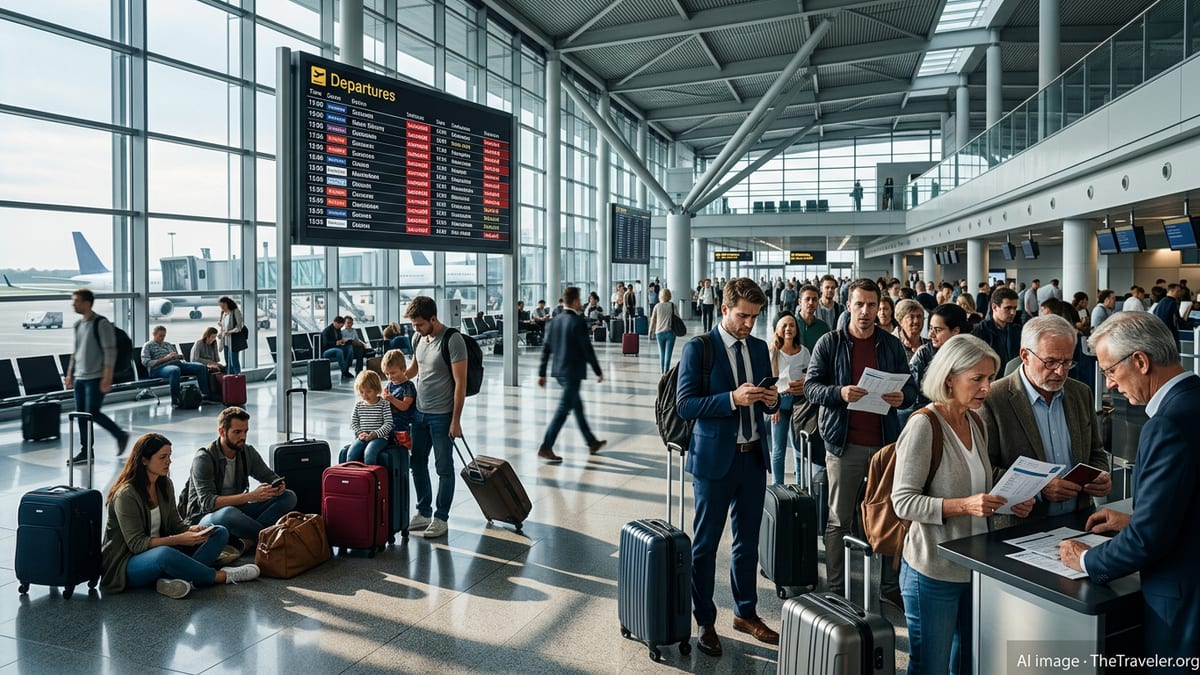
Overnight Delay After Bird Strike in Delhi
According to publicly available flight information and multiple media reports, Emirates flight EK517 from Dubai to Delhi encountered a bird strike while landing at Indira Gandhi International Airport on Saturday, 17 October 2026. The aircraft, a Boeing 777-300 configured for long haul services between the Gulf and India, arrived in the afternoon and was later found to have damage to its nose cone.
The incident occurred near Terminal 3 at approximately 3:10 p.m. local time, based on local coverage referencing airport sources and operational data. The return leg of the service from Delhi to Dubai, also operating as EK517, had been scheduled to depart at 4:25 p.m. but was subsequently held on the ground for detailed checks.
Reports from Indian and international outlets indicate the delay ultimately stretched into the next morning, with departure rescheduled for around 7:00 a.m. on Sunday, 18 October. That created an overnight wait of roughly 14 to 17 hours for passengers who had already checked in at Delhi, depending on their original arrival at the airport.
Information compiled from news coverage notes that the Boeing 777-300 involved was carrying around 357 people on the inbound leg from Dubai, including passengers and crew, though the number of travelers booked on the return sector from Delhi has not been specified in public statements.
Emirates Response and Passenger Support Measures
Emirates issued a public statement acknowledging that EK517 from Dubai to Delhi on 17 October encountered a bird strike on arrival, and that the return flight from Delhi to Dubai would be delayed while the aircraft underwent necessary repairs. The airline described the disruption as a safety-driven decision and stated that it would not operate the aircraft until inspections and any required maintenance were completed.
Across multiple reports, the carrier is described as arranging hotel accommodation for affected passengers in Delhi. Travelers were moved off the damaged aircraft and advised that the revised departure time would be early on Sunday morning, with shuttle transfers and overnight lodging organized for those who could not or chose not to return home.
Emirates’ general disruption guidance indicates that, when a flight is delayed or rescheduled for operational reasons, customers are usually offered rebooking on the next available service, hotel stays where necessary, and assistance at the airport through local ground teams. In this case, public information suggests the airline followed that framework by confirming a new departure time and providing overnight accommodation.
There has been no indication in available reporting of injuries to passengers or crew as a result of the bird strike. Coverage instead focuses on the extended delay, the visible damage to the forward fuselage area, and the logistical impact on travelers who had expected to arrive in Dubai on Saturday evening.
What Bird Strikes Mean for Airline Operations
Bird strikes are a known hazard in commercial aviation, particularly at low altitudes during takeoff and landing. In this incident, the collision reportedly affected the nose cone, a non-pressurized radome section at the front of the aircraft that protects weather radar and other equipment. Even when damage appears localized, airlines typically keep aircraft out of service until structural checks are completed.
Published coverage of the Delhi event notes that the aircraft was taken out of rotation immediately after landing so that engineering teams could inspect the nose section and surrounding systems. For long haul jets like the Boeing 777-300, such work often involves detailed non-destructive testing and, where necessary, component replacement, which can easily extend into many hours.
In India’s capital, bird activity near the airport has been a recurring concern. Local reporting over the past two years has highlighted a rising number of bird strike cases around Delhi’s main runway corridors, with waste disposal practices and food waste in surrounding neighborhoods cited as contributing factors. The Emirates event adds to that pattern, illustrating how even a single strike can disrupt hundreds of travelers and a tightly timed international schedule.
Aviation safety data shows that the vast majority of bird strikes do not result in serious accidents, but can cause significant damage to aircraft structures, engines, or cockpit glazing. As a result, carriers frequently accept major delays, diversions, or cancellations when any uncertainty exists about the condition of a jet following a strike.
Impact on Delhi–Dubai Travellers and Future Bookings
The Delhi to Dubai corridor is one of Emirates’ busiest India routes, linking Indira Gandhi International Airport with the airline’s Dubai hub, where passengers connect onwards to Europe, North America, Africa, and East Asia. A prolonged delay on EK517 therefore affected not only origin and destination travelers, but also those holding onward connections from Dubai on Sunday morning.
Publicly available information on Emirates’ disruption policies indicates that passengers facing missed connections because of such an operational delay are typically rebooked on later flights at no additional fare, subject to seat availability. Travelers whose plans were significantly affected may also seek refunds or make use of ticket flexibility options where permitted by the fare conditions.
Travel industry coverage notes that in situations like this, travelers are generally advised to monitor the live flight status page for their service, ensure contact details are up to date in the booking so they can receive notifications, and allow extra time for re-screening and boarding when a new departure time is announced. For long overnight delays, passengers should also retain boarding passes and hotel receipts if they intend to pursue any compensation available under local regulations or airline policies.
There has been no official indication from publicly accessible sources that Emirates plans to alter its Delhi schedule or equipment on the route as a result of the bird strike. The event appears to be treated as an isolated operational disruption rather than a structural change in service between the two cities.
What This Means for Passengers Flying Through Delhi
For travelers planning to pass through Delhi in the coming weeks, the EK517 disruption underscores the value of building some flexibility into itineraries, particularly when connecting to long haul services in Dubai or beyond. While events like bird strikes are relatively rare and inherently unpredictable, their operational consequences can be substantial when they do occur.
Experts regularly recommend booking longer connection windows when possible, especially during peak travel periods or on routes known for congestion and weather-related delays. Comprehensive travel insurance that clearly covers missed connections and overnight delays can also help offset unexpected costs for accommodation and meals when airlines are unable to provide them.
Passengers flying Emirates from Delhi can track real-time flight status through the carrier’s official digital channels, which list departure times, gate changes, and disruption advisories. Publicly available guidance from the airline emphasizes the importance of checking these resources before leaving for the airport, particularly after an event such as a technical inspection or severe weather.
As operations normalize following the bird strike, the EK517 incident is likely to be remembered by those affected as a difficult overnight wait in Delhi. For the broader traveling public, it serves as a reminder that even well-established routes between major hubs remain vulnerable to sudden, safety-driven changes and that preparedness can help reduce the stress when schedules unexpectedly unravel.