


More news on this day
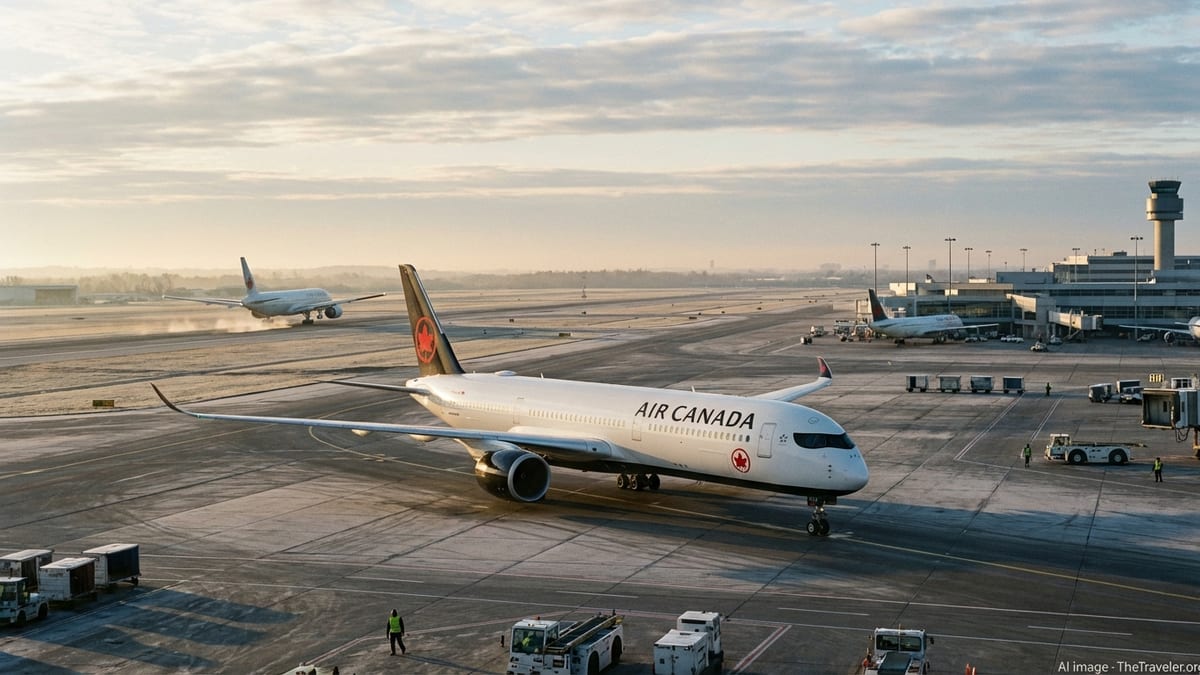
Travel between the United Arab Emirates and Germany is set for an upgrade in June 2026, as Emirates prepares to introduce the Airbus A350 on its busy Dubai–Frankfurt route, promising a quieter, smoother and more comfort focused experience for business and leisure passengers alike.
Get the latest news straight to your inbox!
Strategic Move on a Key UAE–Germany Corridor
Frankfurt is one of Emirates’ most established European gateways, linking Dubai with one of Europe’s largest aviation and financial hubs. Publicly available schedule and fleet planning information for 2026 indicates that Emirates is now aligning its next generation Airbus A350s with this high demand market, marking a transition from older widebody types to a more efficient twin engine aircraft on select frequencies.
The Dubai–Frankfurt sector typically supports a mix of business travellers, corporate traffic connecting to Germany’s industrial regions, and a steady stream of leisure passengers heading in both directions. By assigning A350 capacity to the route from June 2026, Emirates is signaling that it sees sustained demand on this corridor while also using the new aircraft to refresh the product offering in continental Europe.
Aviation industry analyses of Emirates’ A350 rollout suggest that the airline has been gradually shifting the type from regional familiarisation flights to longer haul services as more airframes join the fleet. Adding Frankfurt to the 2026 roster fits that pattern, reinforcing Germany’s role as an anchor market in the carrier’s European network.
Capacity on the Dubai–Frankfurt route in 2026 is expected to remain broadly similar overall, with the A350 incrementally replacing some larger aircraft on specific rotations while maintaining multiple daily options. The change is therefore framed less as a cut in seats and more as a qualitative upgrade in the onboard experience.
Cabin Layout Promises Business, Premium Economy and Economy Enhancements
The Emirates A350 is configured in three classes, featuring a new generation Business Class cabin, Premium Economy and an updated Economy product. The airline’s fact sheets describe a layout of 32 lie flat Business seats, 21 Premium Economy seats and 259 Economy seats, designed to balance comfort with capacity on medium and long haul services.
For corporate travellers between the UAE and Germany, the Business Class cabin is expected to be a key draw. The lie flat seats are arranged in a layout that grants direct aisle access, with larger personal screens, updated inflight entertainment hardware and refined finishes compared with the airline’s older widebodies that have traditionally operated to Frankfurt.
The introduction of Premium Economy on more European routes has been an important part of Emirates’ broader fleet retrofit and renewal programme, and the A350 deployment is set to extend this middle cabin option on the Dubai–Frankfurt sector. Premium Economy typically offers wider seats, extra legroom, upgraded meal service and a differentiated check in and boarding experience compared with standard Economy, appealing to both value conscious business travellers and long haul leisure passengers.
In Economy, the A350’s relatively wide cabin allows for competitive seat width and modern design touches such as improved lighting, larger windows and updated inflight entertainment screens. While pitch and overall density vary by route, industry reports indicate that Emirates is positioning the A350 Economy cabin as an incremental step up in comfort compared with older twin engine jets in its fleet.
Smoother Ride and Quieter Cabin on the A350
Beyond seating, the Airbus A350 platform itself brings technical advantages that are likely to be noticeable on the Dubai–Frankfurt route. The type uses a high proportion of composite materials and advanced aerodynamics, paired with new generation Rolls Royce Trent XWB engines that are designed to reduce fuel burn and cabin noise compared with earlier widebody designs.
Passenger feedback from existing Emirates A350 services in other markets has highlighted the quieter cabin environment and the effect of modern environmental control systems, including improved air filtration and more stable temperature management. These factors are expected to transfer directly to the Dubai–Frankfurt operation, offering a more relaxed atmosphere on a flight that typically runs around six and a half hours.
The A350 is also known for its lower cabin altitude and advanced LED lighting systems, which can be programmed to mirror daylight cycles and support rest on overnight segments. While Dubai–Frankfurt is a relatively moderate length route, these features are likely to be used to make early morning and late night departures more comfortable, particularly for travellers connecting onwards in Europe or Asia.
From an operational standpoint, the aircraft’s efficiency supports Emirates’ long term sustainability objectives. Industry analysis notes that newer generation widebodies such as the A350 offer double digit percentage gains in fuel efficiency over the previous generation of four engine aircraft, which can translate into lower emissions per passenger on busy international routes such as Dubai–Frankfurt.
Connectivity and Schedule Benefits for UAE and German Travelers
The decision to roster A350s onto Frankfurt is also about network connectivity. Frankfurt Airport functions as a major European hub, and the Dubai–Frankfurt link feeds traffic into Germany’s domestic rail and air network as well as into neighbouring countries. The A350’s range and efficiency give Emirates greater flexibility to time departures and arrivals to synchronise with key banks of connections in both Dubai and Frankfurt.
According to published analyses of the airline’s 2026 network, Emirates is using the A350 to fine tune capacity in markets where the combination of premium demand and connection opportunities is strongest. For UAE based travellers, an A350 operated Frankfurt service in June 2026 will mean smoother onward links into Germany and wider Europe, whether through same day flight connections or high speed rail from Frankfurt’s integrated long distance train station.
For passengers originating in Germany, the A350 opens up one stop access through Dubai to a broad range of destinations in Asia, Africa and the South Pacific. The aircraft’s cabin design is intended to make back to back long haul sectors more manageable, particularly for travellers pairing Frankfurt–Dubai with ultra long segments to Australasia or Southeast Asia.
Timings for the A350 operated flights are being used to maintain or improve minimum connection times at Dubai International, a central element of Emirates’ hub and spoke model. Public timetable data points to A350 rotations being slotted into connection rich morning and evening departure waves, supporting tight but workable transfers for both inbound and outbound itineraries.
Part of a Wider A350 Rollout Across the Emirates Network
The June 2026 debut of the A350 on the Frankfurt route is one piece of a broader deployment strategy. Emirates has been gradually expanding A350 operations across its network since the type’s entry into service, adding destinations in Europe, the Middle East, Africa, Asia and Australasia as additional aircraft are delivered.
Industry reports published in 2025 and 2026 highlight that Emirates has ordered a substantial number of A350 900s, with deliveries scheduled through the mid 2020s. The airline has been using the new type to launch or upgrade services to cities such as Copenhagen, Cape Town, Montreal and Adelaide, while also consolidating A350 operations on selected routes in the Middle East.
By positioning Frankfurt within this growing list of A350 destinations, Emirates is reinforcing the importance of the German market in its long term planning. The move complements the presence of other next generation widebodies in Germany, where local carriers and Gulf competitors have also been refreshing fleets on key intercontinental routes.
For travellers watching aircraft assignments closely, the presence of the A350 on Dubai–Frankfurt services in June 2026 signals that the route is moving into the next phase of Emirates’ fleet evolution. As more A350s arrive, the balance between older and newer aircraft on UAE–Europe links is expected to tilt steadily towards the latest generation, reshaping the in flight experience on one of the world’s busiest intercontinental corridors.