


More news on this day
The United States has issued a worldwide travel caution, urging its citizens across all regions to exercise increased vigilance as spiraling tensions in the Middle East raise the risk of attacks, airspace disruptions and broader instability affecting international travel.
Get the latest news straight to your inbox!
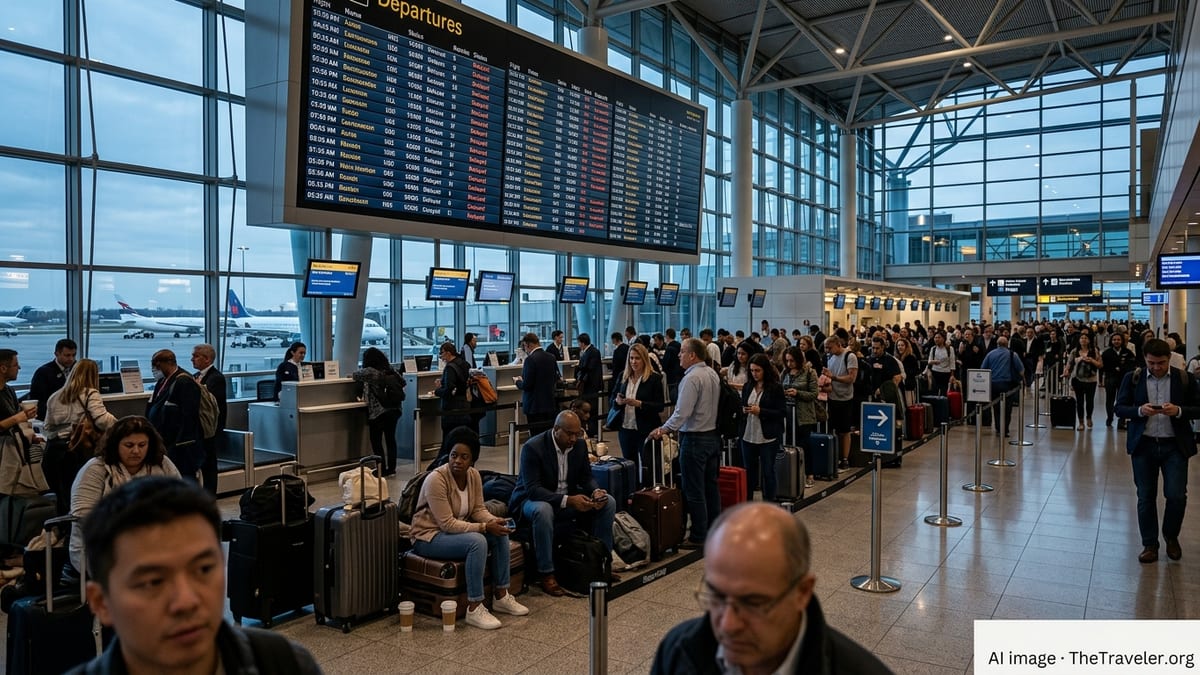
New worldwide caution highlights global security concerns
Publicly available government information shows that the latest worldwide caution advises Americans to be more alert wherever they travel, with particular emphasis on those currently in or transiting the Middle East. The advisory notes that regional hostilities and the activities of armed groups linked to Iran have increased the possibility of attacks on locations associated with the United States and its citizens in multiple regions.
The notice underscores that security incidents in the Middle East can have far-reaching effects well beyond immediate conflict zones. International hubs, popular tourist destinations and locations closely associated with Western interests are described in open-source summaries as potential targets for violence, demonstrations or other disruptions. Travelers are encouraged to remain aware of their surroundings, follow local developments and consider contingency plans if conditions deteriorate.
Recent updates to country-specific pages show that several states in the region remain under elevated advisory levels, including “reconsider travel” or “do not travel” classifications for areas directly affected by conflict. This layered system is designed to sit alongside the broader worldwide caution, giving travelers a more granular picture of risk by destination while reinforcing the message that security conditions are fluid and can change with little warning.
Analysts who track official travel guidance note that such global alerts are not routine and tend to accompany sharp spikes in geopolitical tension or a heightened terrorism threat picture. The latest caution follows a series of escalations involving Israel, Iran and armed groups operating across Lebanon, Yemen, Iraq and Syria, which have raised fears that localized clashes could broaden into a wider regional confrontation.
Middle East flashpoints drive heightened risk assessment
According to recent advisories and security assessments, the primary concern behind the worldwide alert is the evolving conflict arc running from the Eastern Mediterranean through the Gulf. Since the October 2023 Hamas attacks on Israel and the ensuing war in Gaza, the region has seen repeated flare-ups involving Hezbollah along the Israel–Lebanon frontier, Iranian strikes, and attacks by Yemen’s Houthi movement on shipping in the Red Sea and Gulf of Aden.
Subsequent developments, including direct hostilities between the United States and Iran and cross-border fire in Lebanon and Syria, are cited in open reports as reasons for the elevated risk. Government travel pages for Israel, the West Bank and Gaza, Iraq, Lebanon, Syria, Yemen and Iran continue to warn of terrorism, missile and drone attacks, and civil unrest, with several destinations remaining under “do not travel” advisories or strict movement restrictions for official personnel.
Airspace and maritime routes in and around the Middle East have been repeatedly affected by these tensions. Notices to air missions and maritime advisories have highlighted the risks posed by missile launches, drone activity and potential miscalculation in crowded skies and sea lanes. Commercial airlines and shipping companies have announced reroutings and temporary suspensions on some corridors, while official guidance urges operators to exercise extreme caution near conflict zones.
For leisure travelers, this means that itineraries that once involved simple connections through major Gulf or Levant hubs now carry higher uncertainty. Published guidance advises those planning trips to or through the region to monitor flight status closely, remain flexible with routing, and be prepared for last-minute changes as security conditions and airspace restrictions evolve.
What the alert means for American travelers abroad
The worldwide caution does not bar Americans from international travel, but it does raise expectations that travelers take greater responsibility for their safety planning. Public information from the State Department encourages U.S. citizens overseas to stay enrolled in official alert systems, review destination-specific advisories before booking, and identify nearby shelters or safe areas in case of sudden violence or infrastructure disruption.
Travelers are advised to maintain a high level of situational awareness in crowded public places such as transport hubs, tourist attractions, shopping centers, places of worship and large public gatherings. General security advice emphasizes avoiding demonstrations or protests, which can shift quickly from peaceful to confrontational, and maintaining a low profile in areas where anti-U.S. sentiment or political tensions are running high.
Insurance and contingency planning are also gaining prominence in expert commentary. With published information warning of possible airport closures, airspace shutdowns and curfews in some Middle Eastern states, travelers are urged to consider flexible tickets, expanded travel insurance that covers security events, and backup plans for accommodation and onward travel. Those with underlying health conditions or limited mobility are being cautioned to weigh carefully the implications of potential evacuations or prolonged disruptions.
Families and business travelers are increasingly turning to destination risk analysis and crisis-response services offered by private firms, universities and multinationals, many of which base their internal guidance on the same open-source travel advisories now in effect. This has led some organizations to defer or cancel nonessential trips to higher-risk parts of the Middle East while permitting travel to nearby states under stricter review and with reinforced safety protocols.
Knock-on effects for airlines, cruise lines and tourism hubs
The global alert comes at a time when international tourism was in the midst of a strong rebound, and industry observers say the Middle East tensions are creating new headwinds. Aviation data and airline statements suggest that some carriers have reduced frequencies or adjusted routings around conflict-affected airspace, lengthening flight times between Europe, Asia and Africa and raising operating costs.
Major transit hubs in the Gulf and Eastern Mediterranean remain operational, but reports indicate that they are navigating a more complex risk environment. Flight diversions, last-minute rebookings and occasional ground holds when missile or drone threats emerge can ripple across global schedules, affecting passengers with no final destination in the region. Airlines are generally offering waivers or flexible rebooking policies when official advisories or security incidents significantly disrupt operations.
The cruise and luxury tourism sectors are also feeling the impact. Some cruise lines have revised itineraries to avoid Red Sea ports and Eastern Mediterranean stops nearest to conflict areas, substituting alternative destinations or repositioning ships entirely. Popular winter-sun destinations in North Africa and the Gulf continue to market themselves, but travel experts note that some visitors are postponing bookings while they watch how regional dynamics unfold.
International hotel groups and tour operators are closely tracking official travel advisories, adjusting staffing levels, security provisions and marketing plans in response. While many Middle Eastern destinations far from active front lines remain open and eager to welcome guests, the worldwide caution is prompting travelers to ask more detailed questions about local security measures, medical facilities and evacuation options before committing to trips.
Practical steps for travelers navigating the new landscape
Security specialists and travel planners point to a set of practical steps that can help individuals navigate the current environment more safely. These include closely reviewing the latest country-level advisories before departure, registering with official alert services when available, and sharing itineraries and contact information with trusted family or friends back home.
Travelers are encouraged to keep identification and essential documents easily accessible, maintain charged mobile devices with offline maps, and carry backups of important records. Open guidance also recommends having enough local currency and basic supplies to manage temporary sheltering in place if movement is restricted by curfews, checkpoints or sudden unrest.
Those with itineraries that include the Middle East are advised to confirm transit rules and any special security procedures in advance, particularly when connecting through airports that have previously experienced drone or missile alerts. Keeping plans flexible, allowing extra connection time, and maintaining awareness of regional news can reduce stress and help travelers respond quickly if airlines or local authorities adjust operations.
For now, the worldwide caution serves as both a warning and a planning tool. It signals that while global travel remains possible, the intersection of Middle East tensions, terrorism risks and geopolitical uncertainty requires a more deliberate approach, with American travelers urged to stay informed, prepared and ready to adapt as conditions evolve.