


More news on this day
Air Canada is stepping up cancellations on routes between Canada and the United States and has issued disruption warnings tied to six major hubs, signalling a difficult stretch ahead for transborder travelers as fuel prices, demand shifts and operational pressures converge.
Get the latest news straight to your inbox!
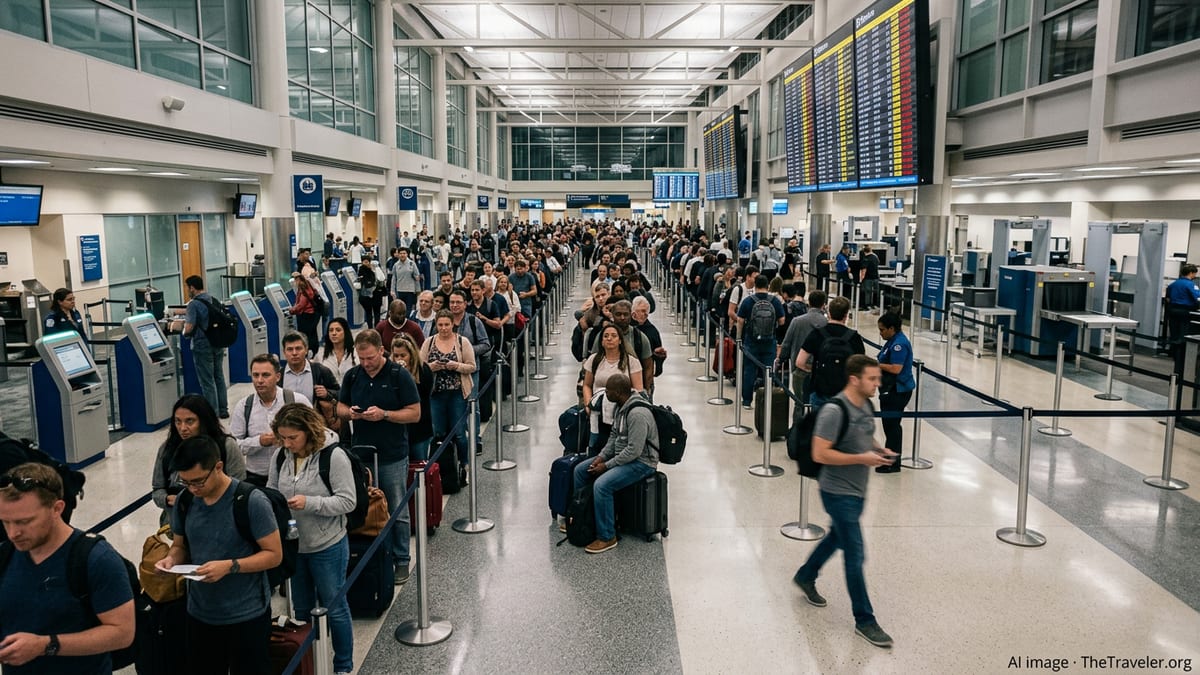
Warnings Extend Across Six Key Hubs
Recent updates to Air Canada’s daily travel outlook and public reporting from multiple outlets indicate that the carrier has expanded its list of U.S. routes facing disruption, while also flagging six key hubs where conditions are expected to be particularly challenging. These hubs include major Canadian gateways with heavy transborder traffic as well as large connecting airports in the United States that feed long haul services.
The warnings focus on increased likelihood of same day cancellations and schedule adjustments affecting passengers traveling through these hubs, especially on flights linking secondary U.S. cities with Canadian connection points. Publicly available information points to a mix of planned capacity cuts and short notice operational cancellations, creating an uneven experience for travelers depending on route and travel date.
Industry coverage suggests that Air Canada’s hub level alerts mirror a broader pattern in North American aviation, where airlines preemptively thin schedules at congested airports in order to stabilize operations. For passengers, the immediate impact is fewer nonstop options, tighter rebooking windows and a higher risk that an initial delay in one hub will cascade into missed connections in another.
While the airline continues to stress that safety and network integrity remain its primary objectives, the escalation of warnings around six hubs underlines how exposed transborder flying has become to both cost pressures and day to day operational constraints.
Cancellations Intensify on Transborder Routes
Air Canada has already confirmed a series of route suspensions and schedule reductions linking Canadian cities with U.S. destinations, and current reporting indicates that the pace of cuts has quickened over the early summer period. Several routes connecting major Canadian hubs with mid sized American cities have been removed from schedules or curtailed earlier than planned, reducing daily frequencies and eliminating some nonstop options entirely.
In practical terms, the increased cancellations mean that some U.S. bound travelers who previously could rely on a single nonstop flight must now route through one or more hubs, often with longer travel times and fewer backup options if something goes wrong. When a flight does cancel, available data shows that rebooking is increasingly channeled through the largest hub airports, adding to congestion there even as smaller routes are trimmed.
Travel industry analysts note that preemptive cancellations can sometimes reduce the likelihood of widespread day of travel chaos by allowing airlines to reposition aircraft and crews in a more controlled way. However, the latest wave of cuts at Air Canada signals that these are not only tactical weather or one off disruptions, but part of a strategic resizing of the U.S. network that travelers will feel for months.
For regular cross border flyers, the shift is particularly noticeable on business oriented routes and seasonal leisure services, where previously reliable midday or evening options have been consolidated into fewer time slots, raising the stakes if the remaining flights do not operate as planned.
Fuel Costs and Weak Demand Shape Strategy
Published coverage in Canada and the United States highlights soaring jet fuel prices and softer transborder demand as two of the main forces behind Air Canada’s evolving strategy. Reports describe how the carrier has labeled several Canada U.S. routes as no longer economically feasible after fuel costs surged in the wake of geopolitical tensions, especially on services with lower load factors.
High fuel prices hit longer and thinner routes particularly hard, making it difficult to justify operating flights that are not consistently full. At the same time, transborder demand has not returned evenly across the network, with some U.S. destinations seeing slower recovery or increased competition from low cost carriers, further squeezing yields on certain city pairs.
As a result, Air Canada has moved to concentrate capacity on routes where demand is strongest and where connections feed into its long haul network. This means prioritizing trunk services between major hubs while scaling back on flights that primarily serve as point to point links or niche connection flows. The pattern is evident in recent decisions to end or shorten seasonal links to specific U.S. cities, even during what would traditionally be peak travel periods.
For travelers, the economic logic behind these cancellations translates into a more consolidated web of options, with fewer direct links and more reliance on a smaller number of heavily used hubs. While this can improve efficiency for the airline, it increases vulnerability for passengers when irregular operations hit those same hubs.
Operational Pressures Add to Disruption Risk
Alongside fuel and demand dynamics, operational factors across North America are adding another layer of complexity to Air Canada’s U.S. flying. Publicly available information from aviation authorities and air navigation providers points to ongoing constraints linked to air traffic control staffing, weather volatility and ground handling capacity.
In the heavily trafficked airspace covering the northeastern United States and southern Ontario and Quebec, even modest weather systems can trigger ground delay programs and flow restrictions that ripple through Canadian and U.S. hubs alike. When that happens, airlines often respond by consolidating flying, cancelling select frequencies in advance and prioritizing aircraft and crews for higher volume services.
Reports on recent travel periods also highlight how tight staffing in specialized roles such as deicing, ramp operations and maintenance can limit an airline’s ability to recover from disruptions quickly. For an interconnected network such as Air Canada’s, a shortage at one station can force last minute cancellations that affect passengers far beyond the original airport.
These operational realities help explain why Air Canada is issuing more explicit warnings around six hubs rather than only adjusting individual flight times. Concentrating alerts at key nodes of the network underscores where the risk of rolling delays and cancellations is highest, especially during peak travel days or when weather and airspace constraints collide.
What Travelers Through Affected Hubs Can Expect
With cancellations climbing and hub focused warnings now in place, travelers planning U.S. trips on Air Canada in the coming weeks should be prepared for a more dynamic and less predictable operating environment. Historical patterns and current advisories suggest that schedules on some transborder routes may continue to shift, with late changes possible even after initial booking.
Passengers connecting through the highlighted hubs are likely to encounter fuller flights, tighter connection windows and busier airport terminals as traffic is funneled through a smaller set of core routes. Same day schedule changes, including aircraft swaps and rebanked departures, may become more common as the airline works to keep key long haul and high demand services running.
Travel experts generally recommend building in additional buffer time for connections, especially when itineraries rely on evening departures from U.S. cities feeding into overnight or early morning international flights from Canadian hubs. Flexibility with routing and departure times can also make it easier to accept alternative options if a planned flight is cancelled.
For now, the combination of higher cancellation levels, six hub specific warnings and ongoing economic headwinds points to a transborder landscape where Air Canada’s network will likely remain in flux. Travelers who understand that context, and plan accordingly, may be better positioned to navigate the disruptions that have become an increasingly regular feature of cross border flying.