


More news on this day
Hundreds of stranded holidaymakers in Kashmir finally resumed their journeys on Thursday as a special Northern Railway train carried more than 600 tourists and other passengers from Srinagar to Katra, providing critical relief after days of severe disruption on the Jammu–Srinagar National Highway.
Get the latest news straight to your inbox!
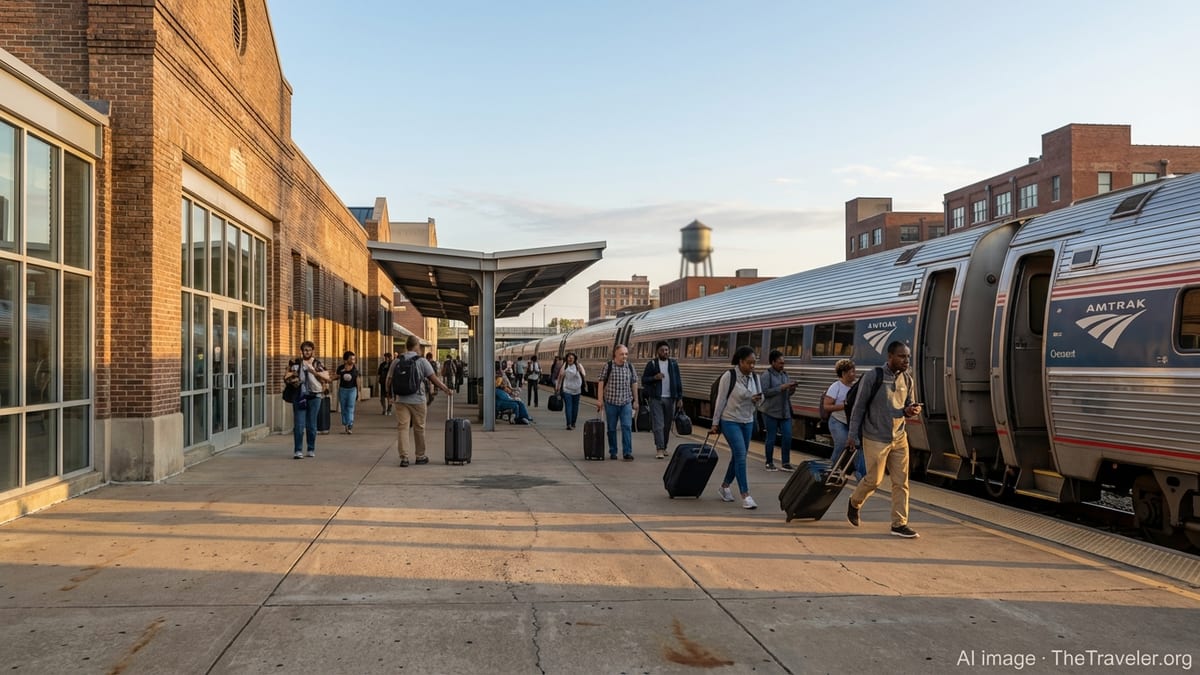
Emergency Rail Link Activated Between Srinagar and Katra
Reports from regional outlets indicate that Northern Railway operated a one-off special service between Srinagar and Shri Mata Vaishno Devi Katra on July 23, after continuous heavy rainfall triggered landslides and shooting stones that cut the main highway link between the Kashmir Valley and the rest of India. The Jammu–Srinagar National Highway, a vital 250 kilometre road corridor, remained closed for a second consecutive day, leaving holidaymakers, pilgrims and local residents stranded at multiple points.
The special train was arranged to move tourists who had completed their stay in the Valley but found themselves unable to exit by road. Publicly available coverage from Jammu and Kashmir suggests that more than 600 passengers boarded the service, which departed Srinagar and traversed the recently completed rail section across the Pir Panjal range to reach Katra, the gateway town for the Vaishno Devi shrine and a key junction for onward trains to the plains.
Indian media reports describe the move as an ad hoc response to mounting travel bottlenecks as the monsoon intensified over the region. The operation drew on infrastructure put in place as part of the Jammu–Baramulla rail project, which has only recently enabled direct train movement across the formidable mountain terrain that historically forced most travellers onto the highway.
Highway Disruptions Leave Tourists and Pilgrims Stranded
This week’s heavy rainfall has once again highlighted the vulnerability of the Jammu–Srinagar National Highway, the only all-weather road officially connecting the Valley with the rest of the country. According to national and local news coverage, repeated landslides, slope failures and road erosion at several stretches forced authorities to halt traffic for safety, building up long queues of vehicles and halting tourist departures at peak summer season.
Travel reports indicate that more than 600 vehicles were stuck at various points along the highway, with many carrying tourists returning from vacations in Gulmarg, Pahalgam and Srinagar, as well as pilgrims heading to or from the Mata Vaishno Devi shrine and the Amarnath Yatra. With no clear estimate for full road restoration and with forecasts pointing to continuing rain, attention quickly turned to rail as the only reliable alternative for large-scale evacuation of visitors.
For travel planners and tour operators, the incident underscores how quickly itineraries across Jammu and Kashmir can unravel when the main highway closes, particularly during the monsoon and winter seasons. Package tours that rely solely on road transfers between Jammu, Katra and Srinagar face significant exposure to weather-related shutdowns, while mixed-mode plans that include rail have gained new relevance.
Rail Corridor Emerges as a Critical Travel Lifeline
The decision to operate the special Srinagar–Katra train reflects the growing strategic importance of the newly operational rail corridor that links the Kashmir Valley with Jammu and the wider Indian network. The line crosses the Chenab Rail Bridge and Banihal tunnels, two engineering landmarks that allow passenger trains to bypass some of the most landslide-prone stretches of the highway.
Recent press releases and news analyses on the Jammu–Baramulla line describe the route as an all-weather backbone for the region, capable of sustaining travel during periods when mountain passes and road sections are forced shut by rain or snow. Although regular services on the corridor are still evolving, the ability to introduce special trains at short notice has already been demonstrated several times in response to weather events and seasonal pilgrimage surges.
The latest operation from Srinagar to Katra provides further evidence of how rail is reshaping access to Jammu and Kashmir’s tourism circuits. For visitors, the availability of a direct train alternative reduces the risk of being trapped by highway closures for days at a time, while for local businesses dependent on tourist flows, it offers a measure of continuity during disruptive weather.
Impact on Kashmir’s Tourism and Pilgrimage Circuits
The timing of the special train is particularly significant for the travel industry, arriving in the midst of a packed summer season that overlaps with the Amarnath Yatra and steady year-round footfall to the Vaishno Devi shrine. Hotels in Srinagar and popular hill resorts have reported strong bookings this year, and the prospect of extended highway closures had threatened to cascade into cancellations and extended stays.
By shifting more than 600 tourists and other passengers in a single operation, the temporary service helped free up accommodation capacity in Srinagar and nearby destinations, while allowing travellers to reconnect with long-distance trains and flights from the plains. Travel commentators in the region note that such interventions can limit financial losses for both visitors and hospitality operators, who might otherwise have to absorb the costs of unplanned extra nights and rebooked journeys.
The episode also reinforces Katra’s role as a multimodal hub for northbound and southbound movement. With direct trains from Katra and Jammu to major Indian cities, once tourists reach the shrine town by rail from Srinagar, they can disperse relatively quickly across the rail network. This flexibility is becoming an important safety valve when weather disrupts either valley flights or the highway.
What Travellers Should Know for Future Trips
For future visitors planning itineraries through Jammu and Kashmir, travel reports around the special train highlight several practical lessons. First, monsoon and winter remain the most disruption-prone periods for the Jammu–Srinagar highway, and travellers whose schedules are tight may wish to factor in the possibility of closures or significant delays.
Second, the expanding rail network across the region now offers more options than in previous years. While special trains like the latest Srinagar–Katra service are announced in response to exceptional circumstances, regular services between Katra, Banihal, Budgam and Srinagar are gradually increasing the baseline level of connectivity. Building at least one rail leg into a round-trip itinerary can provide a vital back-up if road links are suddenly cut.
Finally, the swift deployment of an emergency special train indicates that rail is likely to play an increasing role in contingency planning for the region’s tourism and pilgrimage economy. Travellers who stay informed about rail schedules, potential extra services and weather advisories will be better positioned to adjust plans on short notice, turning what could be a prolonged stranding into a manageable detour through one of India’s most scenic new rail journeys.