


More news on this day
Emirates has expanded its schedule to serve 137 destinations worldwide as airspace restrictions over the United Arab Emirates ease, marking a major step toward normalising long-haul travel after months of disruption across key Middle East corridors.
Get the latest news straight to your inbox!
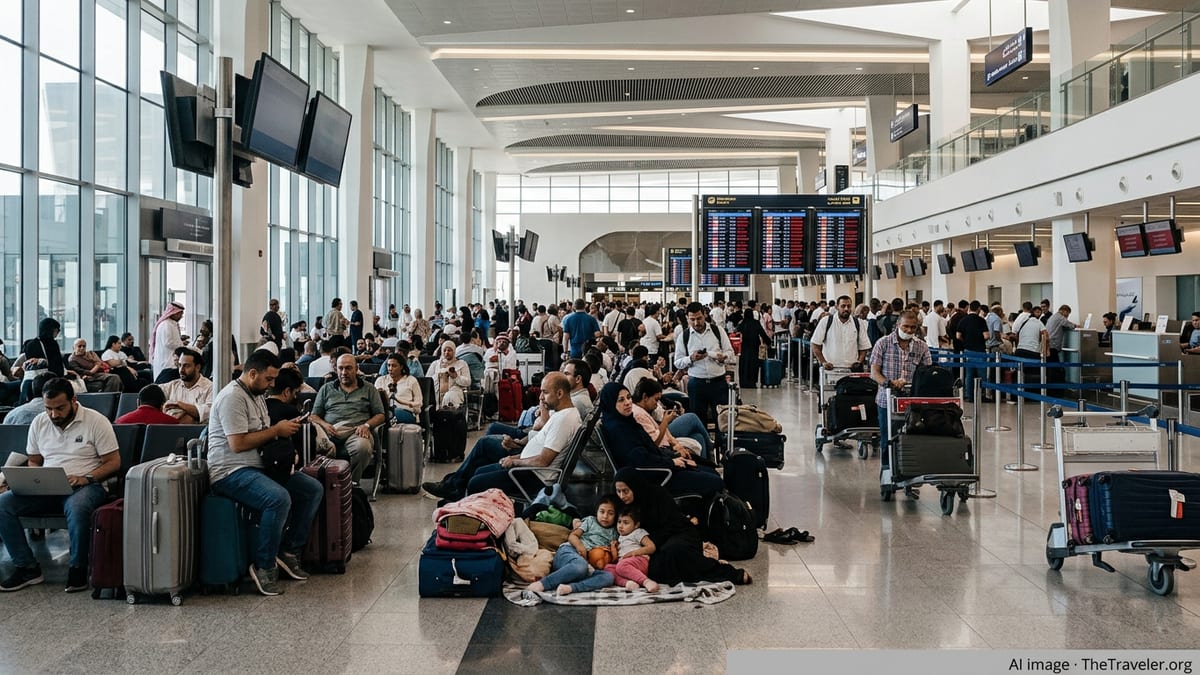
Network recovery gathers pace across six continents
Publicly available information from Emirates and regional aviation coverage indicates that the Dubai carrier is now operating flights to 137 destinations in 72 countries, supported by more than 1,300 weekly services. The rebuilt schedule brings the airline back to around three quarters of its pre-disruption capacity and to 96 to 97 percent of its pre-crisis route map, with only a small number of destinations still paused.
The expanded network spans the Americas, Europe, Africa, West Asia, the Middle East and Gulf, as well as the Far East and Australasia. Analysts note that Emirates has prioritised reinstating high-demand markets and trunk routes that feed its Dubai hub, while progressively returning secondary destinations as airspace and airport constraints ease.
Industry reports suggest the airline’s rapid rebound has been aided by the full reopening of UAE airspace in early May, which removed many of the circuitous routings imposed during the regional conflict. Shorter flight paths have allowed aircraft and crew to rotate more efficiently, supporting a swift rebuild of the schedule and restoring connectivity on popular Europe to Asia and Africa to Asia flows.
Travel data providers tracking flight movements over the past month show a steady climb in daily Emirates departures as suspended routes restart and frequency is added where demand is strongest. The move to 137 destinations signals that the airline is now focused less on crisis response and more on fine-tuning its network for the peak northern summer season.
From deep disruption to near-normal operations
The expansion follows one of the most challenging periods for Gulf aviation in recent years, when regional hostilities and temporary airspace closures forced wide rerouting and cancellations. Aviation trackers report that at the height of the disruption Emirates’ schedule fell sharply, with some long-haul sectors seeing extended block times as flights skirted closed corridors.
Over the subsequent weeks, the carrier adopted a phased restoration strategy. Public travel advisories show that Emirates initially concentrated on re-establishing a core set of destinations, then added cities in waves as operational conditions stabilised. That step-by-step approach appears to have limited further upheaval for passengers, even as schedules were frequently adjusted.
With the latest expansion to 137 destinations, reports indicate that Emirates has now restored almost all of its pre-disruption network, even if frequencies on some routes remain below historic levels. Industry observers say that holding a small buffer in capacity gives the airline flexibility to respond quickly if geopolitical conditions change again.
Operational updates also show that disruption waivers and flexible rebooking options remain in place for many customers whose plans were affected earlier in the year. Travel agencies and corporate travel managers report that these policies, combined with clearer forward schedules, are encouraging travellers to rebook itineraries that were postponed during the height of the crisis.
What the expanded schedule means for global travellers
The broader Emirates network is set to have an immediate impact on long-haul travellers, particularly those connecting between Europe and Asia, Africa and the Americas via Dubai. Travel industry analyses suggest that the return of more non-stop and one-stop options through the hub is helping to reduce total journey times and increase choice on competitive corridors.
With more than 1,300 weekly flights now operating, seat availability is rising on key routes such as London, Mumbai, Jeddah, Johannesburg and major Australian gateways. This is expected to put downward pressure on fares compared with the peak of the disruption, when reduced capacity and longer routings pushed prices higher on several city pairs.
Corporate travel buyers note that the resumption of a more predictable schedule is crucial for planning business trips and events in the second half of 2026. Reliable connection windows through Dubai are seen as particularly important for time-sensitive sectors such as energy, finance and technology, which rely on tight itineraries linking Europe, Asia and Africa.
Leisure travellers are also set to benefit as a wider choice of departure times and routing combinations returns. Tour operators report increased interest in multi-stop itineraries combining Dubai with beach, safari or cultural destinations, using the rebuilt Emirates network to connect regions that were more difficult to reach during the height of the disruption.
Dubai’s hub strategy reinforced as disruption eases
The move to 137 destinations further reinforces Dubai’s position as a major global aviation hub. Business media coverage of the Emirates Group’s latest financial results highlights that the airline’s network strategy remains central to the city’s broader tourism and trade ambitions, drawing transit and destination traffic from across six continents.
As airspace restrictions ease, Dubai International Airport is again serving as a primary bridge between Europe and Asia, as well as between Africa and the Americas. Industry commentators point out that a near-complete restoration of Emirates’ network strengthens the city’s attractiveness for conferences, exhibitions and large-scale events that depend on wide-ranging global connectivity.
At the same time, regional competitors are also rebuilding their schedules as conditions improve, intensifying the contest for passengers and cargo in and out of the Gulf. Aviation analysts observe that Emirates’ early move back to 137 destinations positions the carrier strongly in that race, particularly given its large long-haul widebody fleet and established brand recognition in key source markets.
In the freight market, the airline’s global reach is expected to support trade lanes that were constrained by earlier disruption. Logistics reports note that restored belly-hold capacity on passenger flights is already easing pressure on certain Asia to Europe and Middle East to Africa supply chains, complementing dedicated freighter operations.
Capacity, customer policies and the road back to full strength
Although Emirates now serves 137 destinations, publicly available figures suggest that overall capacity measured in seats and frequencies remains below pre-disruption highs, at around three quarters of typical levels. Industry analysts expect the airline to add further flights on high-demand routes during the coming months as booking trends become clearer.
In the meantime, flexible customer policies continue to play a role in restoring confidence. Travel advisories show that Emirates is still allowing many affected passengers to rebook within specified windows or reroute within the same region, subject to fare conditions and availability. These measures, combined with more stable schedules, are helping to clear the backlog of disrupted journeys.
Market watchers will be looking for signs that the carrier intends to push beyond 137 destinations as geopolitical conditions stabilise and aircraft deliveries support further growth. The airline has previously signalled ambitions to deepen its presence in emerging Asian and African markets, where demand for long-haul travel is expected to rise over the medium term.
For now, the expansion to 137 destinations marks a significant milestone in the region’s aviation recovery. With airspace fully open and most of its global network restored, Emirates is once again positioned as one of the central connectors in international travel, linking cities across the world through its Dubai hub as disruption gradually recedes.