


More news on this day
Travel across Peru and the wider South American region faced fresh disruption as Jorge Chávez International Airport in Lima recorded 21 flight delays and at least five cancellations, with LATAM Peru, Flybondi, Delta Air Lines and JetSMART Peru among the hardest hit carriers operating in and out of the country’s main hub.
Get the latest news straight to your inbox!
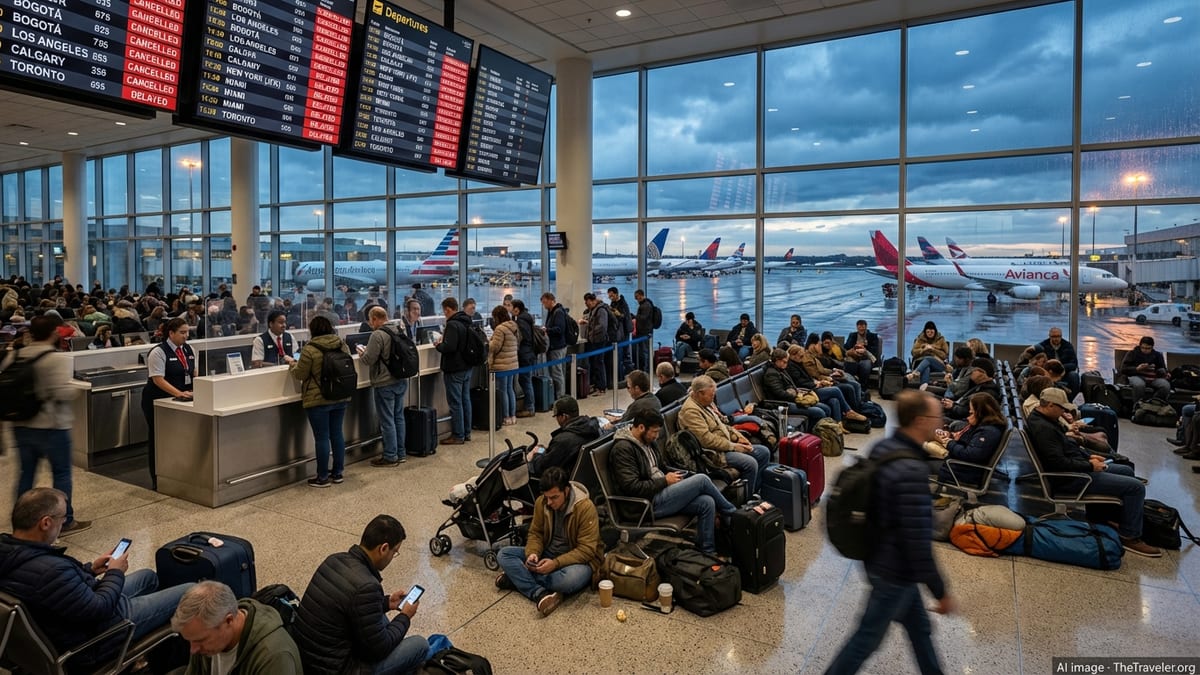
Operational Strain at Peru’s Primary International Gateway
Jorge Chávez International Airport, which serves as Peru’s principal international gateway, experienced a concentrated period of disruption that rippled across domestic and regional networks. Publicly available flight tracking boards for May 22 showed a cluster of delayed arrivals and departures at Lima, with some services pushed back several hours and a handful of flights scrubbed altogether. The pattern pointed to bottlenecks that were felt most acutely by airlines with dense schedules at the airport.
LATAM Peru, which uses Jorge Chávez as its main hub, appeared prominently across delay boards on affected routes linking Lima to major South American cities such as Buenos Aires, São Paulo and Santiago, as well as key domestic connections to Cusco, Arequipa and Iquitos. Codeshare services marketed by partners including Delta Air Lines and Iberia but operated by LATAM Peru also appeared with extended delay annotations, compounding the sense of strain for passengers whose itineraries relied on tight onward connections.
Low cost and ultra low cost carriers, including JetSMART Peru and Argentina based Flybondi, also saw their operations from Lima hit by irregular timings. JetSMART Peru, which has positioned itself as a growing player in Peru’s domestic and near regional markets, depends heavily on high aircraft utilization and quick turnarounds at Jorge Chávez. Any disruption at the hub therefore has a rapid knock on effect across its network. Flybondi’s links between Lima and leisure focused destinations in Argentina were similarly exposed to the wave of delays and cancellations.
While individual flight histories show a mix of minor and more pronounced delays, the cumulative total of 21 delayed services and at least five cancellations over a relatively tight time window translated into hours of additional waiting, missed onward connections and rebookings for passengers at one of South America’s key connecting airports.
Weather, Congestion and a Transitioning Airport Infrastructure
Reports from local media in Peru point to a combination of adverse weather and operational congestion as catalysts for the latest round of disruptions. Coverage of recent conditions highlights that low visibility and challenging weather patterns can quickly affect traffic between Lima and high altitude cities such as Arequipa and Cusco. On days when clouds and wind complicate approaches and departures, cascading delays can build rapidly across the country’s concentrated air corridor.
The disruptions also come at a moment of significant transition for Jorge Chávez International Airport itself. The Lima hub is in the midst of a multi year expansion, including the development and phased opening of a new terminal complex known as Nuevo Jorge Chávez. Official advisories and airline communications indicate that carriers have gradually shifted operations into new facilities, with May 2025 marking a major milestone in the transfer of all flights to the modernized terminal.
Such large scale infrastructure changes are typically accompanied by an adjustment period, with new procedures, layouts and resource allocations needing time to bed in. Information made public by airport stakeholders and airlines acknowledges that some teething issues were expected during the early operational phases, and the recent spike in delays will likely renew scrutiny of how resilient the new setup is when adverse weather or peak traffic coincide.
Travel forums and passenger accounts in recent months have also described longer than usual processing times at immigration and security during busy banks of international arrivals, which can compound the impact of late flights. When several widebody and narrowbody services land in close succession, queues lengthen, aircraft parking stands turn over more slowly and knock on effects can push departure times beyond their scheduled slots.
Airlines Most Affected: LATAM Peru, Delta, Flybondi and JetSMART Peru
Among the airlines operating through Lima, LATAM Peru bore a large share of the disruption simply by virtue of its scale at Jorge Chávez. Published network information shows that the carrier connects Lima with dozens of international and domestic destinations, underpinning its role as Peru’s de facto flag carrier and a central pillar of the wider LATAM group. When its hub schedule is unsettled, connecting banks to cities across South America and beyond can be thrown off balance, resulting in re timed or canceled flights.
Delta Air Lines, a strategic partner of LATAM, saw several of its codeshare flights between Lima and other South American gateways logged with delays as well. Flight tracking data indicates that routes marketed under Delta numbers but flown by LATAM Peru from Lima to cities such as São Paulo, Miami and New York experienced schedule deviations in the period leading up to and including May 22. For passengers relying on smooth connections from regional feeders onto long haul services, these irregularities added uncertainty to already complex itineraries.
Low cost operators have not been spared. JetSMART Peru, headquartered at Jorge Chávez, runs a portfolio of domestic and near regional flights that are particularly sensitive to quick turnarounds and consistent slot availability. Public timetables and route maps underline its focus on high frequency point to point connections from Lima to cities such as Arequipa and other Andean and coastal destinations, magnifying the operational impact when the hub airport slows down.
Flybondi, an Argentine ultra low cost carrier that has expanded across regional leisure routes, has built up its presence between Lima and tourist hotspots in Argentina. These thinner routes typically operate with fewer daily frequencies and less redundancy, so a single cancellation or multi hour delay can have disproportionate effects on both passenger travel plans and aircraft rotations throughout the day.
Implications for Passengers and Regional Connectivity
The latest disruptions at Jorge Chávez underscore the vulnerability of Peru’s aviation system to disturbances at its primary hub. For many travelers, particularly those flying from secondary cities within Peru or neighboring countries, Lima is an obligatory transit point on the way to long haul destinations in North America and Europe. When the hub encounters a wave of delays and cancellations, there are limited alternative routings that avoid the capital, and the knock on consequences for tourism, business travel and cargo can be substantial.
Publicly available travel advisories and airline guidance increasingly recommend that passengers allow greater buffer times when planning connections through Lima, particularly during peak travel seasons or in periods of unsettled weather. For travelers heading to high demand destinations such as Cusco or returning to hubs in the United States and Europe, overnighting in Lima between flights is often suggested as a way to reduce the risk of missed long haul departures caused by domestic delays.
The recent difficulties also highlight the importance of real time information for passengers using Jorge Chávez. Airlines and the airport operator emphasize digital channels and mobile applications as primary tools for checking flight status and gate information. In an environment where a single weather system or ground handling bottleneck can disrupt dozens of flights in quick succession, timely updates are central to managing expectations and allowing travelers to adjust plans, seek rebooking options or modify onward connections.
For Peru’s broader connectivity ambitions, consistent and predictable performance at Lima will be critical. Government communications and industry analyses describe plans to position Jorge Chávez as a leading regional hub, with additional routes and frequencies scheduled over the coming months. The success of that strategy will depend not only on expanded infrastructure and new destinations but also on the airport’s capacity to absorb operational shocks without triggering widespread travel chaos across partner airlines’ networks.
Outlook as Lima Pushes to Become a Regional Hub
Despite the latest bout of disruption, strategic plans for Jorge Chávez point toward continued growth in both passenger numbers and network breadth. Recent updates from Peru’s transport authorities and airport stakeholders highlight that Lima now connects to close to 50 international destinations, served by nearly 30 airlines, with more routes and frequencies expected in the Southern Hemisphere winter and into 2027. Carriers from Europe, North America and across Latin America are slated to increase capacity as the expanded terminal comes fully online.
Industry observers note that such rapid expansion will demand parallel investment in air traffic management, ground handling and passenger processing systems to prevent recurrent episodes of congestion driven delays. The experience of other regional hubs suggests that finely tuned coordination between airline schedules and airport resources is essential when traffic levels push higher and new entrants compete for peak hour slots.
For airlines like LATAM Peru, JetSMART Peru, Flybondi and global partners such as Delta, the performance of Jorge Chávez will continue to shape their competitive positioning in the South American market. On time reliability is a key factor for both business travelers and tourists choosing between competing itineraries, and sustained periods of irregular operations could influence how carriers design future schedules and where they choose to add capacity.
In the short term, passengers planning trips through Lima are likely to face a more volatile operating environment, with the possibility of additional days characterized by clusters of delays and cancellations similar to the recent episode that affected 21 flights and at least five services that never took off. How effectively airport operators and airlines manage these pressures will go a long way toward determining whether Jorge Chávez can deliver on its ambition to operate as a stable, high performance hub for Peru and the wider region.