


More news on this day
Passengers aboard Endeavor Air flight 9E5164 experienced an unexpected diversion to Dothan Regional Airport in Alabama, drawing attention to how regional carriers manage operational disruptions and passenger care when flights cannot continue as planned.
Get the latest news straight to your inbox!
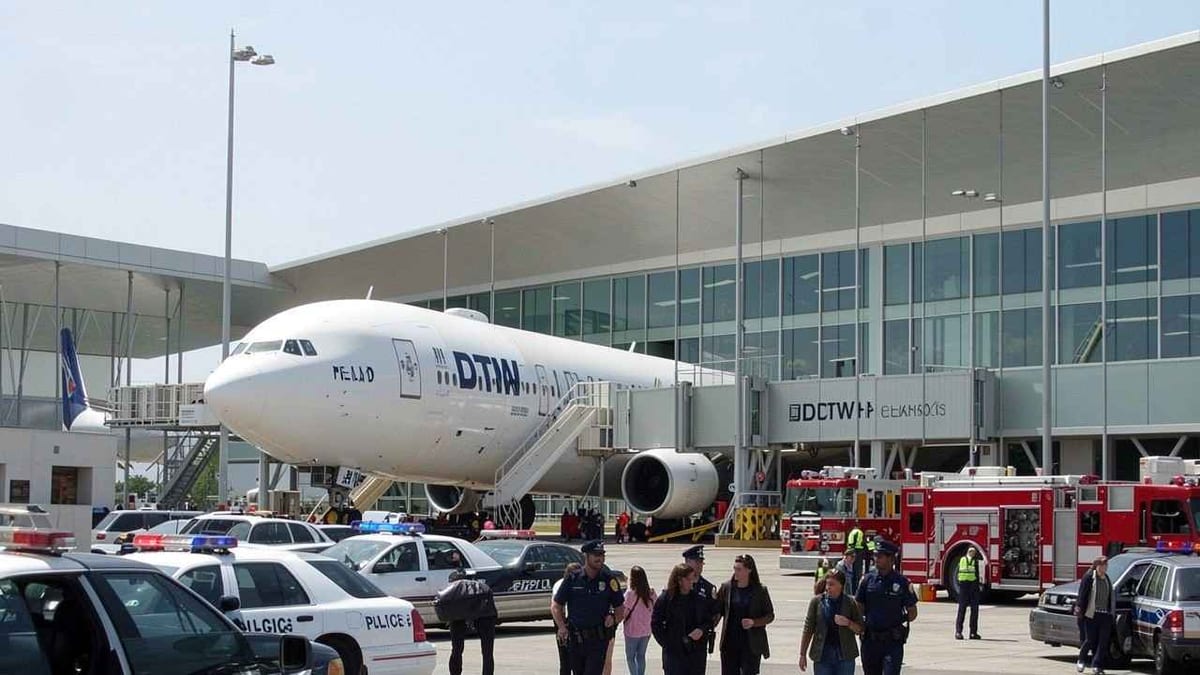
Regional Delta Connection Service Involved in Diversion
Flight 9E5164 is operated by Endeavor Air under the Delta Connection brand, part of a network of regional services that link smaller communities to larger hubs. Publicly available scheduling data indicates that Endeavor Air regularly operates Canadair Regional Jet aircraft on routes serving Dothan Regional Airport, a nonhub facility in southeast Alabama.
Dothan Regional Airport, identified by the code DHN, typically handles a limited number of daily commercial departures and arrivals, largely focused on connectivity to Atlanta. The diversion of a flight such as 9E5164 into Dothan therefore stands out more than a comparable event at a major hub, simply because the local schedule is relatively light and aircraft movements are more noticeable to travelers and airport workers.
While detailed real time technical information about the specific diversion is limited, flight tracking and airport status services show Endeavor Air operations into Dothan under the 9E and EDV codes, confirming the carrier’s presence at the field. This context underscores how a diversion into a small regional airport can quickly reshape daily operations, from ramp handling to passenger accommodation.
In general, regional jets in the CRJ family used by Endeavor Air are well suited to shorter sectors in the southeastern United States, but also have operating limitations that can make them more sensitive to weather conditions, air traffic delays, or weight restrictions than larger mainline aircraft. Those factors often influence diversion decisions when conditions deteriorate en route or at the planned destination.
Dothan’s Role as an Alternate Airport
Dothan Regional Airport occupies a strategic position in the Wiregrass region of Alabama, with runway infrastructure and instrument procedures that allow it to function as an alternate when other southeastern airports are constrained. Federal Aviation Administration documentation shows standardized approach and departure procedures at Dothan, supporting its use by scheduled carriers during reroutes or holding scenarios.
Because Dothan is relatively close to several larger airports in neighboring states, it can serve as a practical diversion point when congestion, storms, or ground stops affect busier fields. Flight listings for Dothan reveal regular activity by Delta Connection services, suggesting that Endeavor Air crews are already familiar with its facilities, which simplifies coordination when a diversion becomes necessary.
For a diverted flight such as 9E5164, using a known station with established ground handling arrangements can reduce the complexity of refueling, catering, and passenger assistance. Even when a diversion is unscheduled, existing relationships with local service providers and familiarity with airport procedures can make it easier to resume the journey or arrange onward transport for travelers.
However, a smaller regional airport also has finite capacity for irregular operations. An unexpected arrival of an additional regional jet may stretch gate availability, ramp space, or staffing, which in turn can influence how quickly passengers are able to disembark, rebook, or access local accommodations.
Why Diversions Happen on Regional Routes
Although precise circumstances for flight 9E5164’s diversion have not been fully detailed in public summaries, typical reasons for such events on regional operations include strong convective weather, low visibility, runway closures, or air traffic control flow programs at the intended destination. Regional jets are often dispatched on high frequency routes where even short disruptions at a hub can cascade into downstream schedule adjustments.
National traffic management advisories frequently highlight periods when thunderstorms or congestion force airlines to accept reroutes, airborne holding, or diversions to maintain safety margins and fuel reserves. In these conditions, a crew may elect to proceed to a suitable alternate such as Dothan when it becomes clear that continued holding is not prudent.
Operational decisions around diversions also reflect crew duty limits, aircraft performance, and the availability of maintenance support. On a tightly timed regional schedule, returning to the original destination after a lengthy delay may no longer be feasible within the crew’s legal duty window, making a diversion and subsequent rescheduling the more practical choice for both safety and compliance.
For passengers, the experience can be highly disruptive, especially when the diversion point is a smaller city with limited ground transport options. However, carriers typically prioritize getting the aircraft safely on the ground with adequate fuel and appropriate weather conditions before addressing the logistical challenges that follow.
Passenger Rights and Airline Obligations
When a flight like Endeavor Air 9E5164 diverts to an alternate airport, passenger rights are shaped primarily by U.S. Department of Transportation regulations and the airline’s own customer commitment documents. Endeavor Air’s published contingency plan for lengthy tarmac delays lays out time limits for keeping passengers on board and standards for providing food, water, and access to restrooms when aircraft remain on the ground without a gate.
Under U.S. rules, carriers must allow passengers to deplane after specified time thresholds during domestic tarmac delays, barring safety or air traffic control limitations. The plan also describes how Endeavor Air coordinates with airports and its mainline partner to secure gate space or remote parking positions, and how it prioritizes communication with passengers during irregular operations.
Compensation for diversions themselves is not mandated in the same way as tarmac delay limits, and outcomes often depend on the cause of the disruption. Weather related diversions are commonly treated as outside the airline’s control, which can limit eligibility for hotel or meal vouchers. In contrast, diversions tied to mechanical issues may lead to more generous accommodations under an airline’s internal policies.
Travelers affected by a diversion are generally encouraged to retain boarding passes and receipts for any out of pocket expenses, then follow up with the marketing carrier, which in this case is Delta Air Lines, to request consideration. Even when formal compensation is not required, airlines may offer travel credits or mileage as a goodwill gesture, particularly when the disruption is lengthy or involves overnight stays.
What the Diversion Means for Future Travelers
The diversion of Endeavor Air flight 9E5164 into Dothan Regional Airport highlights the sometimes fragile nature of regional air connectivity in smaller U.S. markets. With only a handful of daily flights linking Dothan to major hubs, any irregular operation can quickly affect connection windows, baggage transfers, and onward itineraries.
At the same time, the event underscores why regional airports invest in maintaining up to date navigational procedures and infrastructure. By remaining viable alternates for nearby routes, facilities like Dothan can play a critical safety role while also supporting airlines that rely on flexible options during severe weather or airspace congestion.
For passengers, the key lessons from a diversion incident are the importance of leaving buffer time between tight connections, understanding the basic contours of airline tarmac delay and diversion policies, and making sure that contact details in reservations are accurate so carriers can communicate changes quickly. Travel insurance that covers interruption and additional accommodation costs can also mitigate some of the financial impact when diversions extend overnight.
Endeavor Air’s experience operating as a Delta Connection carrier across numerous small and mid sized communities suggests that such diversions, while disruptive, are a known operational risk that airlines plan for in advance. The handling of flight 9E5164 at Dothan will likely become one more data point that informs how the carrier and its partners refine procedures, staffing models, and passenger communication strategies for future irregular operations.