


More news on this day
Flight operations across the United States are facing renewed turbulence this July as powerful thunderstorms, tropical systems and prolonged heat combine to trigger fresh waves of delays and cancellations at major airports.
Get the latest news straight to your inbox!
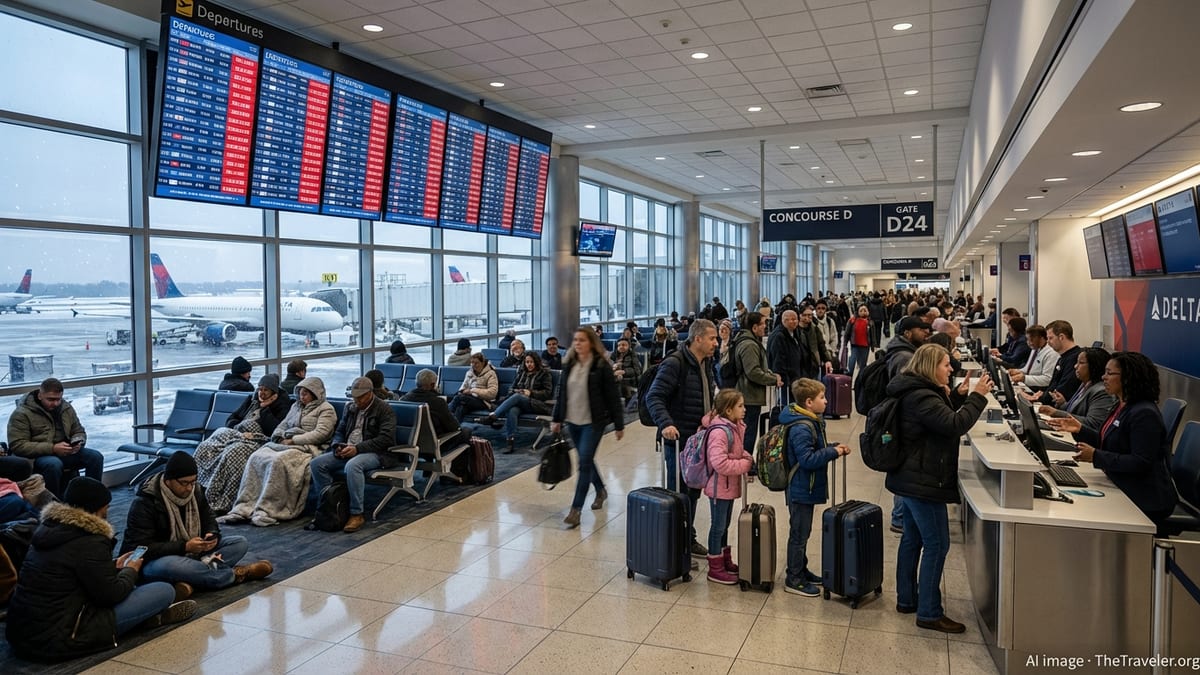
Stormy Skies Slow Traffic at Key Northeast Gateways
Summer thunderstorms are once again constraining operations at major Northeast hubs, with recent air traffic advisories pointing to ground stops and flow restrictions around New York and other corridor airports. Command center bulletins for July show ground stops linked to convective weather affecting John F. Kennedy International and the broader New York airspace, limiting arrivals during peak evening periods and forcing extensive rerouting.
These constraints ripple quickly across the system because the Northeast concentrates dense schedules and a large share of transcontinental and transatlantic departures. When arrival rates at one or two major hubs drop due to lightning and low visibility, aircraft and crews fall out of position, leading to knock-on cancellations at secondary airports hours away from the storms themselves.
Published coverage from airline-focused forums and tracking services indicates that carriers have responded by trimming selected flights in advance on days with the most volatile outlooks, particularly late afternoon and evening departures that are most exposed to slow-moving storm lines. While this approach can reduce last-minute disruption at the gate, it also means some travelers are learning days ahead that their flights are being consolidated or rebooked.
Heat and Thunderstorms Combine Across the South
In the southern United States, extreme heat is interacting with daily rounds of showers and thunderstorms to create challenging operating conditions from Texas to Florida. Recent outlooks from meteorological agencies highlight heat indices consistently above 100 degrees in South Florida and the Gulf Coast, alongside brief but intense storms capable of triggering short-term flight restrictions.
Airlines have issued travel alerts and flexible change policies for customers passing through affected cities, including major hubs in Texas and Florida, as convective activity and low ceilings periodically slow departures and arrivals. Publicly available information from carrier advisories shows waivers in place for mid-July dates tied to thunderstorm risks in South Texas and along the Eastern Seaboard, allowing passengers to adjust plans without change fees when forecasts point to significant disruption.
Operationally, this pattern often results in a patchwork of delays rather than headline-grabbing nationwide shutdowns. Brief ground stops during lightning, reduced arrival rates during heavy rain, and longer-than-normal taxi times in hot, congested ramp conditions can combine to push aircraft and crews past legal working limits. Once that happens, flights that were initially delayed can ultimately be canceled if replacement crews or aircraft are not available.
Tropical Systems Add Uncertainty for Coastal Routes
The Atlantic and eastern Pacific hurricane seasons are adding another layer of uncertainty for carriers and travelers, particularly on coastal and island routes. Early-season tropical disturbances and depressions have already prompted airlines to issue travel waivers for U.S. territories in the western Pacific and for select island destinations, reflecting the potential for strong winds, heavy rain and rapidly changing conditions.
Public Hurricane Center outlooks in July have highlighted areas of disturbed weather capable of developing into tropical systems, prompting aviation planners to prepare rerouting and schedule adjustments several days ahead. When such systems track near key airways or terminal areas, airlines often preemptively cancel or consolidate flights, both to avoid operating in marginal conditions and to ensure aircraft are not left stranded in locations that may later be cut off by deteriorating weather.
For travelers, these tropical influences can result in multi-day disruption windows, especially when storms threaten both origin and destination regions or impact key diversion airports. Even when a system remains relatively weak, persistent bands of thunderstorms and gusty winds can keep arrival rates depressed and contribute to cumulative delays.
Ground Stops and Capacity Limits Magnify Weather Impacts
Underlying many of this summer’s cancellations is the way weather interacts with the U.S. air traffic management system. Federal aviation guidance describes ground stops as a tool used when conditions at a destination airport limit the number of flights that can safely land; during such events, departures bound for the affected airport are held at their origin until conditions improve. As storm activity, low ceilings or strong crosswinds reduce runway capacity, these controls help maintain safety but sharply cut the number of flights that can operate.
Recent air traffic command advisories outline multiple examples in which thunderstorms over the Northeast and Mid-Atlantic required ground stops or reduced arrival rates for several hours at a time. Data published by aviation authorities for recent fiscal years shows that some of the nation’s largest hubs, including airports in New York, Chicago, Denver and Florida, regularly experience dozens of such programs each year, many driven primarily by weather.
Analysts note that today’s schedules leave less margin to absorb disruptions than in previous decades, as airlines strive to make full use of aircraft and crews during peak travel periods. When a thunderstorm complex slows operations at a major hub running near capacity, even a modest reduction in arrival rates can quickly translate into large numbers of delays and subsequent cancellations as the day progresses.
Travelers Face Another Unpredictable Peak Season
The result for passengers is an increasingly unpredictable peak summer travel season, with weather disruptions now layered onto strong demand and already busy schedules. Reports from traveler forums describe extended delays, late-night cancellations after hours of waiting on aircraft or in terminals, and challenges rebooking amid limited remaining seat availability on popular routes.
Consumer advocates advise that, in this environment, travelers treat weather-related disruption as a probability rather than a remote risk during July and August, particularly when flying through thunderstorm-prone hubs or along coastal routes exposed to tropical systems. Flexible itineraries, earlier departures and willingness to connect through less congested airports can help reduce exposure, although even the best-laid plans may still be affected when broad weather systems sweep across multiple regions.
Airlines and aviation agencies continue to publish real-time status boards, travel alerts and planning advisories, but the fast-changing nature of summer storms means conditions can shift within hours. For now, publicly available information suggests that weather will remain a leading driver of U.S. flight cancellations through the heart of the summer period, keeping both carriers and travelers on alert as each new system develops.