


More news on this day
The European Union Agency for Railways has unveiled a detailed information bulletin on ventilation in railway vehicles, offering Europe’s rail operators a common reference for making trains safer against Covid-19 while keeping cross-border travel moving.
Get the latest news straight to your inbox!
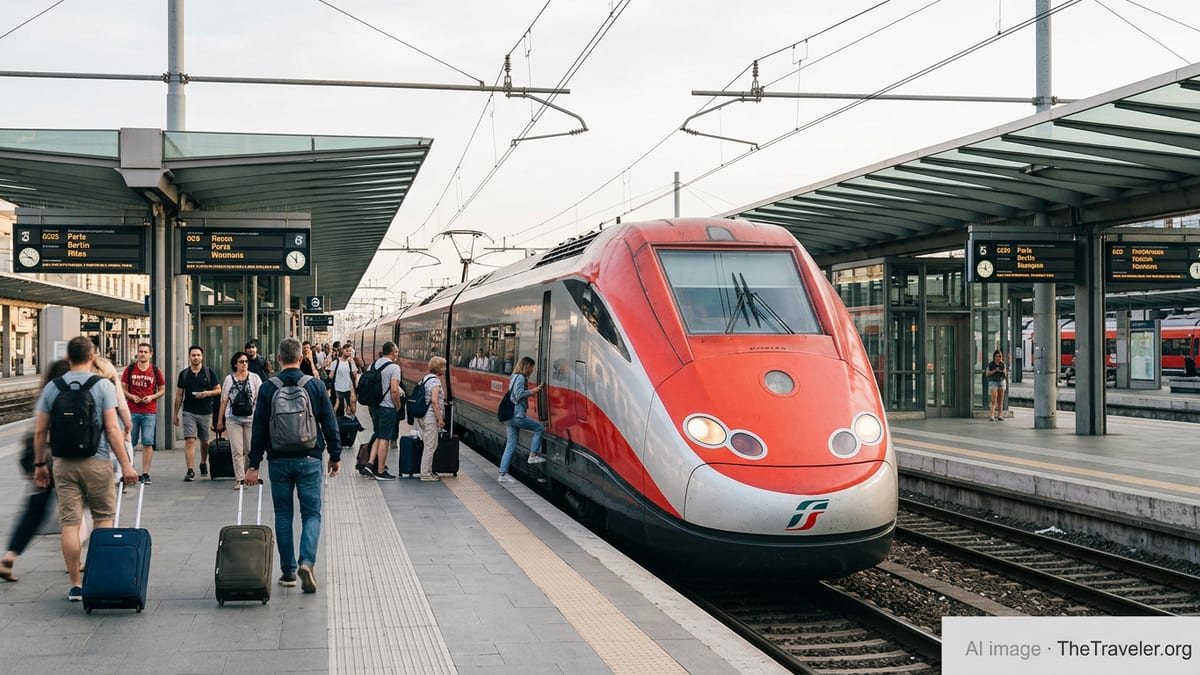
Technical bulletin targets airborne transmission risks on trains
The new manual, presented as a Covid-19 information bulletin on ventilation in railway vehicles, compiles technical advice on how rail operators can use and adjust existing onboard systems to cut the risk of airborne transmission. Publicly available material from the agency describes it as non-binding guidance designed to complement broader health measures, not to replace them.
Rather than proposing major redesigns of rolling stock, the document focuses on operational settings and maintenance practices that can be implemented relatively quickly. It urges operators to prioritise fresh air intake over recirculation wherever possible, and to ensure that filters and ducts are regularly inspected and serviced so that systems perform at their intended capacity.
The bulletin recognises that Covid-19 has fundamentally reshaped expectations around indoor air quality in public transport. By spelling out how train ventilation already functions and how it can be optimised, the guidance aims to close an information gap between rail engineers, health specialists and the travelling public.
According to published coverage, the bulletin is intended to support the wider European effort to keep rail services running safely during health crises, reinforcing rail’s role as a backbone of international mobility.
Natural airflow and HVAC systems under the microscope
Central to the bulletin is a review of the main air distribution concepts used in modern railway vehicles. The guidance distinguishes between natural ventilation through openable windows and doors, forced air systems that rely on fans, and fully integrated heating, ventilation and air conditioning units that manage temperature and air exchange automatically.
Natural ventilation is highlighted as a useful additional measure when operating conditions allow, particularly at stations or in low-speed sections where windows can safely be opened. However, the document notes that natural airflow is inherently variable and cannot be the primary control measure in high-speed or long-distance trains where sealed windows are standard.
For trains equipped with HVAC systems, the manual gives particular attention to how fresh air is supplied, how recirculated air is filtered, and how air is distributed along the length and height of the carriage. Publicly available information indicates that the agency encourages configurations that maximise outside air intake within energy and comfort limits, while using filters to mitigate risks when some recirculation is unavoidable.
The guidance also points out that drivers’ cabs and passenger saloons often have distinct ventilation arrangements. Ensuring that both areas meet comparable standards of air exchange is presented as an important step in protecting onboard staff alongside passengers.
Non-binding guidance designed for quick uptake by operators
The ventilation bulletin is explicitly framed as non-regulatory advice. It does not impose new legal obligations on rail companies but instead offers what the agency describes in public documents as harmonising measures that can be adopted voluntarily across Europe.
This regulatory light touch reflects the urgency of providing usable guidance without waiting for lengthy legislative processes. By presenting practical options rather than hard rules, the manual allows operators to adapt recommendations to national regulations, rolling stock types and local epidemiological conditions.
According to sector analyses, the agency worked with public health expertise and railway stakeholders so that the manual aligns with wider European transport and health protocols developed during the pandemic. That coordination is intended to avoid conflicting messages for operators that manage mixed fleets and cross-border services.
For passengers, the existence of a common reference document is expected to support more consistent messaging about what is happening behind the scenes to make train interiors safer, even as visible measures such as masks and capacity limits evolve over time.
Rebuilding confidence in cross-border rail travel
Covid-19 severely disrupted international rail services, particularly at the height of restrictions when many travellers avoided shared indoor environments. The ventilation bulletin forms part of a broader European strategy to restore confidence in long-distance rail by treating air quality as a core safety parameter alongside traditional concerns such as signalling, braking and fire protection.
Publicly available information from European institutions describes rail as one of the safest and most sustainable modes of transport, and the new ventilation guidance is positioned as reinforcing that reputation in the specific context of respiratory disease. By documenting how air in carriages is refreshed and filtered, the manual gives operators material they can use in passenger communications and staff training.
Travel industry observers note that confidence-building steps are particularly important for night trains and other services where passengers spend many hours in the same carriage. Clear, shared standards on ventilation are expected to make it easier for cross-border operators to promote rail as a credible alternative to short-haul flights on health as well as environmental grounds.
The guidance may also influence future rolling stock orders, as rail companies factor ventilation performance and ease of maintenance into procurement specifications, anticipating that passengers will continue to pay closer attention to air quality even after the acute phase of the pandemic.
Implications for future health preparedness on Europe’s railways
While the bulletin was shaped by the Covid-19 crisis, its authors emphasise in the published material that many of the measures have wider relevance for respiratory infections that spread through aerosols. Improved air exchange, targeted filtration and better monitoring of system performance are all framed as long-term benefits rather than temporary fixes.
Rail safety specialists suggest that the document could serve as a template for future technical advice on other environmental factors within trains, from temperature management during heatwaves to noise and energy efficiency. The experience of rapidly producing shared guidance during a pandemic is seen as strengthening the institutional capacity to respond to future health emergencies.
For operators and infrastructure managers, the manual adds to a growing library of technical and operational recommendations that aim to keep rail services resilient under stress. As Europe continues to promote rail as a pillar of sustainable travel, the way air moves through a train carriage is now firmly part of the safety conversation.
For travellers planning cross-border journeys, the new ventilation guidance signals that the industry is looking beyond visible measures at stations and onboard, and into the complex technical systems that quietly shape the health profile of every trip.