


More news on this day
Escalating clashes between Yemen’s Houthi movement and Saudi Arabia are driving a renewed round of U.S. security messaging across West Asia, with American travelers urged to plan for sudden flight disruptions and to weigh the risks of moving around the region as missile and drone activity intensifies.
Get the latest news straight to your inbox!
What changed: A regionwide travel message meets a fast-moving conflict
Over the past week, published coverage has pointed to a sharp uptick in cross-border attacks tied to the Houthi-Saudi confrontation, including interceptions of drones and ballistic missiles aimed at Saudi cities. The flare-up has been widely framed as part of a wider deterioration in regional security conditions, with periodic spikes in violence and heightened concerns around critical infrastructure and transportation nodes.
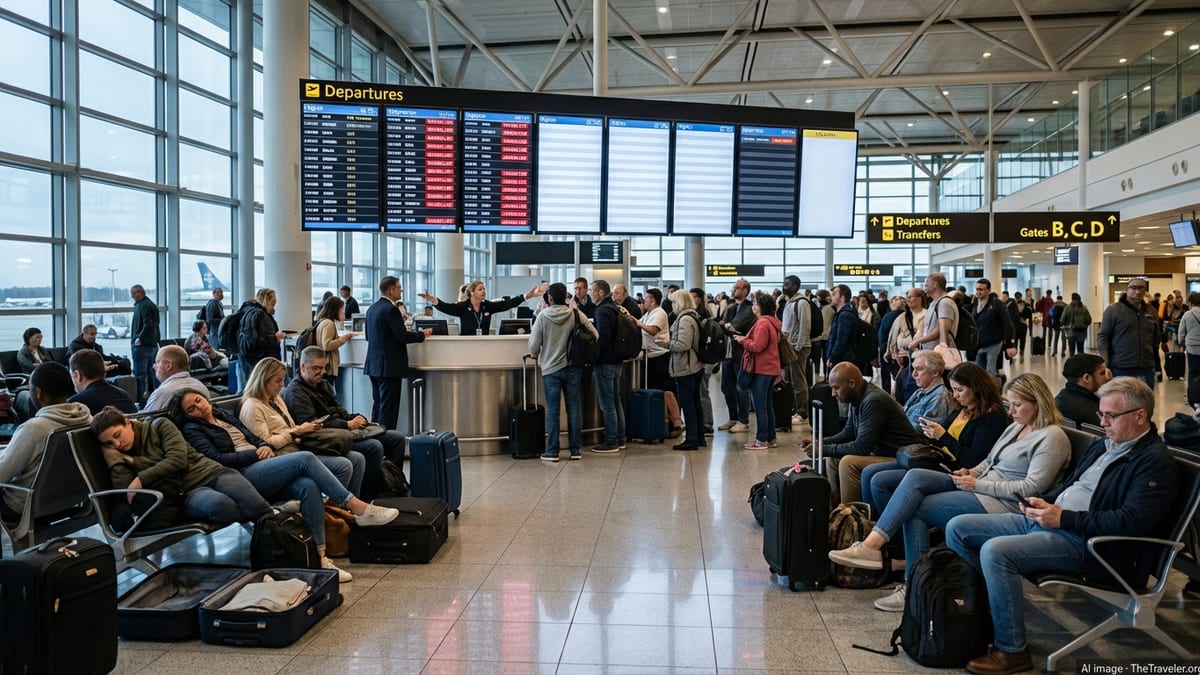
For travelers, the practical takeaway is less about a single incident and more about volatility: airport operations can be disrupted with little notice, airspace can be restricted temporarily, and airlines may adjust schedules quickly in response to new risk assessments. U.S. messaging has emphasized readiness for flight cancellations, periodic airspace closures, and broader travel disruptions across the region.
While U.S. travel advisories differ by country, the latest updates and parallel embassy security alerts underscore a common theme: the security environment is complex and can change quickly. That language matters for tourists and business travelers because it signals an expectation of disruption beyond the immediate Saudi-Yemen frontier, particularly along major transit corridors in the Gulf and the Red Sea basin.
Saudi Arabia’s advisory level and where risks concentrate
As of September 15, 2026, the U.S. State Department lists Saudi Arabia at Level 3, “Reconsider travel,” citing risks that include drone and missile threats, armed conflict, and terrorism, along with other legal and administrative concerns that can affect visitors, such as exit bans and strict local laws around online activity. The advisory also flags higher risk areas, including guidance not to travel to locations near the Yemen border.
In practical terms, many of the Kingdom’s most-visited destinations remain far from the immediate border region. Riyadh, Jeddah, and the Eastern Province sit hundreds of miles from Yemen, but recent reporting indicates the conflict’s reach can extend beyond border areas through long-range missile or drone activity and heightened security postures around airports, military sites, and energy facilities.
Travelers should also separate “advisory level” from “air service availability.” A country can remain open to visitors and still present meaningful operational challenges, particularly if airlines reduce frequencies, reroute around conflict zones, or tighten check-in and security procedures. Those effects can cascade quickly into missed connections, last-minute itinerary changes, and limited rebooking options during peak travel periods.
Wider West Asia ripple effects: embassy alerts and transit disruptions
In addition to Saudi Arabia-specific guidance, U.S. security alerts and global travel messaging have pointed to an elevated risk environment across multiple West Asian countries, urging heightened vigilance for Americans already in the region and caution for those considering travel through it. The core traveler impact is uncertainty: even if a destination is not directly struck, flights may be rerouted or delayed because nearby airspace becomes temporarily constrained.
Major hubs across the Gulf rely on dense, interconnected networks. When regional tensions rise, airlines may add fuel stops, shift routings to avoid specific corridors, or consolidate operations, which can translate into longer travel times and more complex connections. Travelers transiting through the region should treat connection schedules as less predictable than usual, especially on routes that normally cross the Red Sea, the Gulf of Aden, or the Arabian Sea.
For those flying between Europe, the Gulf, and South Asia, changes in overflight patterns can also affect baggage handling and minimum connection times. Even without formal closures, carriers can adjust schedules to keep aircraft and crew within new operational limits, and those changes can occur faster than hotel or ground-transport providers can adapt.
Aviation and maritime risk: why route planning matters right now
Aviation safety notices and government travel guidance have highlighted that military activity and the use of drones and missiles can create unpredictable hazards for civilian movement in and around the Red Sea and nearby waterways and airspace. While most travelers will not see these advisories directly, they often influence airline operations, insurance requirements, and corporate travel approvals.
The most visible impact for leisure travelers is often indirect: airlines may avoid certain routings, which can reduce seat availability and raise fares on remaining options, particularly on time-sensitive routes. Travelers with tight schedules should build in extra buffer time and consider booking itineraries with fewer connections, because re-accommodation can be constrained if multiple flights are disrupted in a short window.
Maritime risk also matters to tourism. Cruise itineraries, ferry services, and Red Sea resort travel can be affected by changes in port calls or security postures, even if hotels remain open. Tour operators and carriers may revise plans quickly, so travelers should confirm departure times, transfer arrangements, and refund policies in writing before committing to nonrefundable add-ons.
What travelers can do now: practical steps before flying or transiting
Because the most immediate risk for many travelers is disruption rather than destination closure, planning should focus on flexibility. Travelers should re-check flight status frequently in the days leading up to departure, and again on the day of travel, including for onward connections, not just the first leg. It is also wise to keep itineraries, passports, and key reservation details accessible offline in case mobile service is strained during fast-breaking events.
Insurance and ticket rules are especially important during periods of heightened tension. Travelers should verify whether their policy includes coverage for trip interruption tied to security incidents and whether their fare class allows changes without steep penalties. Corporate travelers should confirm duty-of-care procedures and communications channels, while leisure travelers should keep alternative routings in mind if a primary hub becomes congested.
Finally, travelers should align their plans with official guidance: read the current U.S. travel advisory for each country on the itinerary and monitor U.S. embassy security alerts where applicable. If travel is essential, consider limiting time near sensitive sites, avoiding border areas, and selecting accommodations with clear security protocols and reliable transport options to major airports.