

More news on this day
Etihad Airways’ flagship Airbus A380 service between Abu Dhabi and London Heathrow has faced renewed disruption, as a superjumbo operating the busy United Arab Emirates–United Kingdom corridor returned to its departure point mid-journey, triggering knock-on delays and highlighting the fragility of the carrier’s ongoing network recovery.
Get the latest news straight to your inbox!
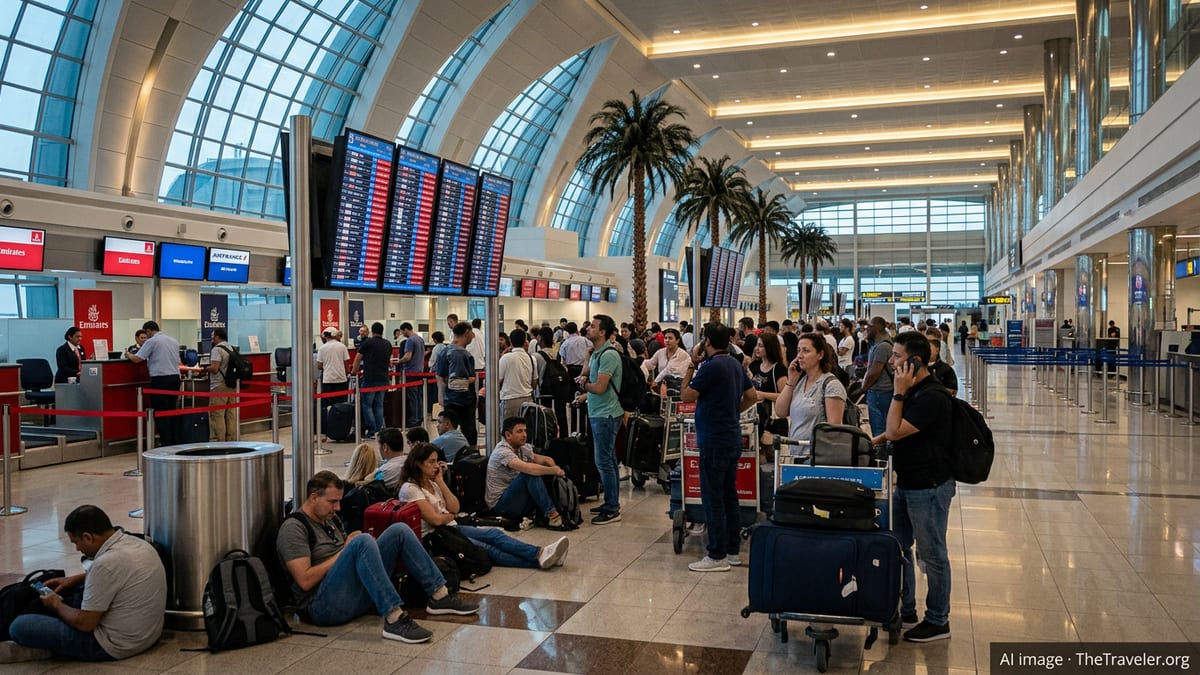
Mid‑Journey Return Raises Fresh Operational Questions
Recent tracking data and travel-industry coverage indicate that an Etihad Airways A380 operating the Abu Dhabi–London Heathrow route was forced to turn back to Zayed International Airport shortly after departure, following what has been described as a technical alert on board. The aircraft, scheduled as part of the airline’s restored superjumbo operation to the United Kingdom, abandoned its northbound track and routed back to Abu Dhabi where it landed safely.
Reports on the affected flight, identified in multiple sources as an A380 service on the EY061 rotation, suggest that the issue emerged during the initial climb phase, a period when carriers typically adopt a conservative approach to any unresolved cockpit notifications. Timelines compiled from flight-status platforms show the aircraft departing in the early hours from Abu Dhabi, returning to base, and later being replaced by another widebody aircraft to complete the journey to London.
Publicly available information from flight-status providers indicates that passengers ultimately reached Heathrow with a delay of several hours, with the replacement aircraft departing roughly eight hours behind schedule and arriving in the United Kingdom around seven hours late compared with the original plan. The disruption has come at a sensitive moment for Etihad, which has been working to stabilize schedules amid a phased rebuild of its global network.
While no injuries or onboard emergencies have been reported in connection with the mid-journey return, the incident has renewed scrutiny on how quickly airlines can recover long-haul schedules when high-capacity aircraft such as the A380 are unexpectedly withdrawn from service, even temporarily.
Impact on the Abu Dhabi–London Corridor
The Abu Dhabi–London Heathrow route is one of Etihad’s most strategically important links between the Gulf and Europe, and it is among the first to see sustained A380 operations as the airline restores its superjumbo fleet. Timetables published in recent weeks show multiple daily frequencies between Abu Dhabi and Heathrow, with the A380 assigned to key overnight and daylight departures in both directions.
A media schedule released this month lists several daily pairings under the EY11 series, with A380 aircraft slated on core rotations from Abu Dhabi in the early hours and from London in the mid-morning and afternoon. That structure is designed to feed Etihad’s long-haul network through Abu Dhabi and to capture both business and leisure traffic between the United Arab Emirates and the United Kingdom.
When an A380 on this corridor is forced to return to base, knock-on effects quickly appear across the day’s operations. Capacity reductions on a single sector can displace hundreds of passengers, forcing rebookings onto later London flights or alternative European gateways, and potentially affecting connecting itineraries to North America, Asia and Africa. Travel-industry reports following the latest turnback describe passengers being shifted to other Etihad departures once an alternative aircraft had been prepared and cleared.
Data from flight tracking platforms for 20 to 22 May show Abu Dhabi–London flights operating with minor delays on some rotations, consistent with an operation that is largely restored but still vulnerable to schedule shocks. The latest A380 incident has therefore served as a reminder that the margin for error remains thin on such a high-demand, high-capacity route.
Network Recovery Still in a Delicate Phase
The disruption comes as Etihad continues a broader recovery of its global network following months of constrained operations linked to regional instability and airspace closures. Public advisories issued in March and April outlined a limited but growing schedule from Abu Dhabi, with London highlighted as one of the core destinations maintained during the most challenging periods.
By late spring 2026, the airline had moved into an expanded phase of its recovery plan, adding more European frequencies and gradually reintroducing A380s on marquee routes. Official news releases this year have detailed increased superjumbo flying to Paris Charles de Gaulle and Tokyo Narita for the upcoming summer season, signaling confidence in demand and aircraft availability across key intercontinental corridors.
At the same time, travel alerts and FAQs distributed via consular channels and aviation authorities stress that schedules remain subject to change at short notice, particularly where regional airspace restrictions, security considerations or operational limitations come into play. In this context, a technical turnback of a London A380 rotation feeds into a broader pattern of periodic disruption that airlines are still learning to manage while ramping up capacity.
Industry analysis from aviation consultancies describes Gulf carriers, including Etihad, as pursuing a cautious growth strategy in 2026, reintroducing capacity in waves rather than all at once. That approach allows for operational resilience, but it also means that the temporary loss of a single high-density aircraft can have an outsized impact on the daily schedule.
Passenger Disruption and Rebooking Options
For passengers on the affected Abu Dhabi–London flight, the mid-journey return translated into extended time on the ground at Zayed International Airport and a significant delay in reaching Heathrow. Travel-agency reports and passenger accounts on public forums describe scenarios in which travelers were moved to a later departure once a replacement aircraft was positioned, with total arrival delays in the range of seven to eight hours.
Guidance documents prepared for Etihad customers during the broader period of network disruption outline several options that typically apply when flights are significantly delayed or rescheduled. These include free-of-charge rebooking within a specified date window, changes to the final destination in some cases, and refunds under defined conditions where journeys are no longer practical. Such policies have been highlighted repeatedly since early March, when the airline first phased in its limited schedule.
Recent passenger reports from flights through Abu Dhabi suggest that, while some itineraries continue to be affected by missed connections and late departures, the carrier has generally been able to provide hotel accommodation, meal vouchers and alternative routing when disruptions extend overnight. The latest A380 turnback appears to have been managed within the same framework, though individual experiences depend on booking channel, fare conditions and the availability of spare seats on subsequent services.
Travel advisers encourage passengers booked on Etihad’s Abu Dhabi–London services in the coming days to monitor flight-status tools closely and to build additional buffer time into onward connections. While the incident does not appear to have triggered wholesale cancellations on the route, it has underscored the value of flexible planning during a period of heightened operational volatility.
Strategic Role of the A380 in Etihad’s Recovery
The A380 has been positioned as a cornerstone of Etihad’s premium long-haul strategy, especially on high-volume city pairs such as Abu Dhabi–London. The superjumbo’s large cabin, which includes The Residence, First Apartments, Business Studios and Economy cabins, allows the airline to consolidate demand while offering a differentiated onboard product compared with smaller widebody types.
Announcements over the past year have confirmed the gradual return of Etihad’s A380 fleet, initially on the London route and subsequently on additional destinations including Paris and Tokyo. Aviation analysts view this as a signal of resurgent demand on trunk routes and a desire to leverage the A380’s economics on slot-constrained airports like Heathrow, where adding frequencies is often more difficult than increasing gauge.
However, the same concentration of capacity that makes the A380 attractive from a commercial standpoint can complicate recovery efforts when irregular operations occur. A technical issue that sidelines a superjumbo affects far more passengers than a narrowbody or smaller widebody event, and it can require extensive re-accommodation across the network. The latest mid-journey return to Abu Dhabi illustrates that trade-off, as Etihad sought to protect safety while also working to reposition capacity and limit further disruption.
As the airline moves into the peak summer travel period, the performance of its A380 program on routes such as Abu Dhabi–London will be closely watched by industry observers and travelers alike. Continued investment in contingency planning, spare capacity and clear customer communication will be critical to maintaining confidence in the carrier’s flagship services between the United Arab Emirates and the United Kingdom.