

More news on this day
British Airways has postponed the resumption of several high-profile Middle East routes until at least August 1, disrupting peak summer travel plans between London and major hubs including Dubai, Doha and Tel Aviv.
Get the latest news straight to your inbox!
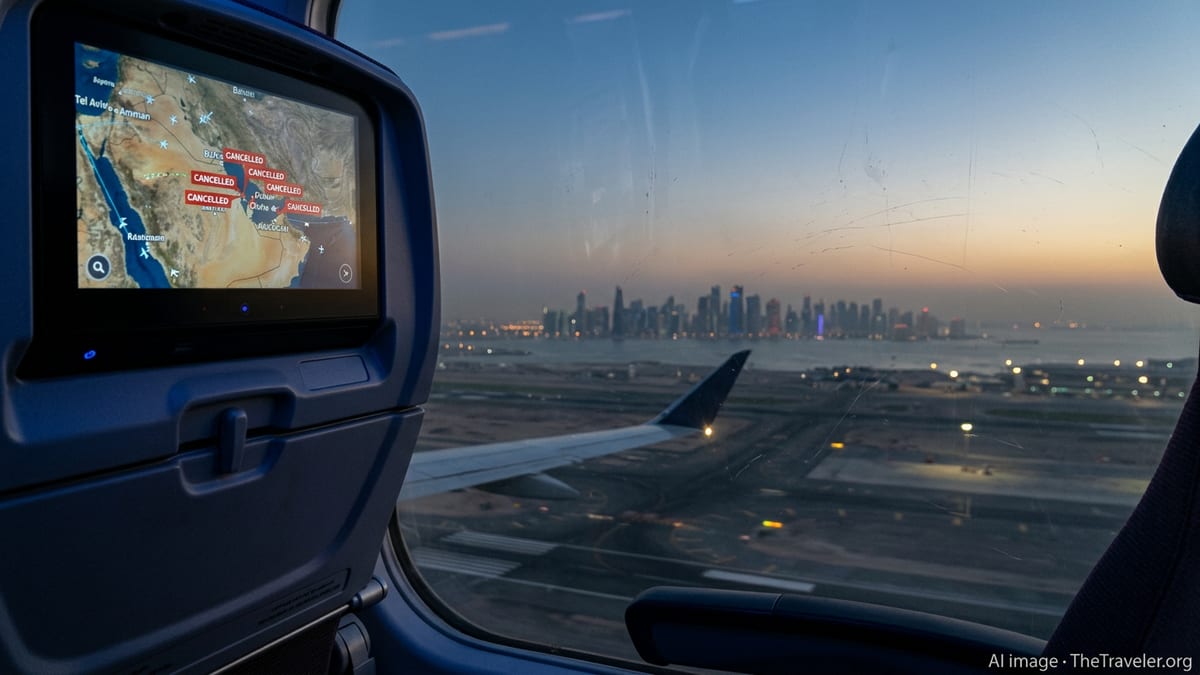
Restart Date for Dubai, Doha and Tel Aviv Moved to August
Publicly available schedule data indicates that British Airways has shifted the planned restart of nonstop flights from London Heathrow to Dubai, Doha and Tel Aviv from early July to August 1. The change follows months of rolling suspensions and reduced schedules across the region after a sharp escalation in military tensions and temporary airspace closures affecting multiple Middle Eastern states.
Information compiled from airline timetables and industry trackers shows that the carrier’s summer plan now treats July as a reduced-operations month on these routes. Passengers previously booked on early and mid-July departures are being moved to alternative dates, rerouted via partner airlines or offered refunds, depending on their original ticket conditions.
The latest timetable update suggests that Dubai and Doha will return first on a limited basis from August 1, while Tel Aviv is set to rejoin the network on the same date with a scaled-back operation compared with pre-crisis levels. Industry coverage notes that all three routes remain flagged as subject to further change if security conditions deteriorate.
Travel data providers report that the August restart date is a revision to earlier schedules that tentatively listed July returns, highlighting the level of uncertainty airlines continue to face when planning operations in the region.
Longer Suspensions and Reduced Frequencies Across the Region
The decision to delay the restart of major Middle East flights until August comes on top of broader schedule cuts that British Airways introduced in late winter and extended into the spring. Reports from aviation and business publications detail that services to cities such as Amman, Bahrain and Abu Dhabi were already suspended into the early summer period, with some not expected to reappear in the timetable until late October at the earliest.
Analyses of British Airways’ published schedules show that even where routes are returning, the number of weekly frequencies is being cut. London to Dubai, which typically operated up to three daily flights in recent high seasons, is expected to resume with a single daily rotation for at least part of August. Doha is projected to follow a similar pattern, while Tel Aviv is due to come back with one daily service instead of the previous twice-daily offering.
Industry commentary also points to at least one permanent withdrawal. Coverage of the carrier’s long-haul strategy indicates that Jeddah has been removed from future schedules, ending a long-running Heathrow connection that had already been reduced before the latest crisis. Other destinations, including Beirut and certain secondary Gulf cities, remain listed as suspended with no firm restart date.
These changes mean British Airways will have a smaller overall footprint in the Middle East for the remainder of the year, even after core trunk routes are restored in August.
Security Tensions and Airspace Closures Drive Planning
The extended suspensions are closely linked to the security situation in the wider region. Since late February, airspace closures and restrictions over parts of Iran, Iraq and neighboring states have complicated routings between Europe and Gulf or Levant destinations. Aviation intelligence providers describe one of the most disruptive periods for Middle East air travel since the pandemic, with multiple carriers forced to cancel or reroute flights at short notice.
Reports in financial and aviation media note that the conflict involving Israel, Iran and allied armed groups has led risk assessors and insurers to raise war-risk premiums on overflights and operations to certain airports. Carriers planning long-haul services into the Gulf and eastern Mediterranean have had to weigh direct security concerns alongside sharply higher operating costs and more complex flight paths.
Industry analysis suggests that British Airways, like several European peers, has opted for a conservative approach, keeping schedules slim while airspace availability and security assessments remain volatile. Timetable changes reveal that aircraft capacity originally earmarked for Middle East rotations is being redeployed to other long-haul markets viewed as more stable.
Observers point out that decisions to delay restarts into August also reflect the lead time needed for crew planning, maintenance and ticket sales. Once an airline has zeroed out a month of flights in a given market, reinstating them typically requires weeks of advance notice, making sudden reversals unlikely even if the security picture improves quickly.
Impact on Summer Travelers and Regional Capacity
The August delay is reshaping options for travelers between the United Kingdom and the Middle East during a key holiday period. Specialist travel sites tracking bookings report that demand originally directed to British Airways has spilled over to other carriers operating via hubs such as Istanbul and European capitals, as well as Gulf-based airlines that have maintained reduced but ongoing services.
Search data cited by consumer travel platforms suggests that seats to Dubai and Doha in July are increasingly scarce on alternative airlines, particularly for nonstop or one-stop itineraries from London. Fares on remaining options have risen compared with the same period last year, reflecting constrained capacity across several major routes.
For passengers holding British Airways tickets, rebooking flexibility and refund policies vary by route and travel date. Travel advisory pages indicate that customers whose flights are cancelled are generally eligible for re-routing on the nearest available date, vouchers or cash refunds, while those still scheduled to travel after August 1 may face standard fare rules if they wish to change voluntarily.
Travel agents and comparison sites are advising affected customers to check the latest information in their booking profiles and to consider alternative routings early, particularly for travel around late July and early August when school holiday demand peaks in the UK.
Strategic Network Shift Favors Other Long-Haul Markets
The ongoing Middle East disruption is also feeding into a wider reshaping of British Airways’ long-haul network. Airline schedule databases and corporate updates show that aircraft freed from suspended Gulf and Levant services are being reassigned to higher-demand markets in Asia and South Asia, as well as selected North American routes.
Industry reports indicate that the carrier has increased capacity on several India routes and strengthened frequencies to some leisure-heavy destinations, using long-haul widebody aircraft that would otherwise have served Dubai, Doha or other suspended Middle East cities. This redeployment is seen by analysts as an attempt to protect revenue during a period when a traditionally strong region is temporarily constrained.
Aviation commentators also highlight that British Airways is not alone in taking a cautious stance. Other major European airlines have extended their own suspensions or severe capacity cuts to Tel Aviv and certain Gulf gateways into late summer, while some Asia-based carriers have pushed back their Middle East resumptions to August or beyond.
With British Airways now targeting August 1 as the earliest widespread restart date for key Middle East routes, travelers and industry watchers are focused on how quickly the airline can rebuild its presence in the region once conditions allow, and whether some of the temporary cuts will evolve into longer-term structural changes in the carrier’s network.