


More news on this day
Etihad Airways is adding Saudi Arabia’s Red Sea coast to its network from October 2026, in a move that reflects rapidly strengthening tourism links between the United Arab Emirates and the Kingdom and reinforces the Red Sea’s position as one of the Gulf’s fastest-rising leisure destinations.
Get the latest news straight to your inbox!
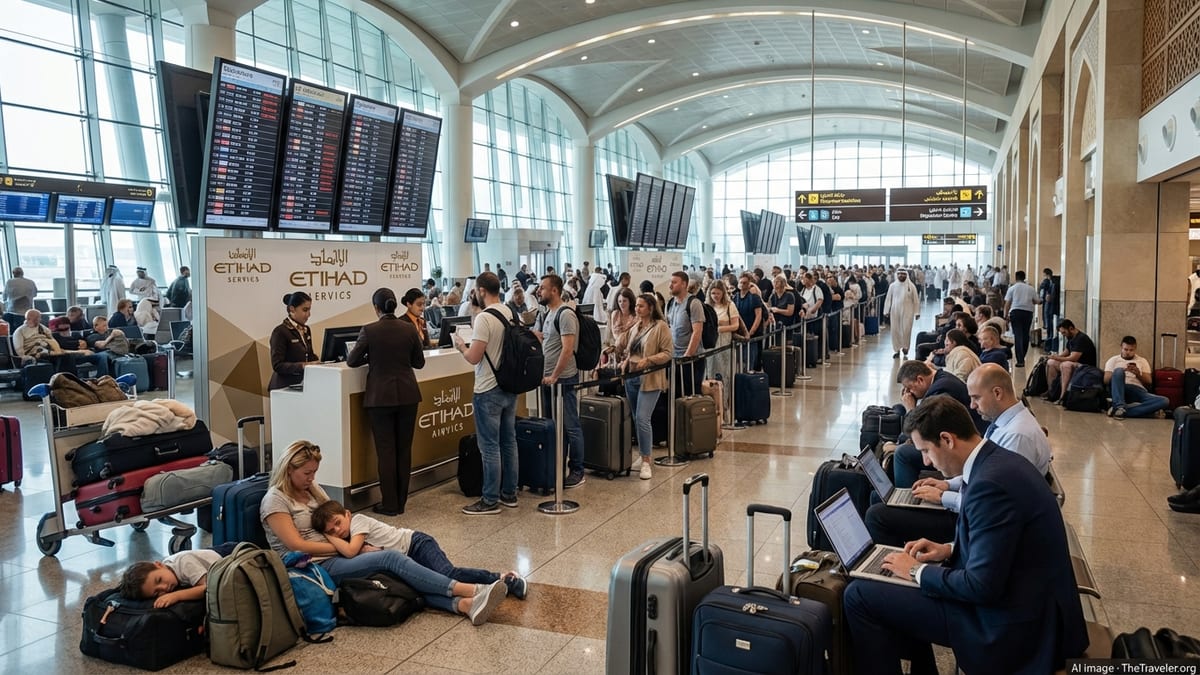
New Abu Dhabi–Red Sea Link Targets Year-Round Holiday Demand
According to Etihad’s latest network announcement, the Abu Dhabi-based carrier will begin year-round flights to Saudi Arabia’s Red Sea International Airport on 4 October 2026. The initial schedule provides one weekly frequency before rising to two flights per week from 25 October, placing the high-end resort area around three hours’ flying time from the UAE capital and connecting it to Etihad’s wider global network.
Publicly available information from the airline indicates that the Red Sea route is being marketed as a new short-haul seaside escape for UAE-based travelers and as an additional premium leisure stop for long-haul visitors transiting Abu Dhabi. The move follows a broader rebuilding and reshaping of Etihad’s route map, with the carrier progressively adding more destinations in the Gulf and wider Middle East to capture regional tourism flows.
The launch will position Etihad among the first non-Saudi airlines to serve Red Sea International Airport with scheduled services. The gateway, developed by Red Sea Global to serve the flagship Red Sea destination on Saudi Arabia’s west coast, opened to domestic traffic in 2023 and has since expanded to international operations with a growing list of regional carriers.
Etihad’s Red Sea flights build on earlier growth in Saudi services, including its 2024 launch of four weekly flights between Abu Dhabi and Al Qassim in the central region. Industry observers view these steps as a sign that the airline is aligning its strategy with Saudi Arabia’s rapid tourism expansion and the rising appetite among Gulf residents for short, high-quality domestic and regional breaks.
Red Sea International Airport Emerges as a High-End Tourism Gateway
Red Sea International Airport has been conceived as the primary access point for the Red Sea destination, a luxury tourism hub being developed along an archipelago and coastal stretch between Umluj and Al Wajh in western Saudi Arabia. Project documentation indicates that the facility is powered entirely by renewable energy, reflecting the Kingdom’s focus on regenerative tourism and lower-impact infrastructure for new coastal resorts.
Developer information shows that the airport opened to domestic flights in 2023, handled by Saudia, before gradually adding international services. By 2024 and 2025, regional carriers such as flydubai and Qatar Airways began operating scheduled flights, directly connecting the destination with Dubai and Doha and placing it firmly on the map for high-spend Gulf travelers.
The wider Red Sea destination forms one of the flagship projects under Saudi Arabia’s Vision 2030 strategy to diversify its economy through tourism, hospitality, and entertainment. Vision progress reports highlight that the destination is intended to welcome up to a million visitors annually by the end of the decade, offering a mix of island resorts, mainland hotels, nature-based activities, and marine experiences around largely untouched coral reef systems.
Etihad’s entry into Red Sea International Airport adds another Gulf hub connection and further integrates the destination into regional air networks. Travel analysts note that multiple Gulf carriers now serve either the Red Sea destination or nearby Red Sea cities, pointing to intensifying competition to capture premium leisure demand from Europe, Asia, and within the Middle East.
Cross-Gulf Tourism Flows Between UAE and Saudi Arabia Accelerate
Recent statistics from Saudi Arabia’s Ministry of Tourism show that cross-border travel within the Gulf Cooperation Council is already substantial. Official data for 2023 indicate that around 8.6 million visitors from GCC states traveled to Saudi Arabia that year, with their spending exceeding 15 billion Saudi riyals. Within this total, the United Arab Emirates ranked among the top source markets, contributing close to 1.4 to 1.5 million visitors, underscoring the strength of UAE-origin demand.
Additional analytical reports on the Kingdom’s visitor base suggest that this Gulf inflow forms part of a much larger tourism surge. In 2024, Saudi Arabia recorded roughly 116 million visitors in total, including nearly 30 million international tourists and more than 86 million domestic travelers. The same studies highlight that Saudi Arabia has recently led G20 countries in growth of international tourism revenue compared with pre-pandemic levels, underlining how central tourism has become to the country’s economic strategy.
For the UAE, the deepening of tourism links with Saudi Arabia comes on top of its own strong performance as a global destination. Dubai, for example, reported record-breaking international visitor numbers in both 2024 and 2025, driven by expanded air capacity, major events, and sustained investment in leisure infrastructure. Travel industry assessments indicate that these parallel booms in Saudi Arabia and the UAE are creating a more integrated regional tourism ecosystem rather than a zero-sum competition.
Carriers such as Etihad, Emirates, Saudia, flydubai, and other regional airlines have increasingly focused on short-haul Gulf connections, weekend travel, and multi-stop itineraries spanning both countries. Etihad’s Red Sea route is expected to feed into this pattern by enabling visitors to combine itineraries such as Abu Dhabi and the Red Sea, or longer journeys taking in both the UAE and cultural or entertainment events in Saudi cities.
Strategic Alignment With Vision 2030 and Gulf Tourism Goals
Saudi Vision 2030 sets ambitious objectives for tourism, targeting around 150 million annual visitors by the end of the decade and positioning the Kingdom as a top global destination. Annual tourism sector reports released in 2024 point to rapid growth in both inbound arrivals and spending, with international tourism revenue rising well above 2019 benchmarks and leisure travel emerging as the leading non-religious purpose for visits.
The Red Sea destination and other flagship projects such as NEOM, Diriyah, and various entertainment seasons are presented in national publications as key pillars for achieving these targets. Each project incorporates a sustainability or heritage focus, with Red Sea International Airport and its associated resorts often cited as examples of regenerative development, renewable-energy operations, and controlled visitor flows intended to protect sensitive ecosystems.
On the UAE side, tourism policies have emphasized open skies, liberal visa regimes for many nationalities, and major investments in airports, cruise terminals, and resort developments. Combined with Saudi Arabia’s rapid ramp-up in attractions and infrastructure, the region is seeing a shift toward multi-country itineraries, especially for visitors from Europe and Asia who can now connect through multiple Gulf hubs and onward to niche destinations like the Red Sea.
Etihad’s expansion into the Red Sea market aligns with these broader trends by linking Abu Dhabi’s global connectivity and established tourism offer with one of Saudi Arabia’s most prominent emerging coastal destinations. The route gives the airline an opportunity to participate directly in Vision 2030-driven visitor growth while offering travelers in both countries a wider range of high-end holiday options.
Prospects for Coastal Tourism and Regional Airline Competition
Industry observers note that coastal tourism along the Red Sea is becoming a focal point of Saudi Arabia’s diversification plans. In addition to the Red Sea destination, other west-coast cities such as Jeddah are experiencing a wave of high-profile hospitality and mixed-use developments aimed at both residents and international visitors. Announced projects on the Jeddah seafront and beyond include luxury hotels, branded residences, and waterfront malls, signaling an expectation of sustained demand for coastal living and tourism.
For airlines, this shift opens new opportunities and intensifies competition. Saudi flag carrier Saudia has already increased its services to the Red Sea area, adding capacity from Riyadh and Jeddah around peak holiday periods in coordination with national tourism authorities. Flydubai’s direct flights from Dubai and Qatar Airways’ services from Doha have helped place the Red Sea on the radar of travelers who may be familiar with Gulf city breaks but are now seeking more nature-focused stays.
Etihad’s decision to add Red Sea International Airport to its network adds another layer to this competitive landscape. The Abu Dhabi carrier brings a different mix of feeder markets, including long-haul traffic from Europe and Asia, which can now be marketed onward to Saudi Arabia’s west coast. As more resorts open and air links proliferate, analysts expect joint promotions, package deals, and cross-selling between UAE and Saudi tourism operators to become more common.
With the Red Sea’s coral reefs, island resorts, and desert backdrops increasingly featured in global marketing campaigns, the new Etihad route symbolizes how air connectivity is helping to turn Saudi Arabia’s coastal tourism ambitions into a concrete product. For travelers, the development translates into more choice and easier access to a growing portfolio of high-end experiences accessible from multiple Gulf hubs.
Etihad Airways – Red Sea route announcement
Red Sea Global – Red Sea International Airport overview
Saudi Press Agency – GCC visitor statistics 2023