


More news on this day
Saudia’s Boeing 787 Dreamliner fleet is taking on a larger role in connecting Europe and Asia through Jeddah, with routes such as Amsterdam and Kuala Lumpur showcasing the airline’s upgraded business class and its growing ambitions as a premium transfer hub.
Get the latest news straight to your inbox!
Amsterdam–Jeddah Becomes a Showcase 787 Route
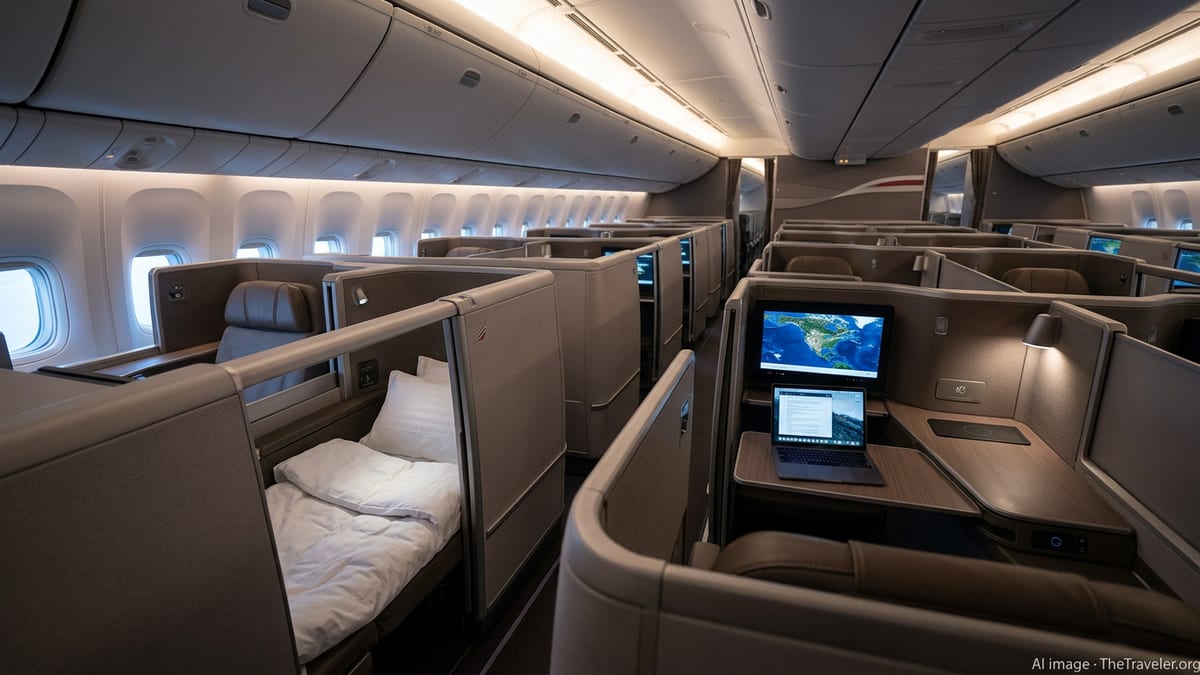
Recent schedule filings and flight data indicate that Saudia’s Amsterdam–Jeddah route has evolved into a key European showcase for the airline’s Boeing 787 business class product. The carrier operates the city pair with 787-9 and 787-10 aircraft, offering a fully flat business cabin in a one-two-one configuration on the longer variant. Flight listings show that Saudia’s Dreamliners are the dedicated type on the nonstop service between Amsterdam Schiphol and Jeddah, underscoring the strategic importance of this corridor for both religious traffic and leisure itineraries to Asia.
Independent reviews published in mid-2026 describe the Amsterdam–Jeddah 787-10 service as markedly improved compared with Saudia’s previous long haul offering, especially in terms of food quality, amenity kits and cabin presentation. Passengers highlight features such as direct aisle access, large entertainment screens, and personalized touches like Arabic coffee and dates that emphasize a regional identity while aiming at global business-class standards. This combination has helped the route stand out in a crowded Europe–Middle East market where Gulf competitors have long dominated premium demand.
Capacity plans for the coming winter season show that Saudia is preparing to deepen its presence in Amsterdam using the Dreamliner. Network information for the Northern Winter 2026/27 schedule indicates a planned increase from four to five weekly flights between Jeddah and Amsterdam, again with a mix of 787-9 and 787-10 equipment. The added frequency, while still tentative in some booking systems, positions Amsterdam as one of the European gateways where Saudia is leaning heavily on its next generation widebody fleet to attract connecting traffic.
Kuala Lumpur Links Strengthen Jeddah’s Asia Reach
On the Asian side of Saudia’s network, Kuala Lumpur remains one of the strongest illustrations of how the Boeing 787 business class product underpins growth through Jeddah. Network summaries for the recent Northern Winter season show that Saudia scheduled up to three daily services between Jeddah and Kuala Lumpur at peak periods, with the Boeing 787-10 as the primary aircraft and additional Boeing 777-300ER capacity layered in during busy travel windows. The Dreamliner’s range and efficiency allow the airline to sustain dense frequencies on this long haul trunk route.
Operational data for flights such as SV841 between Kuala Lumpur and Jeddah list the Boeing 787 with a two-cabin layout, including around 21 business class seats complemented by a large economy section. Business-class reviews on this sector point to lie-flat seats, extensive meal services reflecting both Middle Eastern and Southeast Asian tastes, and a generally quiet cabin thanks to the Dreamliner’s design. Kuala Lumpur’s role as a major departure point for religious journeys as well as broader leisure traffic to Saudi Arabia and beyond has supported sustained premium demand on the route.
Beyond point-to-point traffic, the Kuala Lumpur–Jeddah 787 operation feeds Saudia’s onward network toward Europe and North America, often pairing with Amsterdam and other European gateways on single-ticket itineraries. The resulting one-stop combinations give Southeast Asian travelers additional options besides the large Gulf carriers, while also providing European passengers with another connection to Malaysia’s capital via Jeddah. Saudia’s decision to place its newest widebody type on this route signals its intent to keep Kuala Lumpur central to its Asia strategy.
Jeddah as a Premium Transfer Hub for the 787 Fleet
The deployment of Boeing 787-9 and 787-10 aircraft on routes such as Amsterdam and Kuala Lumpur illustrates Jeddah’s growing role as a premium transfer hub in Saudia’s network. Jeddah’s King Abdulaziz International Airport serves as the primary gateway for religious travel to Makkah and Madinah, but it is also central to the airline’s push to capture long haul business and leisure traffic between Europe, Asia and Africa. The concentration of 787 flying at Jeddah allows Saudia to offer a more consistent business class product for connecting passengers across multiple regions.
Fleet information compiled from public sources shows that Saudia has steadily built up its Dreamliner operation and continues to take additional Boeing 787-10 deliveries, supplementing an existing 787-9 fleet. The type’s range and fuel efficiency make it suitable for high-density services such as Jeddah to Kuala Lumpur as well as medium-haul links like Jeddah to Amsterdam, Birmingham and other European cities. This flexibility has enabled Saudia to pivot capacity between markets while keeping its flagship business-class experience concentrated on the 787 platform.
Scheduling data for recent and upcoming seasons highlights the breadth of Jeddah’s 787 network. For example, network overviews for the Northern Winter 2023/24 timetable list Jeddah–Amsterdam at four weekly frequencies with 787-9 and 787-10 aircraft, while Jeddah–Kuala Lumpur operated up to three times daily with the 787-10 at its core. Updates for more recent seasons indicate additional 787-10 deployments on routes from Jeddah to destinations such as Birmingham and Abuja, reinforcing the airport’s status as the central node for Saudia’s Dreamliner-powered expansion.
Cabin Upgrades Signal Ambition in Business Class
As the Boeing 787 takes on a larger share of Saudia’s international schedule, the airline has publicly outlined plans to further elevate the onboard experience, particularly in business class. Industry coverage of Saudia’s cabin strategy reports that the carrier has signed agreements with Collins Aerospace to install newly designed seats on upcoming 787 deliveries, with the aim of introducing private suites across the widebody business-class fleet. The program is set to include retrofits for existing Airbus A330 and Boeing 777 aircraft, creating a more uniform premium product on long haul routes.
Showcases at recent aviation interiors events have featured prototype Saudia business-class suites designed for future 787 aircraft. Descriptions of the concept highlight fully flat 180-degree beds with increased privacy features, larger surfaces for work and dining, and modernized controls and lighting. Saudia has signaled that these products are intended for its next wave of Dreamliner arrivals from 2026 onward, suggesting that routes like Amsterdam, Kuala Lumpur and other trunk services from Jeddah will eventually see another leap forward in cabin quality.
These hardware investments come on top of incremental improvements in soft product that recent travelers have documented on existing 787 flights. Reports from frequent flyers and independent reviewers point to upgraded catering, refreshed amenity kits, and more polished service routines in business class compared with earlier years. Combined with a network strategy that keeps the 787 at the center of key connecting routes through Jeddah, the upcoming suites program indicates that Saudia is positioning its Dreamliner business class as a cornerstone of its competitive pitch in the premium long haul market.
Network Growth Aligns With Saudi Tourism and Transit Goals
Saudia’s emphasis on Boeing 787 business class routes via Jeddah also aligns with broader tourism and aviation goals linked to Saudi Arabia’s national development plans. Public sources outlining the airline’s strategy describe an ambition to support a sharp increase in international visitor numbers, both for religious travel and for emerging leisure destinations across the kingdom. High-profile tourism projects and eased entry procedures for certain visitor categories have raised the stakes for Saudia to provide a consistent, competitive premium cabin on long haul services.
In Europe, capacity adjustments such as the planned increase in Amsterdam frequencies for the upcoming winter season reflect this alignment between national tourism targets and fleet deployment. By adding more 787-operated flights on strategic routes, Saudia can offer better connectivity to new attractions inside Saudi Arabia while also improving one-stop options to third-country destinations via Jeddah. Similar logic applies in Asia, where sustained 787 operations to Kuala Lumpur and other cities feed both inbound tourism to Saudi Arabia and outbound travel from the kingdom.
Looking ahead, the combination of additional Dreamliner deliveries, upgraded business-class suites and incremental frequency growth suggests that Saudia’s 787 network through Jeddah will continue to expand in both scale and sophistication. For travelers in markets such as Amsterdam and Kuala Lumpur, this translates into more opportunities to experience the airline’s evolving business-class product while using Jeddah as a convenient bridge between Europe, Asia and the Middle East.
Saudia Boeing 787 business class review Amsterdam–Jeddah
Saudia NW26 international service changes
Saudia NW23 international network overview
Flight information for Saudia SV841 Kuala Lumpur–Jeddah
Coverage of Saudia’s business-class seating agreement for future 787s