


More news on this day
JetBlue is moving aggressively into the U.S. premium travel segment with BlueFirst, a new domestic first-class product that extends the carrier’s upscale strategy beyond its existing Mint business-class service and challenges entrenched rivals on lucrative routes.
Get the latest news straight to your inbox!
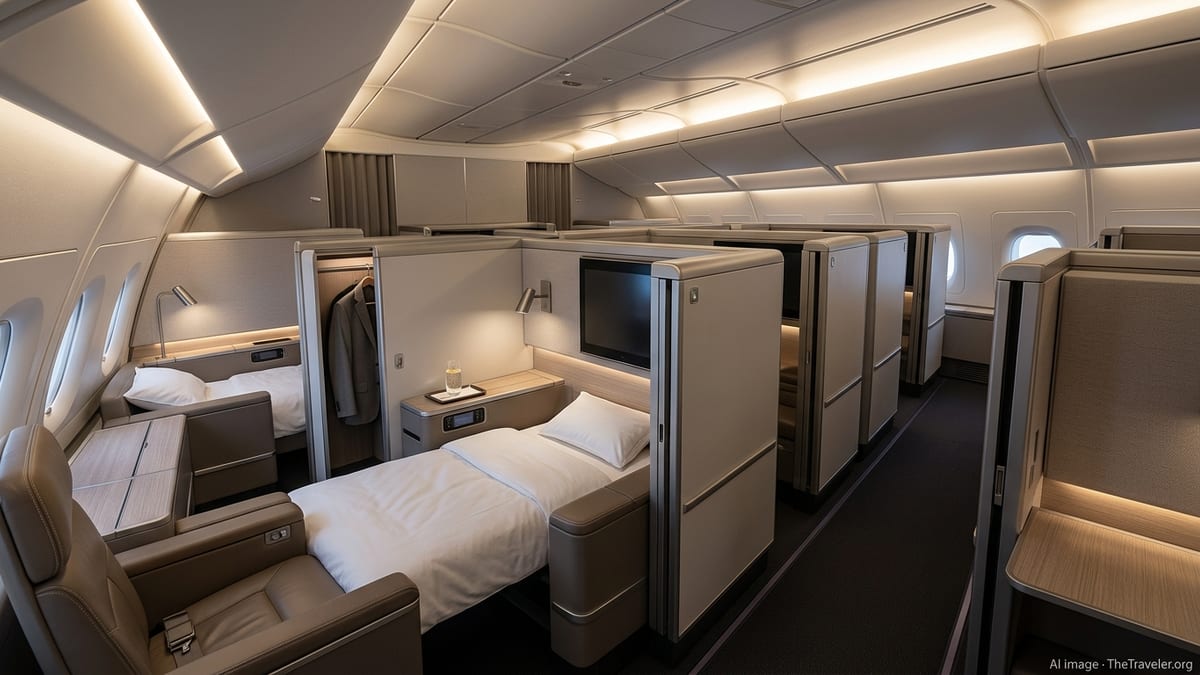
BlueFirst Extends JetBlue’s Premium Footprint Beyond Mint
BlueFirst is designed as JetBlue’s first dedicated domestic first-class experience, positioned above its core economy offerings and alongside its Mint business-class cabins on select routes. Publicly available information from JetBlue indicates that BlueFirst will debut later in 2026 on aircraft and routes that currently operate without Mint, effectively filling a gap between the airline’s transcontinental and transatlantic premium product and the rest of its U.S. network.
According to JetBlue’s updated fare structure, BlueFirst will sit within a simplified portfolio that also includes BlueBasic, Blue and other branded economy fares. The airline has framed the move as an effort to make cabin choices more intuitive for customers while signalling that BlueFirst is a recognizably traditional first-class option on domestic flights. This aligns with an earlier corporate disclosure in 2024 that flagged a forthcoming domestic first-class experience across the non-Mint fleet as part of a broader product refresh.
The introduction of BlueFirst follows several years of investment in Mint, which brought lie-flat suites and upgraded dining to key coast-to-coast and international routes. BlueFirst will not replace Mint, but instead will complement it by targeting markets that do not justify a full lie-flat business-class cabin yet still support demand for extra space, enhanced service and additional perks at the front of the aircraft.
Cabin Layout and Onboard Experience Aim for Modern First Class
JetBlue’s public materials describe BlueFirst as a contemporary take on domestic first class with a focus on comfort and simplicity. The cabin will feature a 2-2 seating configuration on Airbus A320 and A321 aircraft and a similar arrangement on the Airbus A220, giving every customer either a window or an aisle seat. The layout is intended to provide noticeably more space than economy, with wider seats, increased pitch and upgraded cushioning compared with the carrier’s core cabin.
Onboard service is expected to include complimentary alcoholic beverages and an expanded selection of snacks, with JetBlue’s website highlighting a curated mix of premium options available in BlueFirst. While the airline continues to offer free high-speed Wi-Fi and seatback entertainment across much of its fleet, the front-cabin experience will be differentiated through additional amenities and a more personalized service style. The product is framed as a “modern twist” on first class rather than a traditional, highly formal service.
BlueFirst will operate on flights that are generally shorter and less premium-heavy than the routes served by Mint suites, and there is no indication that the new cabin will offer lie-flat seating. Instead, the emphasis is on a generous recliner product that aims to appeal to both business travelers and leisure customers willing to pay extra for comfort. This approach mirrors a wider industry trend in the United States in which airlines have been investing heavily in multiple tiers of premium seating to capture higher-yield demand.
Competitive Pressure on U.S. Legacy Carriers and Premium Rivals
The launch of BlueFirst places JetBlue more directly in competition with the first- and business-class cabins of larger U.S. airlines on domestic routes. American Airlines continues to operate its Flagship First and business-class cabins on select transcontinental services, while Delta’s Delta One and domestic first-class products and United’s premium cabin offerings cover a broad swath of the U.S. network. Industry analyses and regulatory filings describe these carriers as JetBlue’s principal competitors on domestic routes, particularly in New York and Boston where premium demand is strong.
Recent coverage of the U.S. aviation sector notes that major airlines have increasingly oriented their strategies around higher-paying passengers, expanding business-class and premium-economy seating and investing in lounges and digital tools that support frequent travelers. By introducing BlueFirst, JetBlue is positioning itself more clearly within this premium-focused environment. The carrier is classified as a low-cost airline in financial filings, yet it has repeatedly used product investments such as Mint, free inflight connectivity and refreshed cabins to differentiate itself from ultra-low-cost rivals.
Analysts tracking domestic premium markets suggest that additional first-class capacity from a mid-sized carrier like JetBlue could exert pricing pressure on incumbents on certain routes, especially where JetBlue has a strong presence. At the same time, the move may encourage more travelers to “trade up” from standard economy, a dynamic that has benefited competitors as they expanded their premium seating footprints. The net effect is likely to be intensified competition for high-yield customers in major coastal and sunbelt markets.
Network Strategy, Lounges and the Broader JetForward Plan
BlueFirst is emerging alongside other elements of JetBlue’s JetForward strategy, which aims to realign the airline’s network and customer proposition after a period of restructuring and shifting partnerships. Corporate presentations and news releases describe JetForward as a multi-year effort involving fleet modernization, schedule adjustments and a focus on profitable growth. Within that framework, an expanded premium portfolio is intended to strengthen JetBlue’s position in key focus cities while supporting higher unit revenue.
JetBlue has also begun investing in ground-side premium infrastructure. The airline announced plans in 2024 to introduce its first-ever airport lounges, branded BlueHouse, starting at New York’s John F. Kennedy International Airport and Boston Logan International Airport. More recent updates indicate that a second lounge has opened in Boston, with access tied to select fare types and a forthcoming premium co-branded credit card. Combined with BlueFirst, these lounges broaden the ecosystem of perks available to higher-spending customers.
Industry observers note that the move toward lounges and multiple premium tiers mirrors the strategies of Delta, United and American, which have long used club networks and differentiated cabin products to anchor customer loyalty. For JetBlue, which historically focused on leisure and visiting-friends-and-relatives traffic, this marks a notable shift toward courting corporate contracts and affluent travelers who value priority services, exclusive spaces and enhanced onboard comfort.
Implications for Travelers Across JetBlue’s U.S. Network
For passengers, BlueFirst is expected to bring more consistent front-cabin options to routes that previously offered only economy seating. JetBlue materials indicate that the new first-class product will roll out progressively across the non-Mint fleet, meaning that travelers on select domestic flights will see new seat maps and fare classes as aircraft are reconfigured or delivered. The airline has also updated its digital shopping experience to highlight cabin types more clearly, making it easier for customers to identify flights offering BlueFirst.
Travel advisors and frequent flyers are watching closely to see how BlueFirst is priced relative to existing domestic first-class products at rival carriers and to JetBlue’s own Mint fares. Published commentary on the broader U.S. premium trend suggests that while demand for upgraded seating has been robust, customers are increasingly sensitive to value and to the gap between economy and premium prices. The success of BlueFirst will likely hinge on how effectively JetBlue can position the product as a worthwhile step up from its well-regarded core cabin.
As JetBlue refines its network and continues to introduce aircraft configured with both Mint and BlueFirst, the competitive dynamics on U.S. routes may evolve further. Routes where JetBlue historically competed primarily on price and free amenities could become arenas for more direct premium head-to-head competition, potentially reshaping fare structures and traveler expectations in the process.
JetBlue press release: Meet BlueFirst
JetBlue product page: BlueFirst
JetBlue fare options and cabin structure
JetBlue announcement: lounge and premium strategy
Associated Press analysis of U.S. premium airline strategies