


More news on this day
The United Arab Emirates has inaugurated a new era of domestic travel with the launch of a 250 kilometre Etihad Rail passenger corridor, offering a fast, low cost alternative to long highway journeys between key cities.
Get the latest news straight to your inbox!
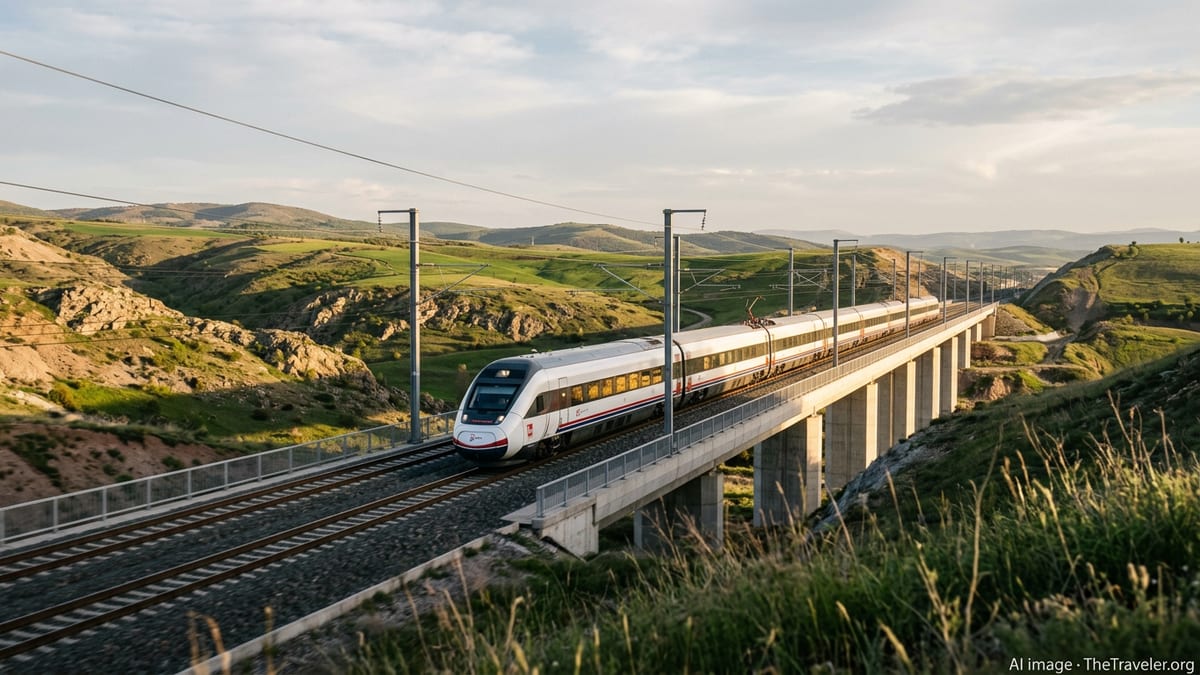
A landmark step for UAE’s national rail ambitions
Etihad Rail’s first mainline passenger operations on a 250 kilometre stretch of track mark a significant shift in how residents and visitors can move across the country. Publicly available information shows that the national railway company has begun carrying passengers on an intercity route of roughly 250 kilometres, with services designed to connect major population centres more quickly than by road.
The launch follows more than a decade of freight-led development. Etihad Rail was established in 2009 to build and operate a 1,200 kilometre federal rail network serving both cargo and passengers. Early phases focused on moving bulk commodities, particularly sulphur from Abu Dhabi’s energy sector, before attention turned to the long planned passenger component linking cities from the capital to the east coast.
Sector analysts note that the new 250 kilometre passenger segment is an early building block in a wider network that is forecast to serve 11 cities once fully complete. Planning documents and recent coverage describe a system designed for maximum operating speeds of around 200 kilometres per hour on the core intercity sections, positioning the UAE alongside other countries investing heavily in modern medium speed rail.
While the current service represents an introductory phase, transport specialists point out that it arrives at a time of rising road congestion and intensifying efforts to cut vehicle emissions. The new corridor offers a test case for how many residents will switch from private cars and long distance buses to rail if journey times and prices are competitive.
Journey times near 200 km/h and a sub two hour run
According to recent travel and business press coverage, Etihad Rail’s passenger fleet has been configured to operate at up to around 200 kilometres per hour, placing the new UAE service firmly in the category of fast intercity rail rather than metro style commuter lines. On the 250 kilometre corridor, this translates into advertised end to end travel times of about one hour 45 minutes when running with limited intermediate stops.
That timing compares favourably with typical car journeys on comparable routes, which can take three hours or more depending on traffic conditions. Observers say the difference becomes particularly meaningful for weekend and holiday travel, when major highways between Abu Dhabi, Dubai and the northern emirates are often heavily congested.
Rail operations specialists commenting in industry publications emphasise that the current timetable balances speed with capacity and reliability. Trains are being introduced with a limited but growing daily frequency, while the operator monitors demand patterns and refines dwell times at stations. The aim is to keep average speeds high enough to offer a clear time advantage over road, even as more services are added.
Passenger reports on early journeys describe a smooth, quiet ride and a sense of covering large distances quickly across desert scenery. The experience, they suggest, is closer to European style intercity rail than to regional buses that have long dominated domestic travel in the Emirates.
Fares pitched to compete with long distance buses
For many residents, affordability is as important as speed. Recent fare tables published by regional news outlets and travel platforms indicate that one way tickets on the new 250 kilometre route start from around 55 dirhams in standard class during the introductory period, with slightly higher prices for more flexible or upgraded options.
That level puts the train in direct competition with long distance bus services and shared taxis, while undercutting the total cost of driving for many passengers once fuel, tolls and parking are factored in. Analysts say the pricing strategy appears designed to encourage first time rail users to test the service and to build loyalty among commuters who may eventually rely on trains for regular trips.
Discounts have been advertised for children, students and some other passenger categories, further broadening the potential customer base. Families travelling between emirates for weekends or school holidays are seen as a key early demographic, attracted by the combination of predictable journey times, onboard comfort and lower stress than extended car journeys.
Travel commentators note that the fare structure will be closely watched as the network expands. If tickets remain within reach for middle and lower income residents, the system is likely to become an important part of the UAE’s broader public transport mix rather than a premium niche product.
Stations, onboard comfort and the passenger experience
Newly opened stations along the 250 kilometre corridor have been described in regional coverage as large, air conditioned transport hubs, with self service ticketing machines, staffed counters and waiting areas designed for families and travellers with luggage. Their architecture combines expansive concourses with clear wayfinding, reflecting the expectation that many first time users will be learning how to navigate rail travel.
Onboard, Etihad Rail offers at least two classes of service on the 250 kilometre line, with differences in seating configuration, legroom and flexibility. Passenger accounts highlight wide, reclining seats, power outlets, luggage racks and Wi-Fi on board, aligning the product with other modern intercity trains in Asia and Europe. Catering options are also available, from trolley service to dedicated café areas depending on the train and time of day.
Accessibility has been a stated priority. Station designs incorporate step free access, lifts and ramps, while trains feature spaces for wheelchairs and accessible toilets. These elements are seen as crucial to making the system usable for older travellers, people with disabilities and families with strollers, groups that often face challenges on long distance buses or in crowded service areas on highways.
Integration with the wider transport network is still evolving. Reports indicate that shuttle buses, taxis and ride hailing services are beginning to coordinate around station arrival and departure times, though last mile connectivity remains an area of active development. Urban planners argue that convenient onward connections will strongly influence how attractive the 250 kilometre rail link becomes for daily commuters as opposed to occasional leisure travellers.
Tourism and long term network growth
Tourism stakeholders see significant potential in the new 250 kilometre train service, which links coastal resorts, city attractions and desert destinations along a single, predictable route. Travel publications suggest that hotels and tour operators are beginning to market rail inclusive packages, leveraging the appeal of avoiding long road transfers in favour of a fast, scenic journey.
By connecting major cities and emerging tourism hubs, the corridor is expected to redistribute visitor flows within the Emirates. Destinations that were previously perceived as distant or difficult to reach without a car may benefit from easier access by train, particularly once connecting local transport options are strengthened around stations.
In the longer term, government strategies and regional transport studies outline plans for the Etihad Rail network to expand far beyond the initial 250 kilometre segment. Additional routes within the UAE, including high speed connections between Abu Dhabi and Dubai, are under development, and cross border links as part of a wider Gulf rail system remain a stated objective.
For now, the operational 250 kilometre passenger corridor serves as a visible demonstration of how rail can reshape mobility in a country long dominated by cars and planes. Its performance, in terms of ridership, reliability and customer satisfaction, is likely to influence how quickly subsequent phases are delivered and how deeply rail becomes embedded in everyday travel across the United Arab Emirates.