


More news on this day
US travelers heading to Europe are being urged to closely monitor local conditions as protest movements over living costs, housing and public services spread from France to a growing list of countries, prompting new security alerts and renewed scrutiny of existing travel advisories.
Get the latest news straight to your inbox!
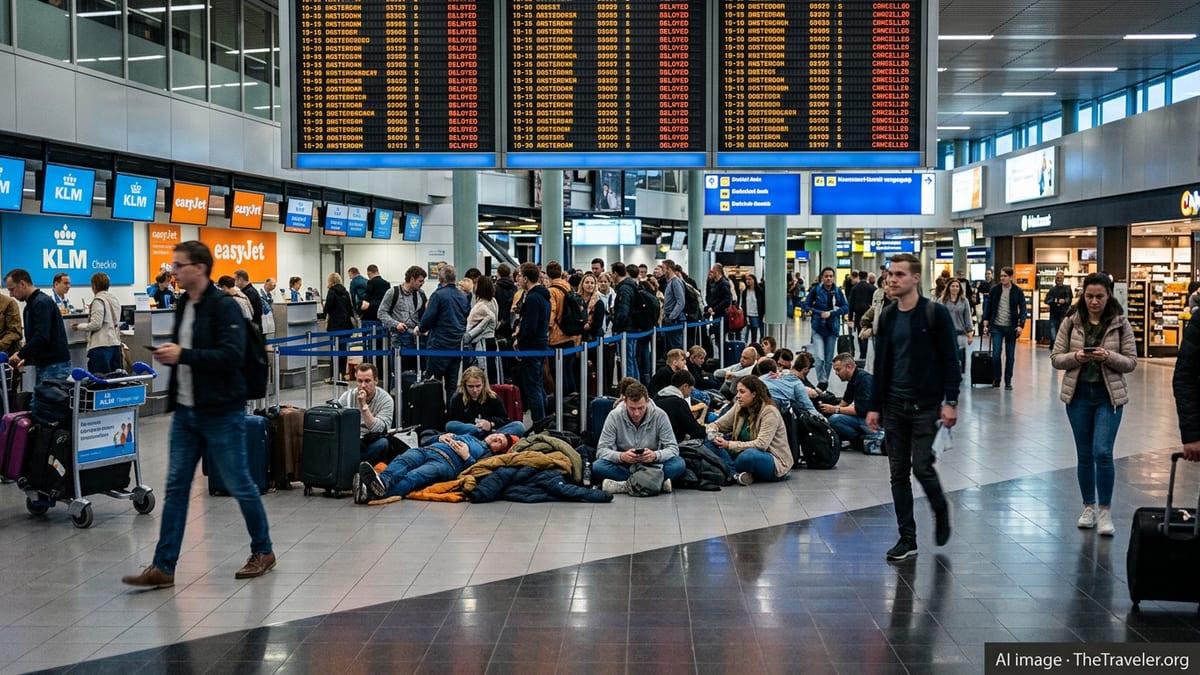
Alerts widen from France to Portugal and Germany
Publicly available guidance shows that the most visible change for US travelers in recent days has been a specific alert for Portugal, following earlier security notifications related to unrest in France. Coverage highlighted a message issued on November 2 warning Americans in Portugal that demonstrations linked to the wider European protest wave could disrupt transport and public services, with routes subject to sudden change and some gatherings turning confrontational in neighboring countries such as Germany and France.
The alert for Portugal follows an October 5 security message for France, reported by industry outlets, that advised US citizens to avoid demonstration areas in Paris and other major cities after protests over living costs and public services escalated into clashes with police. That message pointed to incidents such as a protest on Boulevard Saint‑Germain that turned violent, with thousands of arrests and hundreds of injuries among security personnel recorded across France since late September.
Despite the scale of the unrest, publicly available information indicates that the formal US country‑level advisory ratings for key destinations including Portugal and Germany had not been raised specifically in response to the protests as of November 2. Instead, the government has relied on targeted security alerts, city‑specific messages and broader reminders within its Europe‑wide guidance that demonstrations can emerge with limited notice and may quickly affect visitor itineraries.
Other governments have taken similar steps. Recent advisories from Canada and Australia, for example, flag large‑scale demonstrations and strikes across France and Italy, urging visitors to avoid protest areas, expect transport disruption and maintain flexible travel plans while acknowledging that tourism continues in most major cities.
France remains focal point of Europe’s unrest
France has been at the center of the current wave of protests, which began in late September and intensified around mid‑October as marches over energy costs, housing pressure and cuts to public services drew large crowds in Paris, Marseille, Lyon and other regional centers. Reports describe a sharp escalation on the weekend of October 17, when some gatherings in Paris and several provincial towns descended into rioting, looting and arson.
French and international media accounts note that more than 6,000 people have been arrested since the start of the movement, with over 700 police and gendarmes injured during confrontations. In response, French authorities have imposed temporary restrictions on demonstrations in specific neighborhoods, particularly around key government buildings and major commercial thoroughfares, while still allowing authorized marches along designated routes.
Travel advice platforms in multiple countries continue to warn that further large‑scale demonstrations are planned, including coordinated protest days in late October and early November. Advisories for France from Canada and other partners emphasize that rallies can materialize in central squares and near transport hubs, that tear gas and crowd‑control measures may be deployed, and that even peaceful gatherings can quickly lead to street closures and tram or metro suspensions.
Despite these warnings, there has been no blanket call to avoid travel to France. Guidance instead encourages visitors to check local news before leaving their accommodation, monitor real‑time transport apps and be prepared to reroute around affected districts, particularly in Paris, Marseille, Lyon, Nantes and Toulouse, where protest activity has been more frequent.
Italy, Spain, Belgium and Portugal see growing demonstrations
Beyond France, protest movements are gaining momentum in several other European countries, prompting updated travel advice from foreign ministries and tourism‑focused risk services. Italy has seen repeated weekend marches in cities such as Rome, Milan and Turin, tied to inflation, labor disputes and housing shortages. Australia’s official advisory for Italy, revised in late October, explicitly references ongoing strikes and demonstrations, warning they may disrupt flights, trains and urban public transport.
In Spain, public reports describe housing and cost‑of‑living protests in Madrid’s Puerta del Sol and other central locations, where crowds have gathered to oppose rising rents and evictions. Belgium has also seen solidarity rallies and labor marches in Brussels and other cities, while social media‑organized events have drawn participants in Lisbon and Porto as discontent over housing affordability spreads through Portugal.
Recent news coverage of the US alert for Portugal underlines concerns that some demonstrations there could move beyond traditional city‑center marches and affect residential neighborhoods or tourist areas with popular nightlife. The alert points out that protest routes may shift quickly and that gatherings could occur outside areas pre‑approved by local administrations, complicating efforts for visitors to plan around them.
Risk bulletins compiled by other governments, including New Zealand and Canada, indicate that protest activity could continue to spread to additional European states in the coming weeks. Travelers are urged to avoid treating demonstrations as tourist attractions, to move away at the first sign of unrest and to have alternate routes prepared for airport transfers and intercity journeys.
What the US advisories mean for upcoming trips
For now, the US measures largely take the form of localized security alerts, reminders to enroll in the Smart Traveler Enrollment Program and guidance to monitor local media rather than outright recommendations to postpone travel. Information compiled by travel‑security providers notes that the underlying State Department advisory levels for France, Germany, Italy, Spain and Portugal had not been escalated solely because of the protests by November 2, even as embassy messages highlight the potential for sudden disruption.
This approach aligns with the broader definition of a travel advisory, which US and international sources describe as information intended to help travelers assess risks related to issues such as civil unrest, crime and health rather than a blanket ban. Alerts tied to specific protests often stress practical steps, such as avoiding large gatherings, steering clear of police or military cordons, and allowing extra time for airport and rail transfers.
Travel‑risk consultancies report that some corporate travel programs have begun imposing additional pre‑trip approvals for journeys to protest‑affected cities, and in a few cases have temporarily rerouted conferences or large events to less affected locations elsewhere in Europe. However, there is little evidence so far of a broad collapse in bookings, and major tourism boards across the continent continue to promote city‑break and winter market trips while acknowledging the need for visitors to stay informed.
For individual US travelers, experts recommend reviewing existing bookings to confirm flexible change conditions, keeping digital copies of identification documents in secure cloud storage, and maintaining regular check‑ins with family or friends at home during days when large protests are scheduled. Enrolling in official alert systems can ensure that security messages reach travelers quickly if demonstrations flare near their accommodation or planned sightseeing routes.
Practical advice for travelers navigating protest‑hit cities
For those who continue with European trips in the coming weeks, practical preparation can significantly reduce the impact of unrest on day‑to‑day plans. Travel‑advice portals and security briefings consistently recommend that visitors map out key neighborhoods in advance, identify alternative routes between their hotel and major sites, and avoid relying on a single metro or tram line for time‑sensitive journeys such as airport departures.
Guidance from several governments stresses that travelers should leave demonstration areas as soon as it becomes clear a protest is forming, even if the atmosphere initially appears calm. Crowds can grow rapidly, and the use of crowd‑control measures such as tear gas and baton charges can create confusion not only for participants but also for bystanders and tourists attempting to pass through.
Specialists in travel security also advise maintaining a low profile by avoiding political symbols, flags or clothing associated with any side in the protests, and carrying only the minimum cash and valuables needed for the day. Keeping a small reserve of funds on a separate payment card, along with the phone numbers of the hotel and local emergency services, can help if disruptions or temporary lockdowns affect a neighborhood.
Finally, travelers are encouraged to monitor reputable international and local news outlets each morning, pay attention to transport‑operator updates, and be ready to adjust museum visits, dining reservations or shopping plans if key districts are affected by marches or police operations. While the current unrest across Europe has introduced new variables for trip planning, many attractions, restaurants and cultural venues in major cities remain open, and visitors who stay informed and flexible can often continue their journeys with only limited disruption.