


More news on this day
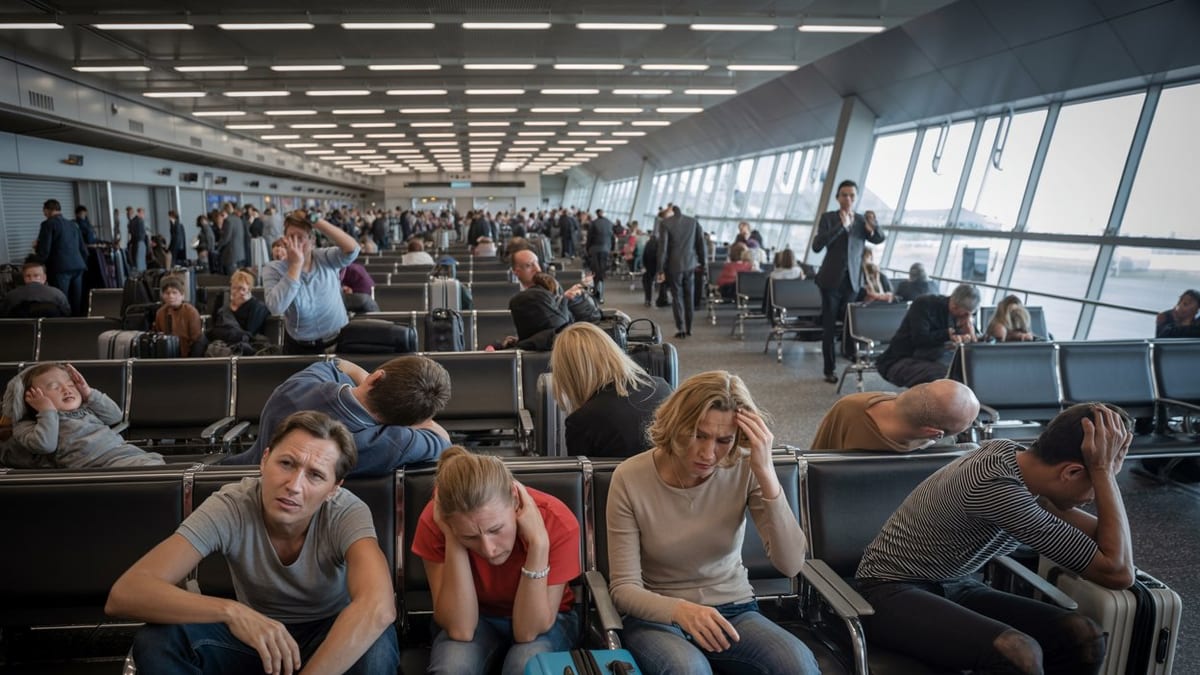
A viral social media video showing passengers stranded at the gate after being told their fully boarded long haul flight was suddenly canceled is renewing anger over how airlines handle last minute disruptions and why travelers are sometimes allowed to board aircraft that never depart.
Get the latest news straight to your inbox!
A familiar pattern of last minute cancellations goes viral
The latest clip, which spread quickly across TikTok and X in late October, shows exhausted passengers queuing at an airport gate after being informed that their evening departure had been canceled shortly before or just after boarding. In the short video, one traveler can be heard asking, “Why were we allowed to board?” a question that has resonated widely with viewers who say they have experienced similar treatment on recent trips.
The footage follows a run of high profile incidents in 2026 where travelers spent hours on aircraft or in boarding areas before flights were called off. In early October, for example, a United Airlines service from Washington Dulles to Rome was ultimately canceled after passengers spent much of the day cycling between the gate and the cabin while maintenance issues were assessed, according to aviation news coverage. Publicly available accounts from that flight describe travelers remaining on board for extended periods before being asked to disembark when the service was finally scrubbed late in the evening.
Reports of overnight disruptions have surfaced internationally as well. Consumer commission documents in India describe a woman left stranded at London Heathrow after a rerouted journey to Bengaluru resulted in her onward reservation being canceled and no timely assistance provided, leading to an order in October 2026 for compensation from the operating carrier. In the Caribbean, local newspapers have highlighted cases where British Airways and other airlines canceled late night flights after repeated rolling delays, leaving customers to scramble for scarce hotel rooms during peak holiday periods.
Although the circumstances differ, the common thread in these stories is chronology: passengers are frequently checked in, sometimes boarded and seated, and only then informed that their journey will not go ahead as planned. The resulting sense of powerlessness is what turns many of these situations into viral moments online.
Why airlines sometimes board flights that never depart
Publicly available airline and regulatory guidance indicates there are several reasons a flight may be boarded and then canceled, often tied to the way operational decisions are made close to departure time. Mechanical inspections, last minute technical findings, crew duty limits and evolving weather patterns can all affect whether a plane is ultimately cleared to fly, and these issues are not always fully resolved when boarding begins.
In the United flight from Dulles to Rome on October 2, coverage by travel industry publications notes that passengers boarded and deplaned more than once while maintenance teams attempted to address a technical problem. With the aircraft already catered and a full manifest at a busy international hub, the airline initially proceeded in hopes the issue could be resolved. Hours later, the flight was canceled, leaving passengers with little clarity about whether to stay at the gate, return home, or seek hotel rooms on their own.
Operational pressures can also shape these decisions. Industry analyses cite airline efforts to avoid triggering certain passenger compensation rules in regions such as the European Union, where Regulation 261/2004 provides cash payments for many cancellations within 14 days of departure when the cause is under the carrier’s control. Carriers weighing whether a technical issue can be cleared may delay canceling until the last feasible moment, even as boarding proceeds, in order to keep the option of operating the flight open.
However, this approach can come at a cost for travelers. By the time a late cancelation is announced, alternative flights may already be full, particularly on busy holiday weekends or overnight long haul routes. Passengers featured in recent news reports from Europe, the Caribbean and North America describe struggling to secure rebooked seats for the same day and, in some cases, having to wait one or more days to continue their journeys.
What passenger protections currently exist
In the United States, the Department of Transportation maintains an Airline Cancellation and Delay Dashboard that compares written commitments by major domestic carriers for “controllable” delays and cancellations, such as maintenance issues. According to the dashboard and related public guidance, many large airlines now pledge to provide meal vouchers for waits above three hours and hotel accommodation when passengers are stranded overnight due to problems within the airline’s control.
Recent viral cases suggest that the value and availability of those benefits remain a flashpoint. In one incident widely shared in late October, a traveler waiting for an American Airlines departure described receiving a 12 dollar meal voucher after a lengthy delay related to an engine problem and the possibility of a full cancellation, prompting criticism from viewers who said such amounts fall short of actual airport prices. Other accounts on social media describe situations where travelers say they were left to arrange and pay for last minute accommodation themselves after crews timed out or aircraft required unscheduled maintenance late at night.
Outside the United States, protections can be stronger but vary by jurisdiction. In the European Union and several associated countries, qualifying cancellations can trigger compensation in addition to refunds and rebooking, with the level depending on flight distance and the length of delay at arrival. National consumer agencies in markets such as India have also ordered airlines to reimburse out of pocket expenses and pay additional damages in individual cases where passengers were rerouted or left stranded without adequate assistance.
Despite these frameworks, many travelers remain uncertain about exactly what they are entitled to when confronted with a late night gate announcement. Advocates often urge passengers to keep all receipts, document interactions at the airport and check both airline policies and local regulations before accepting vouchers that may limit further claims.
Why these incidents resonate with travelers
The emotional response captured in the latest viral clip reflects broader frustration with the post pandemic travel environment. Airlines in the United States and abroad have restored most of their schedules, but staffing and maintenance challenges continue to cause operational strain, particularly during peak travel periods. When problems emerge late in the day, passengers may feel they have little visibility into how decisions are made or why they were permitted to board a flight that was already at risk.
Experts interviewed in previous coverage of large scale disruption events note that communication plays a central role in shaping how such episodes are perceived. Travelers are more likely to accept delays and cancellations when they receive clear, consistent updates and concrete information about rebooking, meal and hotel arrangements. In many of the recent viral cases, however, passengers report learning of cancellations from screens or public address announcements with limited in person support at the gate.
The question captured in the video title, “Why were we allowed to board?”, distills those concerns into a single moment. For passengers who have taken time off work, paid for nonrefundable hotels or planned milestone trips around a particular flight, the sense that a cancellation could have been communicated earlier often overshadows later efforts at compensation.
With smartphones documenting more of these scenes in real time, airlines face growing pressure not only to comply with formal regulations but also to manage expectations about what will happen when flights go wrong. The latest viral recording adds to that pressure, underscoring how the timing and transparency of cancellation decisions can shape public perceptions long after stranded travelers have left the terminal.