


More news on this day
Etihad Airways is preparing a major capacity increase between Abu Dhabi and Paris Charles de Gaulle from July 2026, adding a third daily frequency and positioning the United Arab Emirates alongside leading European hubs such as France, Germany, Italy and the United Kingdom in the race for long haul premium travelers.
Get the latest news straight to your inbox!
Triple Daily Schedule Elevates Abu Dhabi–Paris Corridor
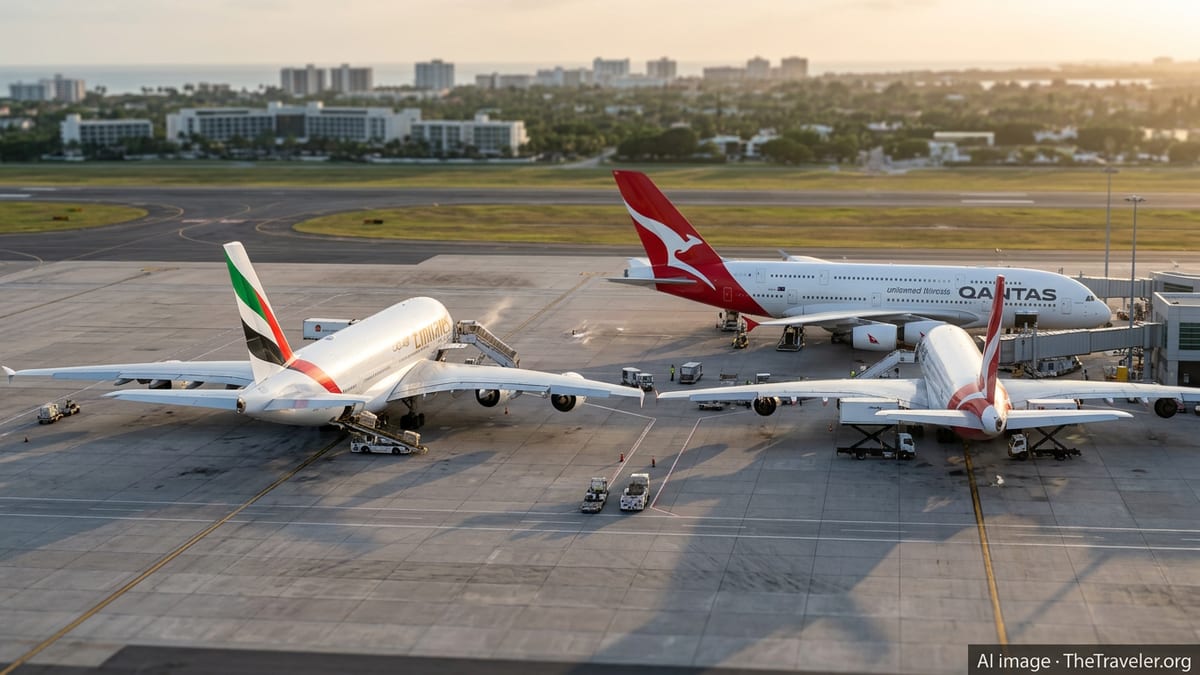
Publicly available information from the airline’s schedule and industry trackers indicates that from 1 July 2026 Etihad will operate three daily flights between Abu Dhabi and Paris Charles de Gaulle, up from the double daily pattern being phased in through 2025. Two of the rotations are scheduled on the Airbus A380, while a third will be operated by a Boeing 787 9, significantly increasing daily seat and premium cabin capacity on the route.
The move will place Paris among a select group of destinations worldwide that receive double daily A380 service from Etihad. Capacity growth is especially pronounced at the front of the aircraft, with the return of the carrier’s flagship products on the superjumbo, targeting high yield corporate and affluent leisure demand between the Gulf and continental Europe.
Route data compiled by aviation trackers shows that the additional Paris frequency will run alongside Etihad’s broader rebuilding of its global network following earlier schedule disruptions in 2026. The carrier is progressively restoring and then expanding frequencies to key cities to capture resurgent demand across Europe, Asia and North America, with Abu Dhabi’s Zayed International Airport serving as the central connecting hub.
Travel analysts say the decision to prioritize extra lift into Paris reflects the strength of France as both an origin and destination market, as well as its function as a gateway feeding connecting traffic from neighboring European countries. With three daily options in each direction, travelers will have improved flexibility for same day meetings, weekend city breaks and onward long haul itineraries.
UAE Pushes Deeper Into Core European Travel Markets
Etihad’s latest Paris expansion comes as the United Arab Emirates increasingly positions itself as a global travel crossroads on par with established European aviation centers in France, Germany, Italy and the United Kingdom. Schedules and published network plans show that Abu Dhabi now offers multiple daily links to major cities such as London, Frankfurt, Munich, Rome and Milan, with further secondary points in Europe being added or restored through 2026.
The enhanced Abu Dhabi–Paris corridor strengthens this web of connections, with additional seats supporting flows between Europe and destinations across the Middle East, the Indian subcontinent, Southeast Asia and Australia. Paris is a particularly valuable spoke for traffic from France, Belgium, Switzerland and parts of western Germany, where travelers can now route via Abu Dhabi instead of connecting exclusively through European hubs or rival Gulf carriers.
Industry coverage highlights that the UAE’s flag carriers are using premium heavy aircraft and dense frequencies to compete directly with European airlines on long haul routes. By deploying its largest aircraft twice daily into Paris and backing them up with a third daily widebody, Etihad is signaling its intent to be a serious challenger for high value travelers who might otherwise fly via London, Frankfurt or Amsterdam.
The strategy aligns with Abu Dhabi’s broader ambitions to establish itself as a leading tourism, business and events destination in its own right. Additional France capacity supports inbound visitor growth to the UAE while also giving residents and regional travelers a wider array of options for leisure and business trips across Europe.
Capacity Boost Targets Premium and Connecting Traffic
According to airline announcements and specialist aviation reports, the double daily A380 deployment to Paris will reintroduce some of Etihad’s most sought after onboard products on the route, including first class suites and high density business cabins. This is expected to appeal to corporate travelers, high net worth individuals and connecting passengers who value additional space and privacy on overnight and ultra long haul segments.
Travel management commentary suggests that three daily departures in each direction will make it easier for companies to secure last minute seats for short notice trips between the UAE, wider Gulf markets and France. More capacity often leads to greater fare competition, particularly in premium cabins, where Etihad faces rivals operating via Dubai, Doha and major European hubs.
The timing of the new schedule is also designed to support global connectivity over Abu Dhabi. Early morning arrivals into Paris allow same day access to regional European destinations, while late evening departures from France feed into overnight banks to Asia and Australia. In the other direction, midday and evening arrivals in Abu Dhabi provide onward options to South and Southeast Asia, Africa and the broader Middle East.
Aviation analysts note that the Paris expansion closely follows other growth moves across Etihad’s network, including enhanced flying into China and resumed or new services to several secondary European cities. This pattern underscores a pivot from pure recovery toward proactive growth in markets where business and leisure demand is proving resilient.
Implications for Travelers and the Wider Market
For travelers, the move to three daily Abu Dhabi–Paris rotations translates into greater choice of departure times, aircraft types and cabin products. Passengers originating in the United Arab Emirates, Saudi Arabia, India or Southeast Asia will be able to tailor itineraries to match business schedules in Paris or weekend escape plans across France and neighboring countries.
Observers point out that the increased capacity may also have a moderating effect on fares if demand does not rise at the same pace as supply. While pricing will ultimately depend on broader economic conditions in Europe and the Gulf, additional inventory often brings more promotional activity and competitive responses from other airlines serving the France–UAE market.
The development is being closely watched by tourism boards and travel intermediaries that package multi country itineraries through Paris and Abu Dhabi. With more seats and improved connectivity, it becomes easier to market combined France and UAE holidays, stopover stays in Abu Dhabi, and complex itineraries linking Europe with Indian Ocean and Asia Pacific resorts.
At the same time, the build up in Abu Dhabi’s long haul network reinforces the city’s role as a transfer hub alongside Dubai and Doha. As Etihad adds frequencies to key European gateways like Paris, the competitive landscape for transcontinental traffic between Europe, Asia and Australia is set to intensify, giving travelers more routing options and potentially reshaping traditional traffic flows over legacy European hubs.
Abu Dhabi’s Airport and Infrastructure Support Growth
The increased flights to Paris are enabled by the continued ramp up of operations at Abu Dhabi’s Zayed International Airport, which serves as Etihad’s home base. Public information on the airport’s development shows that the new terminal complex has been designed to handle strong growth in transfer and origin and destination traffic, with expanded gates suited to large aircraft such as the A380.
Airport planners and aviation analysts highlight that enhanced ground capacity, streamlined transfer processes and upgraded premium facilities are critical to supporting Etihad’s ambitions in markets like France, Germany, Italy and the United Kingdom. As more widebody aircraft converge on Abu Dhabi during busy connection waves, efficient handling becomes a competitive differentiator.
Local transport developments are also gradually improving access between the airport and Abu Dhabi’s urban areas and tourism zones. Plans for expanded rail and road connections are aimed at making the hub more attractive both as a transfer point and as a gateway for visitors spending time in the United Arab Emirates before or after their long haul flights.
Taken together, the triple daily Paris schedule, broader European network growth and continued investment in airport infrastructure illustrate how the UAE is leveraging aviation to link its capital with some of the world’s most important travel markets. For travelers between Europe and the wider region, Abu Dhabi is emerging as an increasingly central waypoint on the global map.