


More news on this day
After five consecutive months of rising tourist arrivals in early 2026, South Carolina’s coast is emerging as one of the United States’ most closely watched beach tourism success stories, joining destinations from Florida to Hawaii, North Carolina, the U.S. Virgin Islands and Guam in redefining how and where Americans return to the shore.
Get the latest news straight to your inbox!
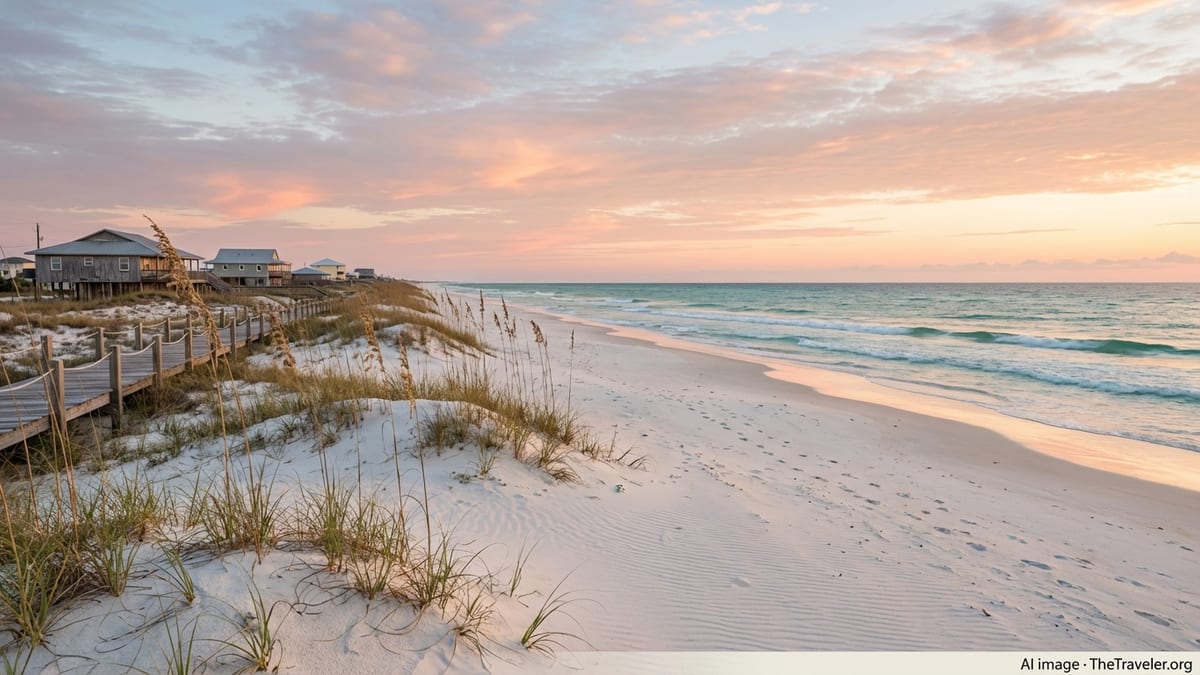
Momentum Builds Along South Carolina’s Shoreline
Publicly available tourism data and recent industry reporting point to a steady rebound across South Carolina’s coastal markets through the first half of 2026. Sector analyses identify tourism as the state’s largest industry, driven by marquee beach destinations including Myrtle Beach, Charleston’s nearby barrier islands and Hilton Head Island. Early-season travel indicators, from hotel bookings to short term rental occupancy, suggest that visitor demand has strengthened each month since the start of the year.
Myrtle Beach, which welcomed more than 17 million visitors in 2025 according to local tourism figures, has entered 2026 with what regional media describe as “busy but manageable” spring and early summer conditions. Reports from the Grand Strand highlight full parking lots, active boardwalks and strong participation in youth sports tournaments, even as hoteliers continue to navigate shifting preferences toward renovated, higher tier properties.
Further south, Charleston’s beaches and Hilton Head Island appear to be benefiting from travelers willing to spend more on fewer, higher quality trips. Destination marketing plans for Hilton Head Island for fiscal year 2025 to 2026 emphasize a visitor base that skews toward drive markets from the Northeast, Mid Atlantic and Midwest, positioning the island to capture families planning extended coastal stays.
Across these communities, the theme is consistent: despite isolated softness in 2025 related to weather and economic headwinds, 2026 is shaping up as a year of stabilization and renewed growth, with five straight months of increasing arrivals helping South Carolina reclaim ground lost during earlier phases of the post pandemic adjustment.
How South Carolina Compares With Other U.S. Beach Powerhouses
The upswing in South Carolina arrives as other major American beach destinations register mixed yet generally resilient performance. Florida, the country’s largest tourism market, reported a record 143.3 million visitors in 2025 according to state level releases, and preliminary first quarter 2026 figures show only a slight year over year dip in total arrivals while overseas visitation continues to rise.
Hawaii, long a bellwether for high value sun and sand travel, is navigating a more complex recovery. Economic outlooks compiled at the end of 2025 projected a mild recession and a weaker near term tourism cycle, a forecast echoed by 2026 visitor statistics that show modest declines in arrivals but higher overall spending. State tourism updates for March and April 2026 describe conditions in which fewer travelers are staying longer or booking more premium experiences.
North Carolina’s Outer Banks and other Atlantic beaches have also seen renewed momentum as airlines add summer capacity into regional hubs and travelers look for coastal options within driving distance of major East Coast cities. Meanwhile, the U.S. Virgin Islands and Guam are benefiting from increased airlift and a rebound in cruise and package tour business, particularly from the U.S. mainland and key Asian markets.
In this context, South Carolina’s string of five consecutive months of visitor growth in 2026 places the state firmly within the group of coastal destinations helping to rewrite expectations for U.S. travel recovery. Rather than a single dominant region, the data suggests a patchwork of strong performers, with South Carolina’s shoreline emerging as a competitive alternative to more mature or higher priced markets.
Myrtle Beach Leads a New Wave of Affordable Family Travel
Among South Carolina’s coastal communities, Myrtle Beach stands out as a symbol of accessible beach tourism in 2026. Recent travel rankings from consumer platforms position the city as a top domestic summer destination, citing factors such as comparatively lower nightly rates, wide beaches, extensive family attractions and a dense cluster of mid range hotels and vacation rentals.
Visitor industry research from the Myrtle Beach area shows that while 2025 brought a slight pullback from record highs, the destination maintained double digit millions of annual visitors and continued to support billions of dollars in spending across lodging, dining, entertainment and retail. Industry groups describe the local market as “resilient,” with sports tournaments, festivals and events helping to smooth traditional shoulder seasons.
Affordability appears to be a key driver of 2026 demand. As travel cost comparison studies for U.S. beaches highlight rising prices in parts of Florida, California and Hawaii, Myrtle Beach’s reputation for value is resonating with families from the Midwest and Southeast who are seeking longer stays without premium price tags. Drive in access from cities such as Charlotte, Atlanta and Raleigh further reinforces the area’s appeal for last minute or extended school break trips.
At the same time, there are signs of gradual repositioning. Hospitality reports note that visitors are gravitating toward newer or recently renovated hotels and resorts, reflecting a broader national shift toward “experience first” spending. For South Carolina’s tourism economy, this blend of value and upgraded product could prove decisive in sustaining growth beyond the current five month upswing.
Charleston, Hilton Head and the Rise of Higher Yield Coastal Travel
While Myrtle Beach captures headlines for volume and value, Charleston’s beaches and Hilton Head Island are helping South Carolina compete for higher yield visitors who tend to spend more per trip on lodging, dining and activities. Market research prepared for Hilton Head’s 2025 to 2026 destination marketing plan depicts a visitor profile dominated by households with above average incomes, repeat visitation and a willingness to travel in shoulder seasons.
Charleston’s coastal area, including Sullivan’s Island, Isle of Palms and Folly Beach, continues to trade on a mix of historic urban tourism and relaxed shore time. Hospitality analyses from 2025 show the city’s hotel fundamentals holding steady, with occupancy supported by a blend of leisure tourism, weddings and small meetings. Early 2026 reports indicate that this foundation has helped Charleston absorb broader economic uncertainty while still attracting a steady stream of weekend and extended stay visitors.
For the state as a whole, these higher yielding segments are increasingly important. Tourism accounts for tens of billions of dollars in annual economic impact for South Carolina, and coastal counties such as Horry, Charleston and Beaufort rank among the top contributors to visitor spending. As travel demand normalizes after the volatility of the early 2020s, destinations that combine beach access with distinctive dining, culture and outdoor recreation are better positioned to maintain pricing power.
The current run of consecutive monthly gains in arrivals therefore reflects more than a simple return to pre pandemic habits. It signals that South Carolina is capturing a broader spectrum of the beach travel market, from budget conscious families on the Grand Strand to golf and spa travelers on Hilton Head and culinary focused visitors orbiting Charleston.
What Travelers Should Expect From U.S. Beach Trips in 2026
For travelers considering a beach vacation in 2026, the emerging picture across South Carolina, Florida, Hawaii, North Carolina, the U.S. Virgin Islands, Guam and other coastal regions is one of choice and competition. Industry commentary suggests that travelers are increasingly weighing value, crowd levels and flight or drive convenience rather than defaulting to a single traditional favorite.
Those looking at South Carolina can expect robust but generally manageable crowds, especially outside peak holiday weekends, along with a wide range of price points and accommodation types. Myrtle Beach offers volume, attractions and budget friendly stays, while Charleston’s beaches and Hilton Head Island provide a more curated, resort driven experience with correspondingly higher nightly rates.
Comparative reports highlight that Florida remains the country’s tourism heavyweight, with world famous beaches and a massive inventory of rooms, even as its first quarter 2026 data shows minor softening. Hawaii continues to attract long haul travelers focused on nature and culture, though capacity and pricing dynamics may lead some visitors to consider closer alternatives. The U.S. Virgin Islands and Guam add an island experience within the U.S. system, supported by growing air service and cruise itineraries.
Against this backdrop, South Carolina’s five month streak of growing arrivals underscores its status as a central player in the new geography of American beach tourism recovery. For the travel industry, the state’s trajectory is a signal that diversified coastal offerings, from entertainment heavy boardwalks to quiet barrier islands, are likely to define the next phase of U.S. travel rather than a return to a single dominant shoreline.