


More news on this day
European Union lawmakers have agreed to preserve the right to cash compensation for airline passengers whose flights arrive more than three hours late, keeping in place one of the world’s most generous travel protection regimes after years of contentious debate with governments and the aviation industry.
Get the latest news straight to your inbox!
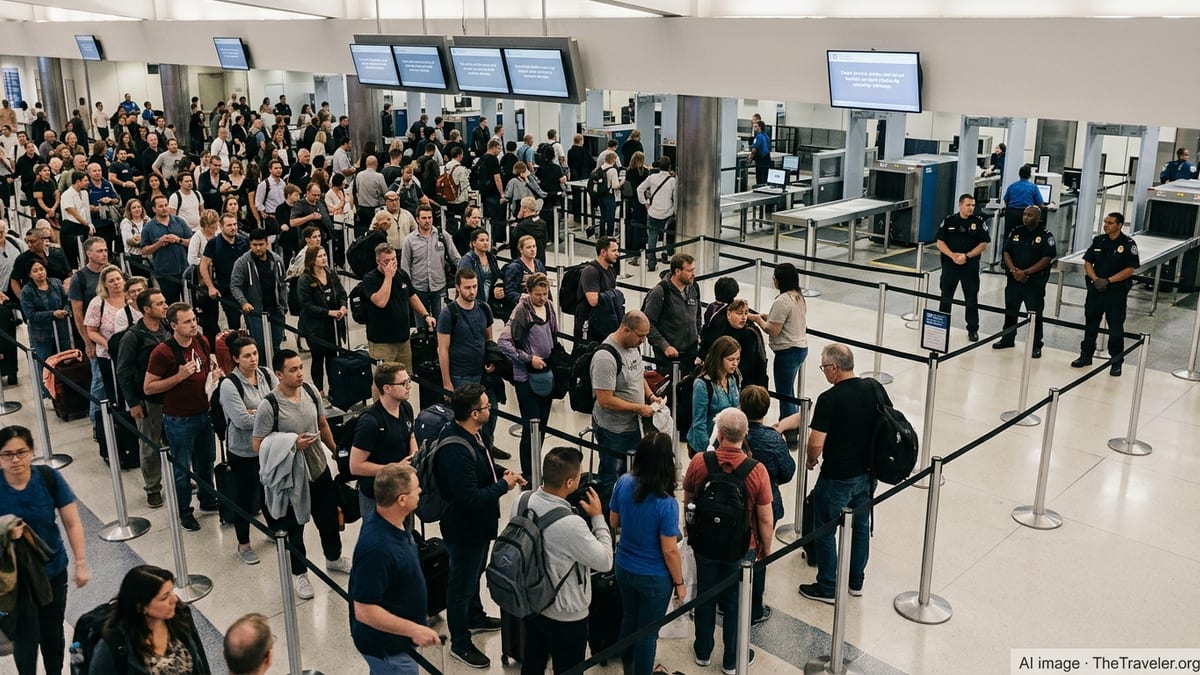
Deal preserves core EU air passenger protections
A provisional agreement endorsed in recent weeks in Brussels maintains the three hour arrival delay threshold that triggers compensation for travellers, alongside existing payouts for cancellations and denied boarding. According to publicly available information on the legislative process, the compromise emerged from conciliation talks between the European Parliament and EU member states over an update to Regulation 261, the bloc’s flagship air passenger rights law adopted in 2004.
Published coverage indicates that the new rules will allow passengers to continue claiming compensation of between 250 and 600 euros when a qualifying delay, cancellation or boarding refusal is not caused by extraordinary circumstances such as severe weather or air traffic control disruptions. The level of payouts varies with flight distance, mirroring the structure that has applied in the European Union for more than a decade.
The outcome follows a push by some governments to lengthen the delay that would qualify for compensation, with suggested thresholds ranging from four to six hours depending on route length. Members of the European Parliament had opposed those changes, arguing in public statements and parliamentary documents that raising the bar would have excluded a majority of current compensation cases and weakened consumer confidence in air travel.
With the compromise, the three hour benchmark that has become familiar to frequent flyers in and beyond Europe remains intact, reinforcing the bloc’s image as a jurisdiction where passengers have relatively strong recourse when flights go wrong.
Years of negotiations after industry pressure
The decision to maintain compensation levels and thresholds comes after more than a decade of on and off talks to revise EU air passenger rights. Aviation groups had argued that increasingly strict interpretations of the rules by the Court of Justice of the European Union, especially on long delays, had raised operating costs and legal uncertainty. Airlines contended that automatic payouts after three hours put particular strain on regional and smaller carriers operating in tight competitive markets.
Reports from Brussels describe intense lobbying from both airlines and consumer advocates as negotiations accelerated in 2025 and 2026. Industry representatives warned that expanding or even maintaining compensation rules without changes could reduce capacity on marginal routes, especially in peripheral regions, as carriers reassessed the financial risk of delays. Consumer organizations countered that robust compensation obligations encourage airlines and infrastructure providers to invest in reliability and transparent communication.
Throughout the talks, lawmakers also grappled with how to define “extraordinary circumstances,” a key concept that can exempt airlines from paying compensation. Court rulings in recent years have narrowed the scope of events that qualify as beyond an airline’s control, reinforcing the idea that technical problems, crew shortages and routine operational issues should not relieve carriers of their financial responsibilities to passengers.
The final compromise does not fundamentally alter that balance, according to publicly available legal summaries of the draft text. Instead, it seeks to clarify obligations while leaving the core right to compensation for long delays intact, a point that travel rights advocates have framed as a significant win.
What travellers can expect under the updated regime
For passengers, the preservation of the three hour delay threshold means that practical entitlements remain largely unchanged on most journeys touching the European Union. On flights departing from an EU airport, or arriving in the EU on an EU carrier, travellers will still be able to claim compensation if they reach their final destination more than three hours later than scheduled, provided the disruption was not caused by extraordinary circumstances.
Alongside cash payouts, the revision also reinforces existing rights to care and assistance. Publicly available information on the agreement indicates that airlines will continue to be required to provide meals, refreshments and, where necessary, hotel accommodation when passengers are stranded for extended periods. In severe delays or cancellations, travellers must be offered a choice between rerouting to their final destination at the earliest opportunity and a refund of the unused ticket.
The updated rules aim to streamline the claims process by requiring clearer information to be displayed at airports and in booking documents, setting minimum standards for how airlines handle complaints and deadlines for responding. Consumer groups have argued that these procedural improvements are essential, as many eligible passengers never pursue compensation due to lack of awareness or complex claim procedures.
For international travellers connecting through European hubs, the continued availability of compensation may remain an important factor when choosing itineraries. Travel advisors note that itineraries starting in the EU can offer stronger protections than comparable journeys beginning in regions with weaker or less consistently enforced passenger rights regimes.
Airlines weigh operational impact and compliance costs
The aviation sector is now assessing how the final agreement will influence operations, pricing and route planning. While airlines did not secure the longer delay thresholds that many had favoured, they did obtain some clarifications and technical adjustments intended to offer more predictability, particularly around the division of responsibilities between carriers, airports and air traffic management providers.
Industry analyses suggest that maintaining compensation from the three hour mark will continue to be factored into ticket pricing models and may reinforce a trend toward greater schedule padding on certain routes. Building longer block times into timetables can reduce the risk of breaching compensation thresholds, though it can also lengthen nominal journey times and reduce aircraft utilization.
At the same time, some carriers are expected to invest further in real time disruption management tools, such as dynamic rebooking systems and more proactive passenger communication, in order to limit knock on effects when operational problems arise. Legal experts point out that swift rerouting and assistance can sometimes reduce or avoid compensation liabilities, giving airlines a financial incentive to handle irregular operations efficiently.
Budget airlines, which often operate with thinner margins and higher aircraft utilization, may feel the impact most acutely. Analysts following the sector note that these carriers rely on fast turnarounds, leaving them more vulnerable to cascading delays that cross the three hour mark and trigger compensation obligations for large numbers of passengers.
Broader implications for global passenger rights
The European Union’s decision to keep its existing delay compensation structure is likely to reverberate beyond its borders. Over the past two decades, Regulation 261 has served as a reference point for legislators in other regions considering how to strengthen protections for airline customers. Jurisdictions including the United Kingdom, Brazil and Canada have already adopted frameworks inspired in part by the EU model, though with different thresholds and compensation levels.
By resisting efforts to dilute the core of its regime, the EU signals that strong passenger protections can coexist with a competitive aviation market, even as carriers face pressures related to fuel costs, environmental regulation and infrastructure constraints. Observers of global aviation policy say the latest agreement may embolden consumer advocates in other countries to push for more comprehensive compensation rights after cancellations and delays.
For travellers planning trips that involve Europe, the development reinforces the continent’s reputation as a jurisdiction where passengers have meaningful legal recourse when flights are significantly disrupted. While claiming compensation can still involve paperwork, documentation and persistence, the continued existence of a clear three hour standard provides a tangible benchmark that many international flyers now understand and actively factor into their travel choices.
As the updated rules move through the final legal steps toward formal adoption and implementation, airlines, regulators and consumer groups are preparing for a new chapter in one of the world’s most closely watched passenger rights regimes, built on the principle that major disruptions to air travel should carry real consequences for carriers and real remedies for customers.