


On a peak summer afternoon in Great Smoky Mountains National Park, you can stand behind a cool curtain of water while rhododendron leaves drip around you and kids squeal as the spray hits their arms. That moment, at Grotto Falls, is what convinces many travelers that this is not just another Smokies waterfall hike. While trails like Laurel Falls, Abrams Falls, and Rainbow Falls all have their fans, Grotto Falls offers a blend of access, atmosphere, and novelty you will not quite find anywhere else in the park.
Get the latest updates straight to your inbox!
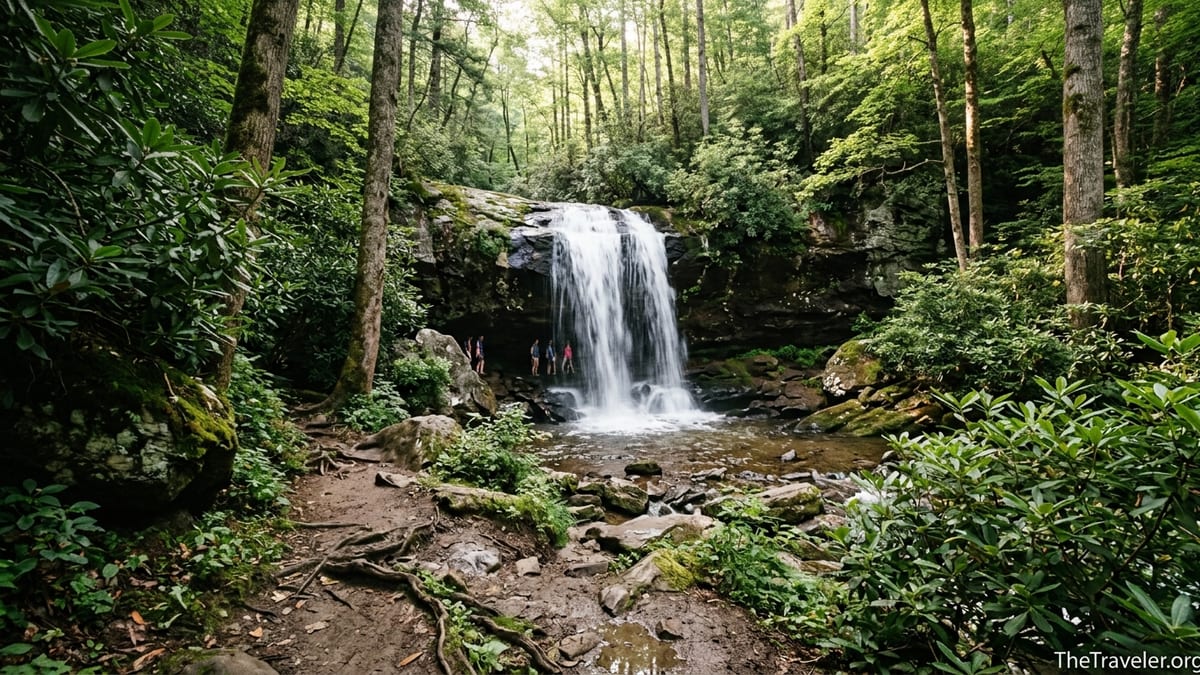
A Waterfall You Can Actually Walk Behind
The single feature that makes Grotto Falls truly different is right in front of you as you step onto the wet rocks at the base of the cascade. Here, the Trillium Gap Trail actually passes behind the 25 foot sheet of water, allowing hikers to slip into a shallow grotto carved into the rock face. National Park Service descriptions highlight Grotto Falls as the only waterfall in Great Smoky Mountains National Park where an official trail leads behind the falls, a distinction that has turned it into a favorite photo stop and family memory maker.
In practice, that means you are not just looking at a waterfall from a viewing platform, as you would at Laurel Falls, or standing on a distant boulder as at Abrams Falls. Instead, you can gently duck under the rock overhang, run a hand along the damp stone, and look out through the shimmering sheet of water at the forest beyond. On a hot July afternoon, visitors often linger here, letting the mist soak into shirts and hiking hats while cameras and phones try to capture the unusual perspective.
Because the rocks around the grotto stay wet and slick year round, this behind the falls feature also calls for a bit of extra caution. Travelers who wear basic trail shoes from brands like Merrell or Salomon usually find the footing manageable, but you will occasionally see someone in smooth-soled sneakers inching along more carefully. The park recommends staying off the steep slopes around the falls and avoiding climbing directly under heavy flows, especially right after big summer thunderstorms when the volume of water increases.
A Moderate Forest Walk Instead of a Paved Stroll
Another way Grotto Falls stands apart from many Smokies waterfall hikes is the character of the trail itself. From the Trillium Gap trailhead on Roaring Fork Motor Nature Trail, the hike comes in at roughly 2.6 to 2.8 miles round trip, with around 500 to 600 feet of elevation gain. It is typically rated moderate rather than easy, but the grade is steady enough that families with school-age children and reasonably active grandparents often manage it without trouble.
Compare that with Laurel Falls, which uses a paved trail and is marketed as one of the most accessible waterfall hikes in the park. Laurel’s paving brings stroller-friendly convenience but also huge crowds clustered along a narrow path. Grotto Falls, by contrast, is a classic dirt and rock footpath. It meanders past small stream crossings on stepping stones, roots winding across the trail, and patches of mud after rain. For many visitors, that slightly rougher surface feels more like “real” hiking while still being short enough to fit between breakfast in Gatlinburg and an early dinner in town.
On busy days in summer, you might share the Grotto Falls trail with dozens of other hikers, but the moderate rating and natural tread keep it from feeling quite as congested as some of the park’s most heavily trafficked paved routes. Travelers staying at midrange hotels along the Gatlinburg strip often report leaving town around 8 a.m., driving the short distance up Historic Nature Trail Road to reach the one way Roaring Fork loop, and finishing the hike in about two to three hours including time for photos at the falls.
Immersed in Old Growth Forest and Lush Cove Scenery
Walk a few minutes up the Trillium Gap Trail and it becomes clear that the waterfall is only part of the appeal. The footpath to Grotto Falls winds through a cool cove forest, with tulip poplars and hemlocks rising above tangles of rhododendron and mountain laurel. The National Park Service notes that sections of the forest along this trail qualify as old growth, something that already sets it apart from many popular front country waterfall hikes that pass younger second growth woods.
In spring, this setting turns into a display of wildflowers. Visitors in late April and early May often find trillium, violets, and fringed phacelia blooming along the trail edges, and the shady ravines hold on to cool temperatures even as Gatlinburg warms up for the season. In midsummer, the rhododendron thickets and mossy logs give the hike a deep forest feel that many travelers never experience on shorter roadside waterfall stops such as The Sinks or Meigs Falls, where you can simply pull into a turnout for a quick view.
The forest setting also shapes the way you experience the falls themselves. Grotto Falls is not a towering cliff like Rainbow Falls or a thunderous torrent like Abrams Falls. Instead, its smaller height and sheltered location create a kind of natural room, framed by rock and evergreen foliage. Many hikers find that this cozy atmosphere, combined with the ability to stand behind the water, makes the experience feel more intimate and less like checking off a landmark.
Roaring Fork Motor Nature Trail Access and Seasonal Quirks
Where and how you reach Grotto Falls is another distinctive part of the experience. The Trillium Gap trailhead sits off the Roaring Fork Motor Nature Trail, a narrow one way scenic drive that leaves from the upper end of Historic Nature Trail Road in Gatlinburg. This road twists through the forest past historic log cabins and along Roaring Fork creek, offering a mini scenic tour before you even lace up your boots. It also means that the logistics of hiking Grotto Falls are slightly different from waterfall trails that start directly off US 441 or Little River Road.
The Roaring Fork Motor Nature Trail typically closes in winter, often from late November to mid March, so direct vehicle access to the Grotto Falls parking area is seasonal. During these months, very determined hikers sometimes add many miles by accessing the Trillium Gap Trail from lower down near Rainbow Falls, but for most visitors Grotto Falls is effectively a spring to fall destination. Before an early season visit in March or April, it is wise to check the Great Smoky Mountains National Park official alerts page or call local visitor centers to confirm whether the motor trail has reopened.
Even in the high season, the limited parking at the Trillium Gap trailhead can shape your day. The small lot and roadside pullouts fill quickly on sunny mornings, particularly in June, July, and October leaf season. Travelers staying in Gatlinburg cabins frequently report arriving before 8:30 a.m. to find a spot, while those who show up closer to late morning may need to circle or adopt a backup plan such as continuing the driving loop, visiting Rainbow Falls instead, or returning at a quieter hour. Some local outfitters and shuttle services in Gatlinburg offer seasonal transport to the Roaring Fork area, which can be worth considering if you prefer to avoid the parking scramble.
Part of a Bigger Adventure to Mount Le Conte
Another aspect that sets Grotto Falls apart from self contained waterfall walks is the way it plugs into one of the Smokies’ classic high country routes. The Trillium Gap Trail does not end at Grotto Falls. Instead, it continues up the mountain to Trillium Gap itself and on toward the summit area of Mount Le Conte, one of the tallest peaks in the park. Day hikers aiming for Le Conte can use Grotto Falls as a scenic mid route stop on a much longer climb that might stretch to 13 or more miles round trip.
For most travelers, that bigger adventure might not happen on the same trip as their first family visit to Grotto Falls. But the connection matters because it creates options. A couple on a four day Smokies vacation might hike to Grotto Falls on their first day, get a feel for the trail and elevation, and then decide whether they are comfortable attempting a partial extension farther up Trillium Gap later in the week. Others use the falls as a non intimidating way to introduce friends to the idea of hiking toward Le Conte, pointing up the trail and saying, “Next time, we keep going.”
This through route also explains some of the trail traffic you see. Alongside families with day packs and reusable water bottles, you may encounter trail runners using Grotto Falls as a turnaround point, or backpackers heading down from a night at LeConte Lodge. Their presence subtly changes the feel of the hike compared with shorter tourist focused trails like Cataract Falls or the Laurel Falls loop, giving Grotto Falls a sense of being part of the park’s deeper trail network rather than an isolated attraction.
Comparing Grotto Falls to Other Iconic Smokies Waterfalls
When travelers plan a short trip to Great Smoky Mountains National Park, they often have to choose between several well known waterfall hikes. Look at Grotto Falls through this lens and its unique character becomes even clearer. Abrams Falls near Cades Cove, for instance, offers a powerful, wide cascade with a significant volume of water, but the trail is longer, about five miles round trip, and signage warns firmly against swimming due to strong currents and past drownings. Rainbow Falls, launching from just outside Gatlinburg, delivers a taller 80 plus foot plume and a signature rainbow effect on sunny afternoons, but the hike is steeper and more strenuous.
Laurel Falls remains one of the most visited waterfalls in the park thanks to its 2.6 mile paved trail. Families pushing strollers or visitors with limited mobility often gravitate there, but the popularity can mean shoulder to shoulder crowds and limited space around the falls themselves. Compared to these three, Grotto Falls hits a middle ground. It is shorter and easier than Abrams and Rainbow, more rustic than Laurel, and adds the unusual behind the falls experience that none of the others can match.
From a trip planning perspective, this makes Grotto Falls a particularly strong choice for mixed ability groups. A family staying in a mid priced Gatlinburg rental cabin might dedicate one day to the Cades Cove loop and Abrams Falls, leaving Grotto Falls for a different morning when not everyone wants a five mile trek. Or a couple could pair a Rainbow Falls climb one day with the gentler, more shaded walk to Grotto Falls the next, experiencing two very different sides of the same general area near Mount Le Conte.
Practical Tips to Experience Grotto Falls at Its Best
Because Grotto Falls has grown into a headline attraction around Gatlinburg, timing your visit can make a big difference. Travelers who arrive before 9 a.m., particularly on weekdays in late spring or early fall, often find quieter conditions both on the road and on the trail. By late morning on a sunny July Saturday, the parking area may be full and the grotto crowded with people waiting for their turn under the spray. Late afternoon can also offer a relative lull, though you will want to keep an eye on sunset times to avoid hiking out in the dark.
Footwear and clothing choices are simple but important. The combination of stream crossings, wet rock near the falls, and occasional muddy patches makes closed toe hiking shoes or sturdy trail runners a smarter choice than sandals. Many families pick up basic trekking poles at big box stores before their trip, which can help adults and older kids with balance on the moderate inclines. Prices for these entry level poles often run under 40 dollars, a small investment that can pay off on uneven terrain around Grotto Falls and other Smokies hikes.
Weather also shapes the experience. On hot August days, the shaded trail and cool air around the falls feel like natural air conditioning, making Grotto Falls a good choice when lower elevation areas feel humid. After heavy rain, the falls swell and the streams run higher, which can be beautiful but also means stepping stones may be partially underwater. During shoulder seasons like early April or late October, temperatures at the trailhead can be noticeably cooler than in downtown Gatlinburg, so a light fleece or windbreaker is worth throwing into a daypack along with at least one liter of water per person and a few snacks.
The Takeaway
Grotto Falls is not the biggest or loudest waterfall in Great Smoky Mountains National Park. What makes it special is the way several elements come together in one compact hike. The ability to walk behind a real mountain waterfall, the moderate but manageable trail, the cool cove forest with pockets of old growth, and the scenic approach along Roaring Fork Motor Nature Trail all combine to create an experience that feels distinctly “Smokies” while still being accessible to a wide range of visitors.
For travelers weighing which hikes to prioritize on a tight itinerary, that combination matters. If you want a taste of the park’s deeper trail system without committing to a strenuous all day climb, and you like the idea of literally standing inside a waterfall, Grotto Falls deserves a top slot on your list. Plan your timing around the Roaring Fork seasonal opening, arrive early to skirt the parking crunch, wear shoes ready for wet rocks, and you will see why so many visitors leave this shaded grotto talking about how different it felt from the park’s other famous falls.
FAQ
Q1. How long is the hike to Grotto Falls and how difficult is it?
The hike to Grotto Falls is roughly 2.6 to 2.8 miles round trip from the Trillium Gap trailhead, with moderate elevation gain. Most visitors in average shape find it manageable, though the natural dirt and rock surface, roots, and some short steeper sections mean it is more than a simple stroll.
Q2. Why is Grotto Falls considered different from other Smokies waterfall hikes?
Grotto Falls is the only waterfall in Great Smoky Mountains National Park where an official trail leads directly behind the falling water. Combined with its lush old growth style forest, moderate distance, and access via the Roaring Fork Motor Nature Trail, this behind the falls feature makes the hike feel distinct from popular options like Laurel Falls, Abrams Falls, or Rainbow Falls.
Q3. Can you safely walk behind the waterfall at Grotto Falls?
Yes, the Trillium Gap Trail passes behind the waterfall, and many visitors step into the shallow grotto to experience the water from behind. However, the rocks are often wet and slippery, so it is important to move carefully, avoid climbing on steep slopes, keep children close, and stay clear of areas where heavy water flow could knock you off balance.
Q4. Is Grotto Falls a good hike for children and older adults?
Grotto Falls is often recommended for families with school age children and active older adults because of its moderate distance and steady grade. It is more challenging than a paved path like Laurel Falls but easier than steeper routes such as Rainbow Falls. With proper footwear, snacks, and a relaxed pace, many multigenerational groups complete the hike comfortably.
Q5. When is the best time of year to visit Grotto Falls?
The prime season for Grotto Falls runs from spring through fall, roughly April to November, when the Roaring Fork Motor Nature Trail is open to vehicles. Spring brings wildflowers and cooler temperatures, summer offers lush green foliage and refreshing spray at the falls, and autumn adds colorful leaves along the drive and trail. Winter access is more complicated because the road to the main trailhead usually closes for the season.
Q6. How crowded does Grotto Falls get and how can I avoid the busiest times?
Because of its unique appeal and proximity to Gatlinburg, Grotto Falls can be busy, especially on summer weekends and during fall color season. The small parking area often fills by mid morning. To avoid crowds, aim for early starts before 9 a.m., consider weekdays rather than weekends, or visit later in the afternoon while allowing enough time to finish before dark.
Q7. Do I need special gear to hike to Grotto Falls?
You do not need technical gear, but basic hiking preparation helps. Closed toe shoes with good grip, such as trail runners or light hiking boots, are strongly recommended due to rocks, roots, and stream crossings. A small daypack with water, a light jacket in cooler months, and simple trekking poles can make the hike more comfortable, especially for those less familiar with uneven terrain.
Q8. How does Grotto Falls compare to Laurel Falls for accessibility?
Laurel Falls uses a paved trail and is generally more accessible for strollers and some visitors with mobility limitations, which also makes it one of the most crowded waterfall hikes. Grotto Falls, by contrast, follows a natural dirt and rock path with moderate elevation changes and some obstacles. It offers a more traditional hiking feel but is not as accessible as the paved Laurel Falls route.
Q9. Is swimming allowed at Grotto Falls?
There is no designated swimming area at Grotto Falls, and the pool at the base is relatively small and rocky. While some visitors may wade cautiously at the edge in warm weather, it is important to respect park guidelines, avoid climbing into hazardous positions, and remember that rocks under the water can be extremely slippery and uneven.
Q10. How do I reach the Grotto Falls trailhead from Gatlinburg?
From downtown Gatlinburg, you generally follow Historic Nature Trail Road up to Cherokee Orchard, then continue onto the one way Roaring Fork Motor Nature Trail to reach the signed parking area for the Trillium Gap Trail and Grotto Falls. Because Roaring Fork is narrow and seasonal, and parking is limited, it is wise to check current road status with the park and to arrive early during busy months.