


More news on this day
European policymakers are racing to shore up jet fuel supplies as the conflict involving Iran disrupts flows through the Strait of Hormuz, heightening the risk of flight disruptions and higher airfares ahead of the peak summer travel season.
Get the latest news straight to your inbox!
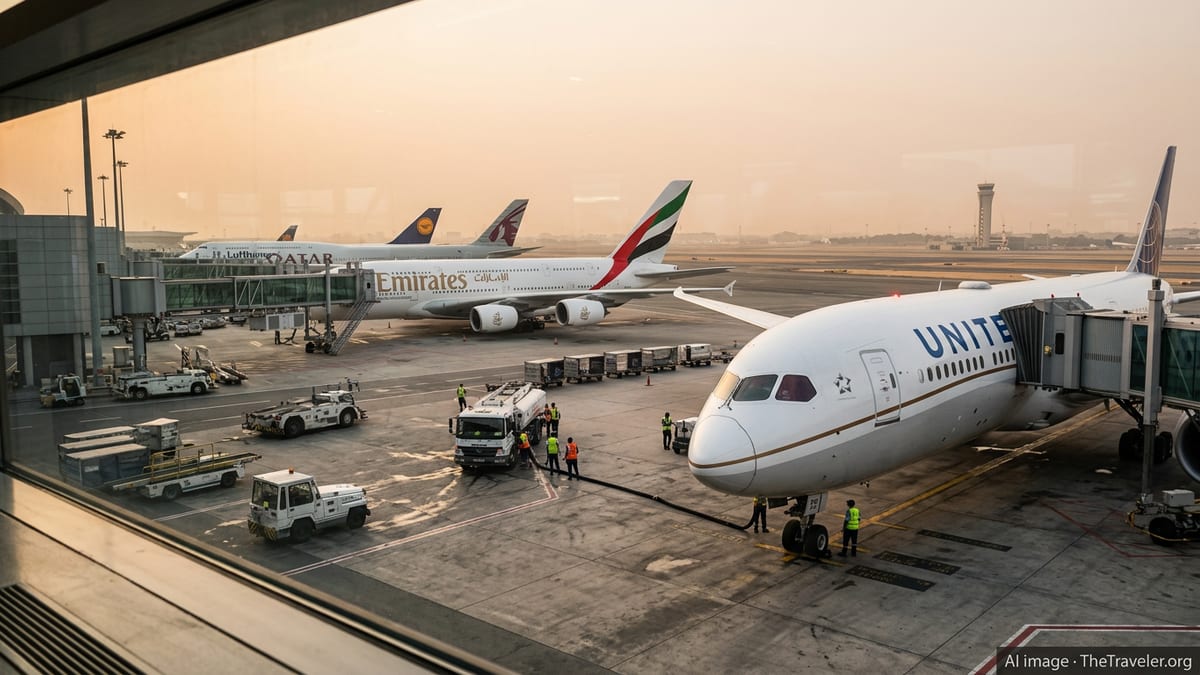
Middle East Turmoil Exposes Europe’s Fuel Vulnerability
The latest escalation of the Iran conflict has sharply reduced tanker traffic through the Strait of Hormuz, a chokepoint that normally carries a significant share of the world’s jet fuel and oil exports. Publicly available analyses describe a steep fall in Gulf-origin aviation fuel deliveries to Europe since late February, when hostilities intensified and shipping risks surged.
Industry assessments indicate that Europe is structurally short of middle distillates, including jet fuel, and relies heavily on imports from the Middle East to cover demand. As Gulf refineries divert supplies or struggle to move product out of the region, European storage hubs face tighter balances, even as refinery runs on the continent increase to compensate.
Jet fuel prices have responded rapidly. Market monitoring by trade and aviation bodies shows that benchmark jet prices have almost doubled since the first attacks in late February, outpacing gains in crude oil and adding pressure to an industry where fuel typically accounts for around a quarter of total operating costs.
Analysts warn that even if limited shipments resume through the Strait, logistical bottlenecks and constrained refining capacity could keep Europe’s supply picture fragile well into the second half of 2026. That raises the risk of localised shortages at vulnerable airports and sustained upward pressure on ticket prices.
Brussels Assembles Emergency Toolkit To Keep Planes Flying
In early May, the European Commission announced a coordinated response to what it described in public communications as an “unprecedented” jet fuel supply situation linked to the Middle East crisis. The emerging plan brings together energy, transport and competition instruments in an effort to keep airlines supplied and avoid widespread service cuts.
According to Commission documents and subsequent guidance, Brussels is preparing to use joint monitoring of fuel stocks, fast-track state aid clearance for strategic storage and logistics investments, and coordinated use of national emergency reserves where necessary. The measures are designed to smooth out short-term bottlenecks and reduce the risk that isolated supply issues at specific airports cascade into broader network disruption.
Guidance released by the EU’s transport directorate also clarifies how airlines can use regulatory flexibilities on airport slots and minimum service requirements when fuel constraints make it impossible to operate a planned schedule. The intention is to give carriers room to consolidate flights or adjust frequencies without automatically losing valuable slots at congested hubs.
At the same time, the Commission has activated its network of national transport contact points under the existing Transport Contingency Plan. These channels are being used to share information on fuel availability, coordinate potential cross-border assistance, and track knock-on effects on tourism and passenger rights as the summer season approaches.
Switch To U.S. Jet Fuel And Alternative Grades Gains Pace
With Gulf supplies disrupted, European buyers have turned increasingly to the United States and other Atlantic Basin producers to fill the gap. Published shipping and commodity data highlight record or near-record flows of jet fuel and related middle distillates from the U.S. Gulf Coast to European terminals in April and May, as traders rush to capitalise on strong arbitrage economics.
This surge in transatlantic imports comes with complications. U.S. Jet A fuel is certified under different specifications than the Jet A-1 grade standard in Europe, prompting regulators and safety agencies to issue new technical guidance. Recent bulletins from the European Union Aviation Safety Agency describe conditions under which Jet A can be safely used in European operations, a move that widens sourcing options but requires careful oversight.
Alongside geographic diversification, airlines and airports are experimenting with fuel management strategies to stretch available supplies. Publicly available information shows that carriers on certain routes are “tankering” more fuel from airports with secure stocks, while some hubs have introduced temporary refuelling caps or priority rules for long-haul departures.
The situation is also accelerating interest in sustainable aviation fuel. Reports from France and other member states describe a renewed push to ramp up production of bio-based and synthetic kerosene, not only to meet climate targets but as a hedge against geopolitical shocks. However, current sustainable fuel output remains a fraction of overall demand, limiting its impact on the immediate crisis.
Airlines Adjust Schedules As Airfare Pressures Build
For passengers, the most visible impact of the jet fuel squeeze is emerging through higher prices and growing uncertainty over summer travel plans. Economic assessments produced since March suggest that the near-doubling of jet fuel prices could translate into average airfare increases in the low double digits across Europe if current levels persist.
Some low-cost carriers have publicly warned that a prolonged conflict could put a substantial share of their fuel supply at risk in May and June, particularly at bases that depend heavily on Middle Eastern imports. Industry commentary indicates that while large network airlines may be better hedged, they are still facing higher spot purchase costs and pressure to pass at least part of the increase on to consumers.
Operational challenges are already being felt at a handful of airports. Media coverage has highlighted temporary refuelling restrictions and isolated flight disruptions at some Italian and Eastern European gateways, where local storage and pipeline infrastructure leave them more exposed to supply interruptions. Travel industry analysts caution that, without successful implementation of the EU’s contingency measures, similar issues could spread to busier hubs later in the season.
Forward booking data compiled by aviation bodies still point to robust demand for European travel through the summer months, suggesting that many travellers are prepared to absorb higher fares after several years of disrupted holidays. The balance between that demand and the evolving fuel situation will help determine whether the region avoids broader cancellations and severe capacity cuts.
From Short-Term Crisis Management To Long-Term Resilience
Beyond the immediate scramble to secure fuel, the Iran conflict is prompting a broader reassessment of how exposed European aviation is to external shocks. Studies released in recent weeks by international organisations and think tanks underline that Europe entered 2026 with relatively lean jet fuel inventories and limited spare refinery capacity, increasing its vulnerability when a major supplier is suddenly constrained.
Policy discussions in Brussels and key capitals are now focusing on how to strengthen resilience. Options under consideration include higher minimum strategic stock levels for aviation fuel, incentives for additional storage close to major hubs, and mechanisms to encourage multi-source procurement that avoids excessive dependence on any single region.
The crisis is also intersecting with climate and energy debates. Advocates of faster decarbonisation argue that accelerating the uptake of sustainable aviation fuel and improving aircraft efficiency would reduce exposure to oil market turmoil over time. Others warn that the immediate priority must remain on keeping essential air connectivity functioning, especially for peripheral regions and islands that depend heavily on air links.
For now, Europe’s jet fuel balance remains finely poised. The success of the EU’s emergency plan, the trajectory of the Iran conflict, and the responsiveness of alternative suppliers will together shape how disruptive the coming months prove to be for airlines and travellers across the continent.