


More news on this day
India is intensifying a sprawling travel rescue mission across West Asia as widespread airspace closures, flight cancellations and missile risks turn one of the world’s busiest corridors into a maze of diversions for nearly one million Indian citizens who live, work or transit through the region.
Get the latest news straight to your inbox!
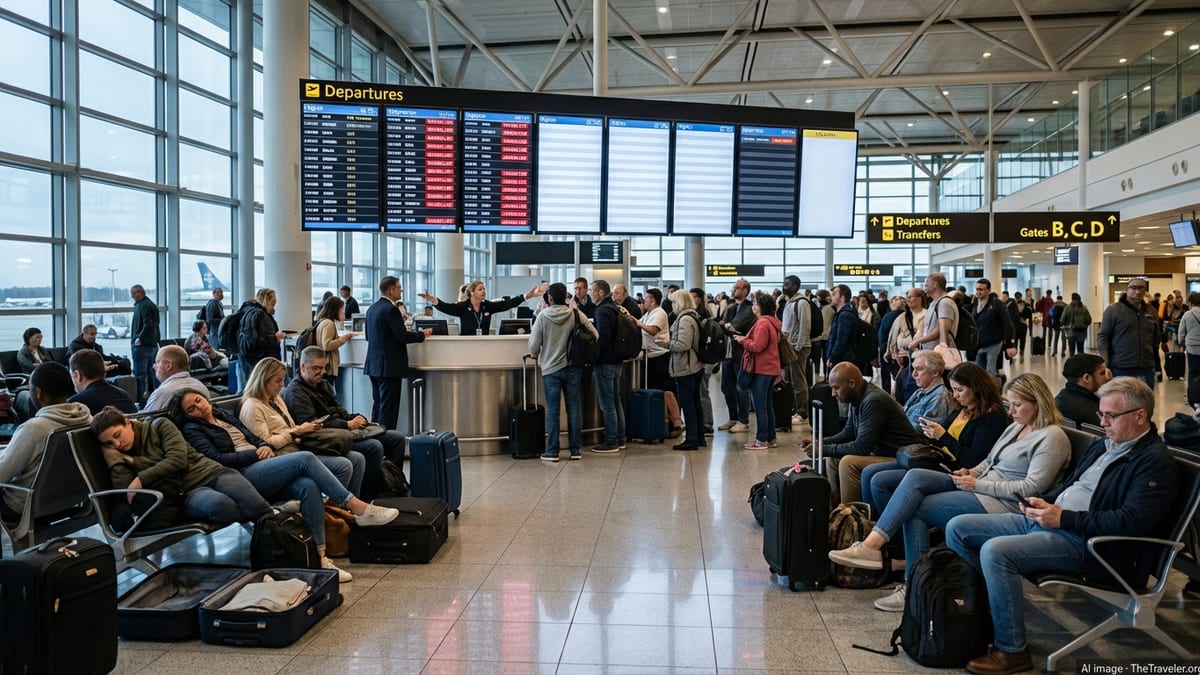
Airspace Clampdown Forces Urgent Rerouting
Publicly available aviation notices show that since late February 2026, large swathes of airspace over Iran, Iraq, Israel, Syria, Lebanon, Jordan, Yemen and parts of the Gulf have been intermittently shut or designated high risk, following missile exchanges linked to the Iran war and retaliatory strikes around the region. The closures have disrupted established trunk routes between India and Europe, North America and North Africa, pushing airlines onto longer detours over the Arabian Sea and Central Asia.
India’s aviation regulator has responded with successive safety advisories instructing domestic carriers to avoid up to 11 West Asian flight information regions entirely, except under limited conditions in Saudi and Omani airspace. Reports indicate that the orders, initially framed as temporary, have been repeatedly extended as the security picture worsens, forcing airlines to redraw network maps and contingency plans almost week by week.
Business media coverage shows that by early March, Indian carriers had cancelled or rescheduled hundreds of flights touching the Gulf and beyond, with ripple effects on domestic connections and crew availability. Airlines have rolled out waivers, free date changes and refunds on affected routes, but capacity to key hubs such as Dubai, Doha and Kuwait City remains volatile, often announced only a day or two in advance.
The end result for travellers is a patchwork of operations where flights that do operate frequently take circuitous routings, adding up to two hours to some Europe bound sectors and sharply increasing fuel burn and costs. Aviation analysts quoted across industry reports warn that if the pattern persists into the peak summer season, higher fares and tighter seat supply are likely on long haul departures from India.
Evacuation Lifts Scale Up Across Multiple Gateways
Against this backdrop, India’s wider travel rescue effort has rapidly expanded from ad hoc relief flights to a structured, multi country operation designed to keep citizens moving out of conflict affected zones. Ministry briefings and embassy notices collated by domestic media indicate that since February 28, tens of thousands of Indians who were transiting or on short visits in the region have been brought home on special services.
Coverage from national dailies describes evacuation bridges through relatively stable hubs such as Armenia, Saudi Arabia and Qatar, used to extract citizens from high risk areas like Iran and parts of Iraq where airspace has been periodically closed. One frequently cited example involves more than 550 Indians flown out of Iran via Yerevan over several rotations, after direct commercial options collapsed.
In parallel, data shared in official social media updates and reproduced by broadcasters suggests a steady stream of inbound flights from the broader Gulf, with over 7,000 passengers on a single day in early March and cumulative arrivals climbing into the tens of thousands within days. These numbers, while modest relative to the overall diaspora, underline the scale of the coordination task when routine schedules are in flux.
India has prior experience with such large scale missions, including evacuations from Yemen and Ukraine, but the current West Asia crisis is unusual because it simultaneously targets the very air corridors required for rescue. Travel experts note that this has pushed planners to rely more heavily on multi leg routings, ground convoys to alternative airports and close sequencing with foreign civil aviation authorities to secure transient access to crowded skies.
Nearly One Million Citizens Face Prolonged Uncertainty
Estimates referenced in parliamentary statements and think tank analyses suggest that close to one million Indian nationals live or work across the Gulf and wider West Asia, from the United Arab Emirates and Saudi Arabia to Bahrain, Kuwait, Qatar, Oman and beyond. Many are long term residents not seeking immediate evacuation, yet they are deeply exposed to the cascading travel risks created by the conflict.
Migrant worker communities are especially vulnerable to sudden flight cancellations, visa expiry complications and income loss when they cannot return to job sites on schedule. Travel advisories issued by Indian embassies in the region, reproduced in local press, stress that citizens should avoid non essential movement, keep documents current and register contact details so they can be reached if evacuation windows open or close at short notice.
For students, medical tourists and short term visitors, the main concern is predictability. Education consultants and travel agents quoted in Indian media describe families repeatedly rebooking itineraries or rerouting via distant hubs such as Tashkent, Almaty or even Southeast Asia to reach Europe and North America. Each change carries additional cost and uncertainty, amplifying the stress of an already fraught situation.
Industry commentators also point out a quieter but significant impact on Indian staffed cruise ships, offshore installations and merchant vessels that normally rely on Gulf ports and air hubs for crew changes. With some coastal and airport facilities curtailed, rotation cycles are stretching, increasing fatigue risks and complicating welfare arrangements for seafarers and offshore workers.
Airlines, Airports and Travelers Scramble to Adapt
Indian carriers have adopted varied strategies to cope with the evolving airspace map. Flag carrier Air India, for instance, has leaned on its long haul fleet to mount additional services to Europe and North America, using non stop or polar routings to bypass closed corridors. Aviation trade publications note that the airline has announced dozens of extra flights on sectors such as Delhi to London, Frankfurt and Toronto during key weeks of the crisis to absorb passengers displaced from disrupted Gulf connections.
Low cost operators more dependent on narrow body aircraft and Gulf traffic, such as IndiGo and Air India Express, have at times suspended certain West Asia flights entirely on safety grounds, then cautiously reinstated limited services when routing options reopened. This stop start pattern has left airport terminals across India handling surges of stranded passengers on some days and ghostly quiet halls on others.
On the ground, major Indian gateways like Delhi, Mumbai, Kochi and Hyderabad have set up dedicated help desks and additional staff support for travellers affected by route changes, according to local airport operator statements cited in business media. Crowd control, real time information and quick rebooking channels have become critical to preventing minor disruption from cascading into scenes of chaos that could undermine public confidence.
Travel advisers consistently recommend that passengers heading toward Europe, North America or Africa build in additional buffer time, keep itineraries flexible and rely on airline apps for last minute gate or schedule changes. They also underline the value of comprehensive travel insurance that explicitly covers war related disruptions and forced rerouting, a clause that is not standard in many basic policies sold before the crisis.
Strategic Stakes for India’s Connectivity and Security
Beyond the immediate human and commercial fallout, India’s travel rescue surge in West Asia highlights deeper strategic vulnerabilities in its connectivity model. For decades, Indian outbound and inbound flows have heavily relied on Gulf super connectors and overflight agreements that channeled millions of passengers through Doha, Dubai and Abu Dhabi. The current airspace crunch reveals how quickly those arteries can constrict when conflict engulfs the region.
Policy forums and op ed commentary in Indian newspapers argue that the crisis is likely to accelerate ongoing efforts to diversify both maritime and air corridors. These include strengthening direct long haul links from Indian hubs to Europe and North America, investing in alternative overflight partnerships with Central Asian states and pushing for faster completion of infrastructure upgrades at key domestic airports to handle heavier international traffic.
At the same time, naval and energy security operations such as those mounted in the Arabian Sea and near the Strait of Hormuz underscore how closely travel, trade and strategic considerations now intersect. Indian planners must juggle the imperative to shield citizens and maintain air links with the need to safeguard shipping lanes that carry critical crude oil and gas supplies.
For now, the government’s travel rescue architecture appears focused on sustaining a fragile bridge home for those most at risk, while nudging others toward caution and self preparedness. As the West Asia conflict grinds on with no clear timeline for full airspace reopening, the experience is likely to leave a long shadow over how India thinks about diaspora safety, aviation resilience and the geography of its global connections.