


More news on this day
European rail financier Eurofima has agreed a CZK 4 billion funding package with Czech national operator České dráhy to support the purchase of 94 new regional trainsets, a move expected to modernise everyday rail travel across Czechia and strengthen low-carbon public transport links beyond Prague and other major cities.
Get the latest news straight to your inbox!
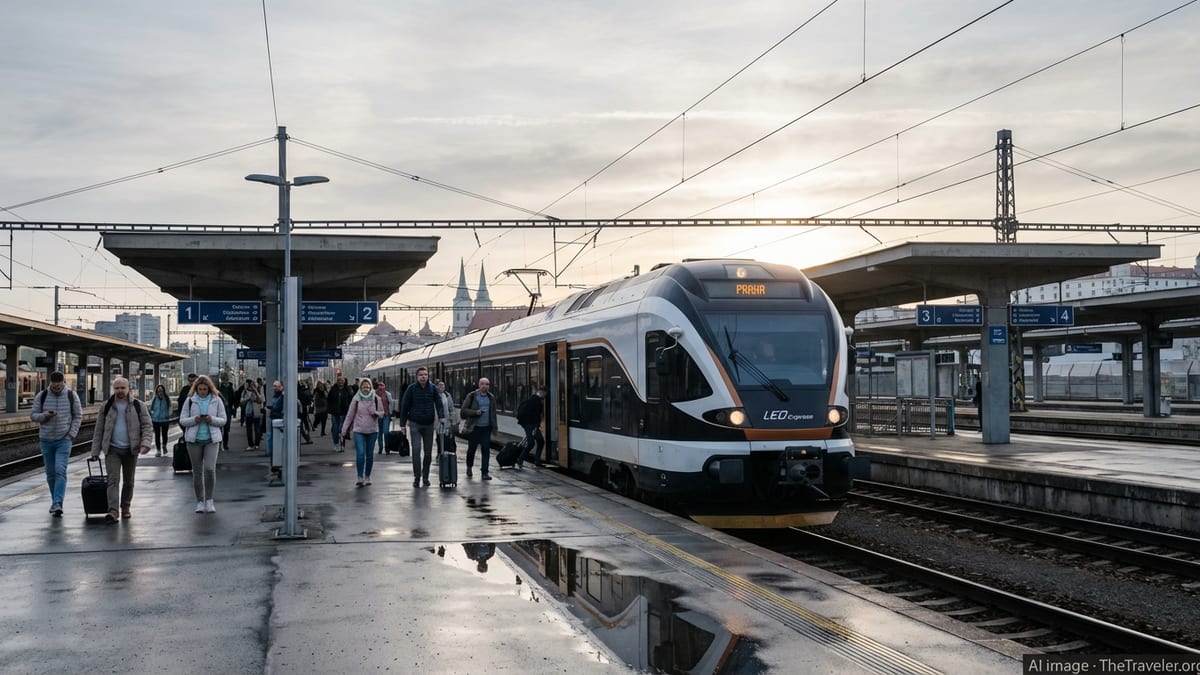
Landmark financing deal for regional rail in Czechia
According to information published by Eurofima, the CZK 4 billion facility, equivalent to around EUR 166 million at current exchange rates, is structured under a framework agreement first concluded with České dráhy in June 2024 and now moving into its practical phase with the first drawdown in July 2026. Publicly available details indicate that the funding is dedicated to rolling stock used in regional passenger services under public service contracts, rather than long-distance or purely commercial operations.
Reports from specialist rail media state that the financing will cover 94 two-car electric multiple units intended for shorter-distance routes across the Czech network. These trains are expected to replace older locomotive-hauled sets and diesel units on a number of lines, offering higher capacity, step-free access and improved on-board amenities such as air conditioning and modern passenger information systems.
The transaction aligns with Czech transport policy goals that emphasise shifting more journeys from cars to public transport, particularly outside the largest urban centres. By targeting regional services, the agreement is designed to improve the daily experience of commuters, students and leisure travellers who rely on local trains for short and medium-distance trips.
Eurofima describes its role as a supranational specialist lender that raises funds on international capital markets to support investment in passenger rolling stock across Europe. The organisation operates on a non-profit-maximising basis, focusing on long-term, cost-effective financing for public service rail operators in its member states, including Czechia.
What the 94 new trains will bring to passengers
Information released by České dráhy over the past year outlines a broader fleet renewal strategy built around modern, mostly electric multiple units for both regional and intercity services. The trains backed by the Eurofima package are expected to continue this trend, with low-floor entrances designed to reduce boarding times and to improve access for passengers with reduced mobility, parents with prams and cyclists.
New regional fleets in Czechia typically feature wide doors, open saloon interiors and multi-purpose spaces that can be adapted for bicycles, wheelchairs or bulky luggage. While detailed technical specifications for the 94 units have not been widely disclosed, industry coverage suggests that similar trains entering service on other Czech regional lines offer on-board Wi-Fi, power sockets and enhanced interior lighting, reflecting rising passenger expectations even on short-distance services.
The arrival of additional modern units should also support more frequent timetables on busy regional corridors, where ageing rolling stock has sometimes constrained capacity or required extended maintenance outages. More reliable trains can help operators maintain clockface timetables and tight connections with intercity and international services, improving the overall coherence of the national rail offer.
For many smaller towns, the practical impact may be felt in modest but noticeable changes: quieter traction, smoother acceleration, better climate control and clearer passenger information. While such improvements do not attract the same attention as high-speed rail projects, they influence the everyday quality of travel for large numbers of passengers.
Green finance and Eurofima’s funding strategy
The Czech regional train deal fits into Eurofima’s wider strategy of using capital markets to channel green finance into low-emission public transport. The institution has developed a programme of euro-denominated green bonds, with proceeds earmarked for passenger rolling stock that supports environmental and climate objectives defined at European level.
Recent investor documentation from Eurofima shows that it has fully allocated the proceeds of its outstanding green bonds to rail projects across multiple countries, with a significant share directed to commuter and regional traffic. Electric multiple units such as those ordered by České dráhy typically account for the majority of green bond allocations, reflecting their role in replacing older, less efficient fleets and in supporting modal shift from road to rail.
Eurofima’s funding strategy for the second half of 2026 points to continued use of euro green bonds as its core instrument, complemented by selective issuance in other currencies to match funding needs and investor demand. Earlier in July 2026, the organisation placed a new Swiss franc-denominated bond with a nine-year maturity, part of a diversification approach that aims to secure stable, long-term funding at competitive rates.
By linking its borrowing strategy to transparent allocation and impact reporting, Eurofima positions transactions such as the Czech regional train financing within a broader narrative of sustainable infrastructure investment. For investors seeking tangible, measurable environmental outcomes, the combination of dedicated rail assets and detailed reporting has become an important feature of the institution’s offer.
Context: Czech rail modernisation beyond headline projects
The Eurofima-backed package arrives as Czech railways pursue both high-profile infrastructure schemes and quieter, incremental upgrades. National transport plans envisage the gradual build-out of higher-speed corridors, but much of the system’s day-to-day performance still depends on the reliability and comfort of regional services using existing lines.
Public information from the Czech Ministry of Finance and European financial institutions shows that recent years have brought substantial investment into rail, including major infrastructure loans targeting sections of the core European transport network crossing Czech territory. These funds typically focus on tracks, signalling and key junctions, while rolling stock for regional services is often financed via separate instruments involving state-backed operators like České dráhy.
In this context, the Eurofima deal can be seen as a complement to larger infrastructure programmes, ensuring that modern track and station upgrades are matched by contemporary trains. Together, these investments aim to shorten journey times, improve punctuality and make rail a more attractive option compared with private car use on regional journeys.
Observers of central European transport policy note that Czechia has already made significant strides in renewing its intercity fleet and strengthening international links, for example through new trains on routes to Germany, Austria and Slovakia. Extending similar standards of comfort and accessibility to regional lines is viewed as a logical next step in maintaining ridership growth and supporting regional development.
Implications for travellers and regional connectivity
For passengers, the most direct impact of Eurofima’s CZK 4 billion financing will emerge progressively as the 94 trainsets enter service on different regional routes. Timetables are expected to be adjusted gradually, with operators typically introducing new fleets line by line to simplify driver training, maintenance and depot planning.
Travel industry observers point out that regional trains are often the first point of contact with the rail system for visitors exploring beyond Prague, whether heading to spa towns, UNESCO-listed sites or hiking regions. Cleaner, quieter and more comfortable rolling stock can therefore shape the perception of Czech rail for international tourists as well as domestic travellers.
The deployment of modern electric units on more routes may also facilitate integrated ticketing and multimodal connections, as stations upgrade information systems and coordinate rail timetables with regional buses. Such improvements can make it easier for travellers to complete car-free journeys, from city centres to rural destinations, using a combination of trains and local public transport.
While the immediate focus is on Czech regional services, Eurofima’s growing portfolio of similar financings across Europe suggests that passengers in other member states may see comparable upgrades in the coming years. For Czechia, the latest agreement reinforces the role of rail as a backbone of sustainable regional mobility and underlines the importance of behind-the-scenes financial arrangements in shaping the travel experience on the ground.