


More news on this day
A Polish court has rejected an appeal by Stadler challenging the outcome of PKP Intercity’s high value tender for 42 double deck electric multiple units, solidifying Alstom’s position as supplier of the country’s first long distance double deck fleet and marking a key step in Poland’s wider rail modernisation drive.
Get the latest news straight to your inbox!
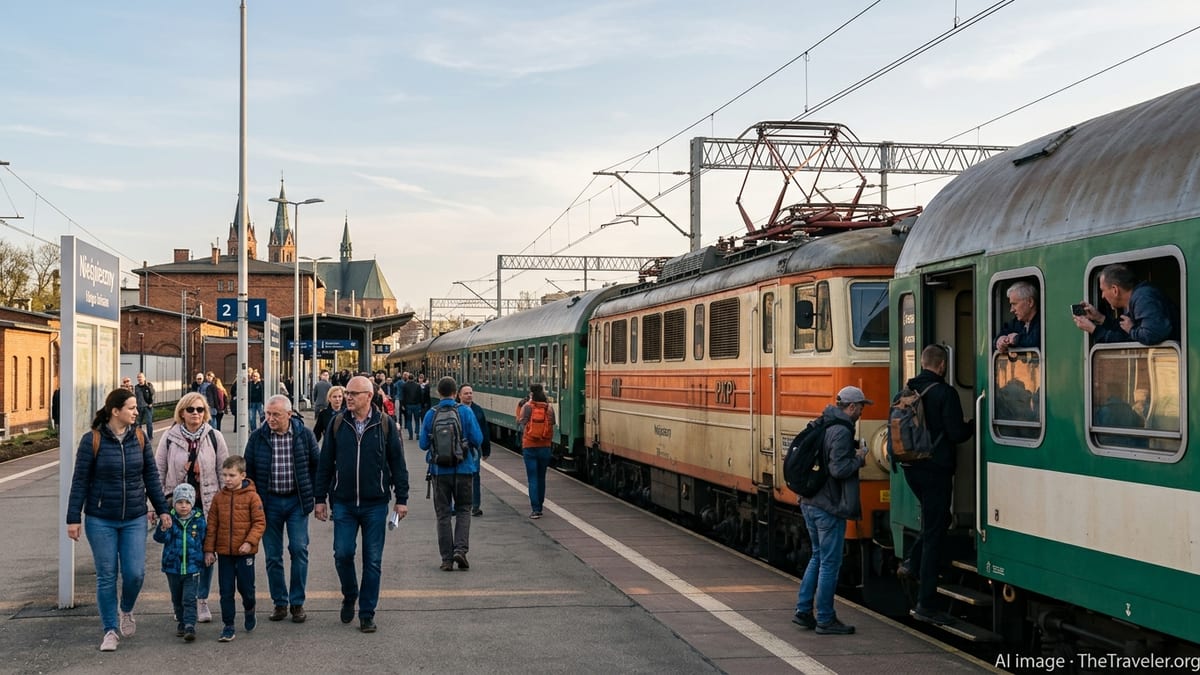
Ruling secures PKP Intercity’s 42 train megadeal
According to publicly available information from Polish legal and industry registers, the court decision brings to an end Stadler’s attempt to overturn PKP Intercity’s tender award for a fleet of 42 double deck trains plus options. The procurement is described in specialist railway coverage as one of the largest rolling stock contracts ever concluded by the state owned long distance operator, with a total value quoted in local media at around 6.9 billion zloty.
The contract covers high capacity double deck sets intended to boost long distance capacity on the country’s busiest intercity corridors. The trains are planned to operate at up to 200 km/h on upgraded lines, significantly increasing the number of seats available on routes that have seen sustained passenger growth in recent years.
Reports indicate that Alstom’s Polish business secured the contract, while Stadler lodged an appeal alleging irregularities in the evaluation of bids. The rejection of that appeal confirms the original award decision and allows PKP Intercity to move ahead with detailed design, certification and production schedules.
Local rail analysts note that the case fits a wider pattern in European rolling stock tenders, where losing bidders have increasingly turned to legal remedies to contest awards. In this instance, however, the court sided with the contracting authority and maintained the original outcome.
Strategic step in Poland’s rail modernisation
The 42 train order is seen by sector observers as a cornerstone of PKP Intercity’s long term investment programme, which combines new coaches, locomotives and multiple units with infrastructure upgrades across the national network. Publicly available company plans point to a multibillion zloty modernisation package stretching over this decade.
For passengers, the new double deck units are expected to bring higher comfort standards, more seats per train and better accessibility compared with locomotive hauled formations that still dominate many Polish long distance services. Industry analyses suggest that higher capacity sets are particularly important on trunk routes linking Warsaw with Gdansk, Krakow, Katowice and Wroclaw, where demand has continued to rise.
From a network perspective, double deck formations allow PKP Intercity to add capacity without requiring more train paths on busy main lines. This is viewed as significant in Poland, where sections of the core network are close to saturation at peak times, and infrastructure managers are under pressure to balance intercity, regional and freight traffic.
The tender is also being watched elsewhere in Central Europe, as neighbouring countries explore similar options to increase capacity on their own long distance routes. The court’s decision provides legal certainty for PKP Intercity as it seeks to position itself as a competitive alternative to low cost airlines on medium distance domestic journeys.
Setback for Stadler in a key growth market
The ruling represents a notable setback for Stadler in one of its important European growth markets. The Swiss headquartered manufacturer has previously supplied PKP Intercity with FLIRT electric multiple units for long distance services, and its Polish subsidiary has been involved in several regional fleet programmes.
Industry commentary highlights that losing the 42 train contract reduces Stadler’s immediate pipeline of high value intercity work in Poland at a time when the country is rapidly renewing its rolling stock. For Stadler, the case underlines the risks faced by established suppliers when national operators diversify their procurement portfolios among competing manufacturers.
Nevertheless, analysts point out that Poland remains a large and dynamic rail market with multiple regional authorities and urban operators continuing to order new trains. Stadler units already operate widely on Polish regional networks, and the company is expected to continue targeting future tenders, including possible high speed and cross border projects.
The rejection of the appeal may also influence Stadler’s broader legal strategy in European tenders. Commentators observing recent disputes in Switzerland and other countries note that court challenges carry reputational and financial costs even when they are part of a company’s efforts to defend market share.
Alstom strengthens foothold in Central Europe
For Alstom, the confirmation of the award consolidates its position as a leading supplier of intercity and high speed rolling stock in Poland and the wider Central European region. The manufacturer already delivers Pendolino trainsets and other fleets for PKP Intercity and regional operators, and the double deck order reinforces that presence.
Specialist rail media report that the 42 train contract will be supported by manufacturing and engineering work at Alstom’s facilities in Poland, contributing to local industrial employment and know how. Long term maintenance and service agreements linked to the fleet are expected to provide additional revenue streams over the life of the trains.
The deal also fits within Alstom’s broader strategy to use large national contracts as reference projects when bidding in neighbouring markets. With several Central and Eastern European countries planning to expand or upgrade long distance rail, Poland’s decision is likely to feature prominently in future procurement documentation and marketing materials.
Observers add that the presence of multiple large manufacturers in Poland, including Alstom, Stadler and others, has intensified competition in tenders. The court’s endorsement of PKP Intercity’s decision in this case may shape how future competitions are structured and evaluated, particularly regarding technical scoring, life cycle cost assessments and local content provisions.
Implications for passengers and future tenders
For travellers, the immediate consequence of the court ruling is that the delivery schedule for the 42 double deck trains can proceed without the uncertainty of a protracted legal dispute. PKP Intercity now faces the task of integrating the new fleet into its timetable, crew training and depot planning.
Sector analyses suggest that the trains will be introduced gradually as infrastructure upgrades permit higher line speeds and as existing rolling stock is cascaded to other routes. This gradual roll out is expected to improve comfort and capacity on flagship services first, before benefits spread more widely across the network.
From a procurement standpoint, the case may act as a reference for future high value rolling stock tenders in Poland. Contracting authorities, manufacturers and legal specialists are likely to study the reasoning behind the rejection of Stadler’s appeal when designing upcoming competitions, including tenders for very high speed trainsets capable of 250 to 320 km/h that PKP Intercity has signalled it intends to pursue.
Travel industry observers note that the outcome ultimately reinforces a broader trend in Europe, where national rail operators are deploying larger, faster and more comfortable trains to win passengers from road and air. With legal challenges in the PKP Intercity double deck tender now settled, attention will shift to how quickly the new fleet can be delivered and how it reshapes long distance travel across Poland.