


More news on this day
Bulgaria has opened a new funding window for intermodal transport operators, directing millions of leva in national and European resources toward terminal upgrades, capacity expansion and greener freight links across the country’s regions.
Get the latest news straight to your inbox!
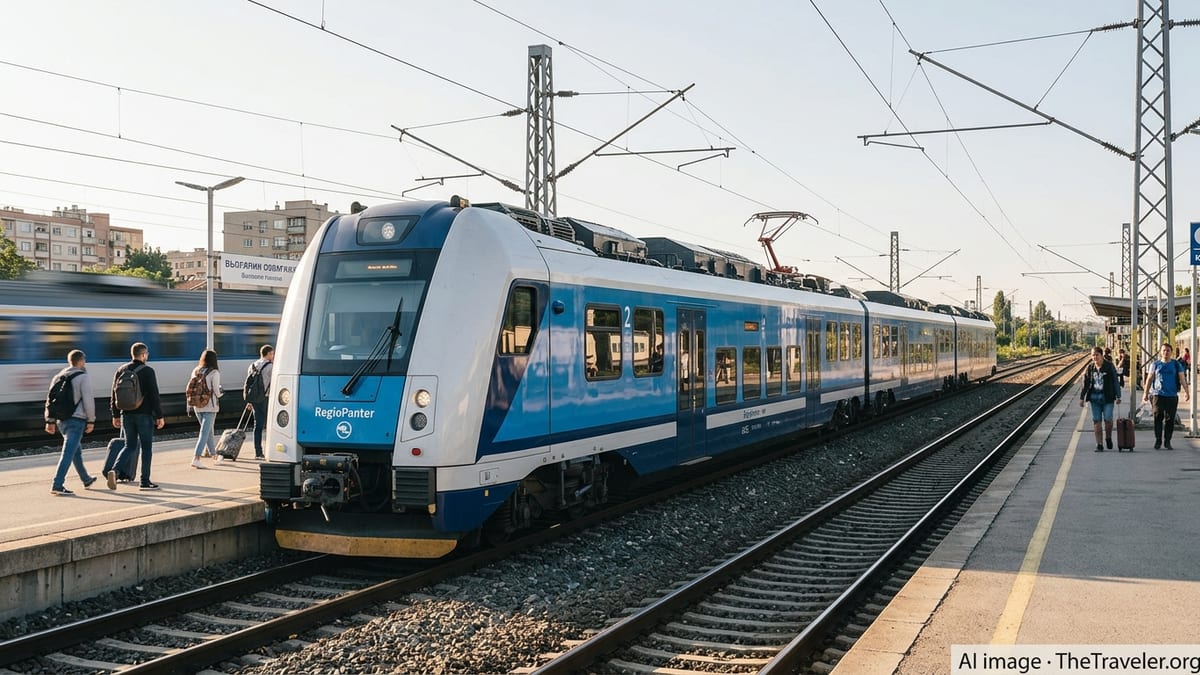
New support scheme targets terminals and operators
According to publicly available information from Bulgaria’s Ministry of Transport and Communications, a fresh procedure has been launched to support intermodal operators, including the development of existing freight terminals. The initiative builds on an approved state aid scheme titled “State Aid for the Support of Intermodal Operators in Bulgaria,” cleared under European Union competition rules and scheduled to run until the end of 2027.
The overall budget of the state aid scheme is reported at around 34.5 million leva, with an annual envelope of approximately 17.25 million leva. The funds are structured as direct grants to operators in the transport and storage sector, with an aid intensity of up to 50 percent of eligible costs. The programme is intended to improve coordination between different modes of transport and support environmental protection by shifting freight from road to rail and waterborne transport.
Public documentation indicates that the support is aimed at operators managing rail, port and logistics terminals who are prepared to modernise and expand their infrastructure. By focusing on combined and intermodal transport, the scheme is designed to make better use of existing networks while cutting emissions associated with long-haul road freight.
The measure forms part of a wider package of transport support instruments in Bulgaria, which also includes schemes for road transport operators and compensation mechanisms linked to rising fuel prices. Together, these initiatives are intended to stabilise the sector and encourage investment in more sustainable operations.
EU funds underpin “Transport Connectivity” priorities
The new allocations to intermodal operators are closely connected to Bulgaria’s “Transport Connectivity” Programme for 2021 to 2027, which is co-financed by the European Union. Programme documents show that combined transport and intermodal terminals are listed among the key tools for achieving a more robust, climate-resilient and interconnected Trans-European Transport Network within the country.
Earlier published material on the procedure “Supporting intermodal operators, including development of existing terminals” sets out that the grants are directed mainly at less developed regions of Bulgaria. The aim is to modernise and, where possible, expand existing intermodal terminals and adjacent rail and road links, thereby improving access to major corridors and ports.
Funding is eligible for a range of investments, such as new shunting equipment with zero emissions, upgraded loading and unloading facilities, improved rail and road access tracks and modern IT systems for managing freight flows. The intention is to reduce bottlenecks, increase handling speeds and enhance the reliability of multimodal services for shippers.
Alongside structural funds, the initiative is complemented by resources from national instruments, including the National Recovery and Resilience Plan. Publicly accessible project information platforms in Bulgaria indicate that the digital management of EU-funded procedures has been strengthened to streamline applications and monitoring for schemes such as the intermodal operators’ support measure.
Budget parameters and eligibility conditions
Draft documentation on the intermodal support procedure, previously opened for public consultation, outlines minimum and maximum grant thresholds at project level. The indicative range runs from about 1.5 million leva to 4 million leva in non-repayable support per individual project, again with a co-financing ceiling of 50 percent of eligible expenditures.
Eligible applicants are described as operators of intermodal terminals on Bulgarian territory, including rail-road, port-based and logistics platforms that handle containers, swap bodies and semi-trailers. Projects are expected to focus on improving terminal capacity, safety and environmental performance in line with EU transport and climate objectives.
Investment categories cover both infrastructure and superstructure, from track rehabilitation and yard reconfiguration to cargo handling machinery and digital control systems. In some cases, works may also include improving last-mile road connections that link terminals with national highways or industrial zones, provided these are directly related to intermodal freight handling.
The state aid scheme is time-limited, with implementation running up to December 31, 2027. This timeframe reflects EU rules governing the current multiannual financial framework, as well as the need to ensure that supported infrastructure is completed and operational within the programming period.
Strategic role for intermodal transport in Bulgaria
The decision to allocate targeted funding for intermodal operators reflects a broader shift in Bulgarian and European transport policy. National planning documents, including updated energy and climate strategies, highlight the importance of combined transport in reducing greenhouse gas emissions from freight and improving the efficiency of logistics chains.
Intermodal terminals allow a larger share of long-distance freight to move by rail or inland waterway, with road vehicles mainly serving shorter feeder routes to and from terminals. This model is seen as a way to ease congestion on key highways, lower fuel consumption and cut external costs such as air pollution and noise.
Bulgaria’s geographic position on pan-European corridors linking Central Europe with the Eastern Mediterranean, Turkey and the Black Sea gives intermodal facilities particular strategic value. Upgraded terminals can act as hubs for containerised and trailer traffic, connecting industrial regions in the country’s interior with ports and border crossings.
By tying grant support to specific performance and modernisation goals, the new scheme seeks to accelerate a gradual rebalancing of freight transport shares. The emphasis on climate-friendly equipment and digitalisation aligns with broader EU initiatives under the Green Deal and sustainable mobility strategies.
Implications for operators and regional connectivity
For intermodal operators, the availability of grant funding changes the financial equation for projects that might otherwise have been delayed or scaled down. Co-financing of up to half of eligible costs can make investments in cranes, shunting locomotives, automated gates or expanded storage tracks more viable, particularly in regions with lower traffic volumes.
Regional authorities and logistics users are expected to benefit indirectly from the programme. Enhanced terminal capacity and reliability can attract new services and routes, improving options for manufacturers, exporters and importers who rely on predictable transit times and competitive transport prices.
While the funding volume remains modest compared with total transport infrastructure needs, analysts view the scheme as an important signal of policy continuity. Earlier pilot procedures for intermodal support showed that there is demand among operators, and the renewed allocation gives them a clearer planning horizon through 2027.
If the current procedure leads to successful upgrades and higher utilisation of terminals, observers suggest that similar schemes could be considered in future EU programming periods. For now, Bulgaria’s decision to channel targeted funding to intermodal operators marks a concrete step toward more integrated and sustainable freight transport across the country.