


More news on this day
Volcanic ash from Indonesia’s Anak Krakatau volcano has closed Jakarta’s Soekarno-Hatta and Halim Perdanakusuma airports for a second day, disrupting hundreds of flights and leaving travelers scrambling to decide whether to wait out the shutdown, seek refunds or reroute through other cities.
Get the latest news straight to your inbox!
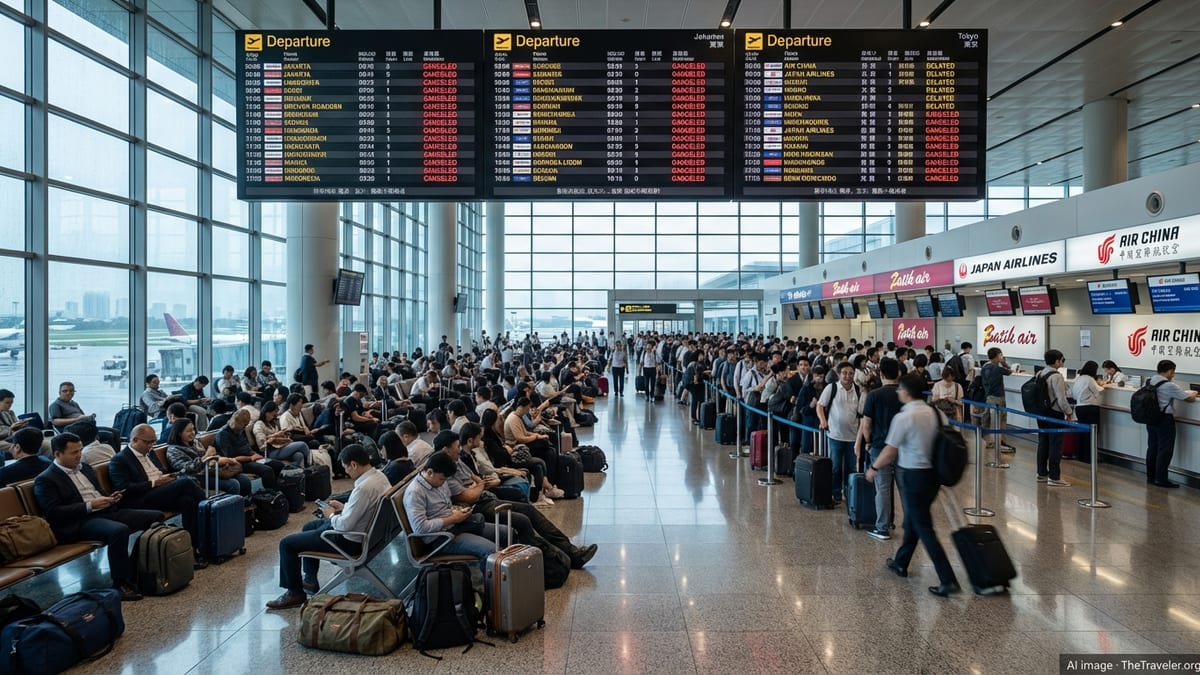
Jakarta’s Main Gate to Indonesia Falls Silent
Jakarta’s Soekarno-Hatta International Airport, the country’s primary international gateway, extended its closure on Monday, September 7, after paper tests continued to detect volcanic ash in the airspace following eruptions from Anak Krakatau in the Sunda Strait. Notices to Air Missions (NOTAM) cited ash contamination risks as the basis for suspending operations.
Government statements and airport operator updates indicate that at least eight airports, including Soekarno-Hatta and Jakarta’s city airport Halim Perdanakusuma, are affected to varying degrees. Temporary shutdowns and rolling extensions have turned one of Southeast Asia’s busiest hubs into a landscape of idle aircraft, shuttered boarding gates and growing departure boards filled with cancellations.
Transport ministry information and local media tallies suggest that more than 200 flights at Soekarno-Hatta alone were canceled or heavily delayed on Sunday, with disruption continuing into Monday. Across the wider network, multiple reports put the total number of affected passengers in the high tens of thousands, and some accounts describe more than 170,000 travelers impacted since the first closures were announced over the weekend.
Published coverage shows that the closure periods have been repeatedly extended in line with updated ash tests, with initial Sunday shutdowns pushing into the afternoon, then rolling into Monday morning and beyond. For passengers, that has translated into a moving target for departure times and little certainty about when normal schedules will resume.
Numbers Reveal Growing Scale of Disruption
Data from Indonesia’s transportation authorities and airport operator InJourney Airports show that on Sunday alone, Soekarno-Hatta recorded 209 canceled flights during an early shutdown window, covering around 160 domestic and nearly 40 international services plus cargo movements. Additional cancellations and delays later in the day increased the tally as the closure window was lengthened.
By Monday morning, further government updates and wire-service reports indicated that disruptions at Soekarno-Hatta had climbed to more than 240 flights, affecting close to 30,000 passengers at that airport in just one day. Nationally, transportation ministry briefings and international news agency summaries describe at least eight airports under temporary suspension at various points, with total affected passengers in the hundreds of thousands.
The evolving situation has also impacted airlines operating long-haul and regional routes. According to regional news agencies, at least a dozen international destinations have seen cancellations or diversions from Jakarta, including services linking the Indonesian capital with hubs such as Singapore, Kuala Lumpur, Doha, Sydney, Seoul and Amsterdam. Some carriers have opted to route flights through alternate Indonesian or regional airports that remain open, while others have chosen to cancel rotations entirely until the ash threat clears.
Indonesia’s transport authorities have emphasized in public statements that aviation safety takes priority over schedule reliability, with each extension of the closure based on new meteorological and ash-dispersion assessments. For passengers, that focus on safety translates into longer waits, rolling rebookings and an increasingly complex web of options.
Stranded Travelers Weigh Their Options
With Jakarta’s main airports shut or heavily curtailed, travelers have turned to a patchwork of advice from airlines, online forums and travel agents to navigate their next steps. Posts on traveler communities and aviation discussion boards describe passengers sleeping in terminals, queuing at airline counters for hours, and weighing whether to accept rebookings days ahead or to cancel altogether.
Many stranded visitors face a three-way decision: wait in Jakarta for airport operations to resume, request refunds or vouchers from airlines, or attempt to reroute through other Indonesian or regional airports that remain open. Discussions on public forums mention alternatives such as flying from cities like Surabaya, Yogyakarta or Bali, or connecting via regional hubs including Singapore and Kuala Lumpur, though these options require additional ground travel and come with no guarantee that onward flights will depart on time.
Publicly available airline notices suggest that most carriers are offering free rebooking within a limited window, and some are granting refunds for flights directly affected by the NOTAM-based closures. However, travelers reporting their experiences online note that policy details vary by airline and fare type, and that contact centers and airport ticket desks are struggling to keep up with demand.
For those stuck in Jakarta hotels or at friends’ homes rather than at the airport, the challenge is to anticipate whether the ash cloud will linger and closures will be extended yet again. Meteorological agencies continue to monitor wind patterns and ash dispersion, but the timeline for a full reopening remains uncertain, leaving many itineraries in limbo.
Domestic Passengers Face Packed Trains and Buses
While international travelers search for alternate flight paths, domestic passengers have increasingly shifted to land and sea routes. Indonesian news outlets and social media posts describe rising demand for intercity trains, interprovincial buses and ferries as residents try to bypass grounded aircraft and reach cities across Java and Sumatra.
Reports from local media indicate that rail and bus operators serving corridors such as Jakarta to Bandung, Yogyakarta and Surabaya have seen a surge in bookings and walk-up demand. Some passengers recount switching to overnight trains or long-haul buses after multiple flight cancellations, accepting slower journeys in exchange for more predictable departures.
For travelers starting or ending their trips outside Jakarta, alternate airports in unaffected regions remain an option, but reaching them often involves a combination of ground transport, ferry crossings and domestic connections. The added cost and complexity are weighing heavily on family travelers and small-business passengers, many of whom had chosen air travel precisely to avoid long overland journeys.
Tourism operators and small hotels in destinations such as Bali and Lombok are also feeling knock-on effects, as inbound guests from Jakarta cancel at short notice or postpone trips. For the moment, much of Indonesia’s domestic travel ecosystem is adjusting day by day to a transportation map temporarily redrawn by volcanic ash.
What Travelers Can Do Now
For anyone booked to fly into or out of Jakarta over the coming days, travel advisories from airlines, airport operators and Indonesia’s transport authorities all point to the same basic guidance: check flight status frequently, expect schedule changes and avoid heading to the airport until a confirmed departure time appears on official channels.
Published notices from Indonesian aviation agencies and airport management emphasize that closures are being reviewed regularly in line with ash-dispersion tests and meteorological data. That means flights can resume sooner than expected if conditions improve, but also that further extensions are possible if ash continues to drift over key air corridors.
International travel associations and consumer groups generally advise passengers to document all disruption-related expenses, retain boarding passes and booking confirmations, and review airline policies for disrupted flights, which may include options for date changes, rerouting or refunds. Travelers are also encouraged to monitor updates from their own foreign ministries or travel advisories, particularly if they are transiting Jakarta en route to a third country.
As Anak Krakatau’s activity continues to evolve, Jakarta’s air links remain constrained, and the central question for thousands of would-be passengers is whether to wait, seek a refund or reroute. With safety protocols firmly guiding decisions on reopening, Jakarta’s normally packed departure halls are likely to remain quieter than usual until ash levels fall and authorities judge the skies safe for the return of full-scale operations.
Eight airports remain shut on Monday due to volcanic ash from Anak Krakatau – The Jakarta Post
Anak Krakatau eruption cancels 209 Soekarno-Hatta flights – ANTARA News
Anak Krakatau ash disrupts flights across eight Indonesian airports – Bernama
Volcanic island in Indonesia erupts, canceling hundreds of flights and stranding thousands – AP News