


More news on this day
Passengers flying through Dubai and Abu Dhabi are facing another spell of disruption as Emirates, Etihad Airways and flydubai adjust Gulf and Indonesian schedules in response to regional security tensions and a volcanic ash cloud affecting Jakarta.
Get the latest news straight to your inbox!
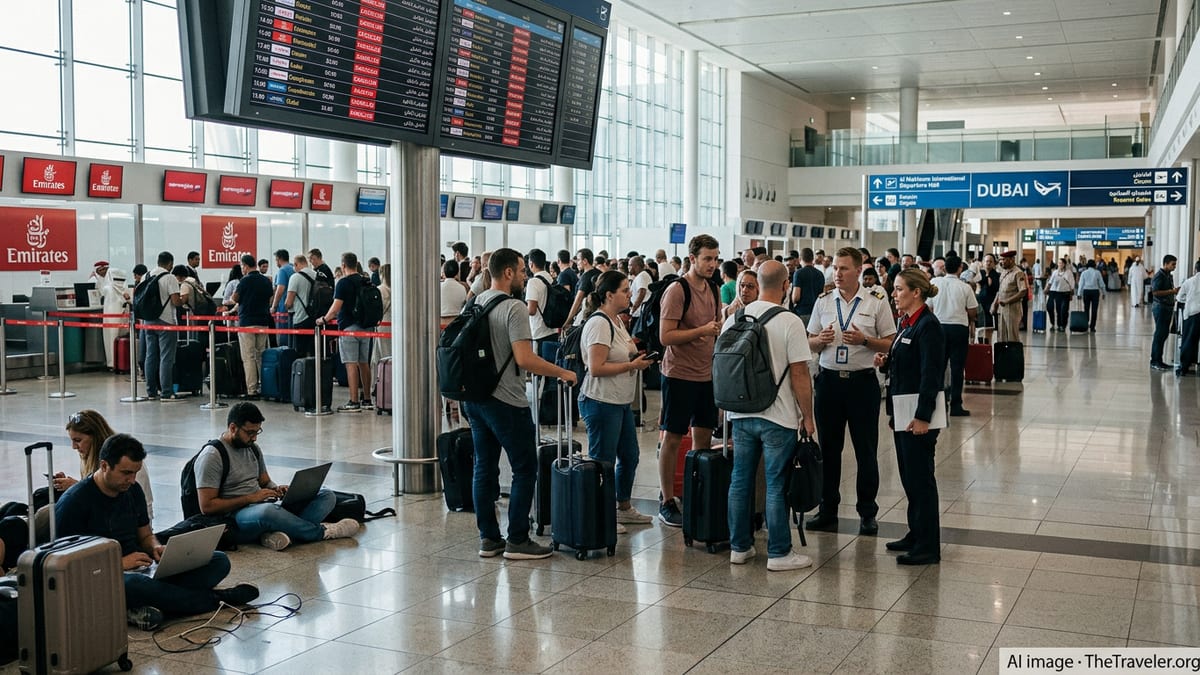
Mixed operations at Dubai and Abu Dhabi hubs
Flight boards at Dubai International and Abu Dhabi’s Zayed International Airport are showing a patchwork of on-time services, lengthy delays and targeted cancellations across key regional and long-haul routes, according to recent airport and media reports. Coverage from UAE-based outlets describes a “mixed picture” for Sunday operations, with many flights still departing while others face rolling schedule changes.
Publicly available flight data compiled in recent days indicates that Emirates, Etihad, flydubai and fellow UAE carrier Air Arabia are all operating modified schedules on Gulf sectors and selected international routes. Some services are running normally, while others have been retimed, consolidated or cancelled as airlines navigate constrained airspace and evolving operational conditions.
Travel advisories published this week highlight ongoing disruption at both Dubai and Abu Dhabi, with delays affecting arrivals from Europe, Asia and neighboring Middle East markets. A recent report by The National noted that Etihad had more than a dozen delayed services spanning Europe, Asia and regional destinations, while several Emirates and flydubai flights into Dubai also arrived behind schedule.
Despite these issues, core connectivity at the UAE hubs is continuing. Flight-status tools show that the three main UAE carriers are still operating large portions of their networks even as they trim capacity on certain city pairs and reroute aircraft around sensitive areas.
Jakarta volcanic ash forces Dubai–Indonesia cancellations
Alongside regional security concerns, a separate disruption has emerged on the busy Dubai–Jakarta corridor due to volcanic ash affecting Indonesia’s main international gateway. Emirates has issued an operational update confirming a temporary closure of Jakarta’s Soekarno–Hatta International Airport and listing multiple Dubai–Jakarta rotations that are cancelled or severely delayed on September 6 and 7.
According to the airline’s travel-updates page, flights EK356 and EK358 from Dubai to Jakarta, along with return services EK357 and EK359 from Jakarta to Dubai, were cancelled on September 6. The same four flight numbers are also cancelled on September 7, effectively suspending Emirates’ Dubai–Jakarta operation over that two-day window while the airport deals with ash-related safety concerns.
Passengers booked on these services are being advised via the airline’s online channels to monitor flight status closely and review rebooking options before heading to the airport. Volcanic ash can pose a serious risk to jet engines, and published guidance notes that carriers typically suspend operations until visibility improves and local authorities reopen affected airspace.
The disruption on the Jakarta route compounds an already challenging period for travel between the Gulf and parts of Southeast Asia. Earlier reports highlighted knock-on delays on services to Bali and other Indonesian destinations following earlier bouts of airspace restrictions tied to regional tensions.
Gulf routes reshaped by airspace restrictions
In the wider Gulf region, airlines are continuing to adapt to airspace closures and precautionary restrictions linked to ongoing tensions between the United States, Iran and regional actors. Analysis of recent coverage from UAE and regional news organizations shows that several Gulf city pairs have seen suspended or reduced service, while others are operating on altered routings that add time to journeys.
A status report published on September 6 noted that Emirates had partially restored flights between Dubai and Bahrain, operating a reduced daily schedule, while services between Dubai and Kuwait remained suspended. Similar adjustments are visible in schedules operated by Air Arabia and a number of foreign carriers, some of which have temporarily halted flights into Dubai and other Gulf hubs.
Travel industry reporting over recent months has also documented episodes where multiple Middle East airspaces, including Bahrain, Qatar, Kuwait, Iraq, Jordan and others, have been closed for limited periods after escalations, forcing Emirates, Etihad and flydubai to cancel flights or hold aircraft on the ground. These closures can ripple across networks, with late-running inbound aircraft causing further delays on subsequent legs.
Operational summaries from local outlets describe how these constraints have led to selective cancellations on high-frequency Gulf routes and extended delays on certain long-haul flights into both Dubai and Abu Dhabi. Some airlines have opted to suspend specific services entirely, while others are maintaining connectivity but warning passengers that last-minute changes remain possible.
Impact on travelers heading to and from the UAE
For passengers, the disruption is translating into longer journey times, unexpected overnight stays and, in some cases, re-routings via alternative hubs. Reports from UAE travel advisories this week outline arrivals into Dubai from cities such as Paris, Bangkok, Bengaluru, Jakarta and Gulf points like Jeddah and Bahrain showing delays ranging from one hour to more than five hours on affected days.
Flydubai’s network has also seen targeted delays and cancellations on routes from Central Asia, Russia, the Levant and East Africa. A recent roundup of flight-status changes listed affected services from Almaty, Astana, Bishkek, Minsk, Addis Ababa, Damascus, Abha and Baghdad, underscoring the breadth of the carrier’s operational adjustments.
Travel media focusing on the Gulf region note that some long-haul travelers are encountering missed connections, especially when flying from Europe or North America into Dubai or Abu Dhabi with onward links to South or Southeast Asia. In such cases, rebooking options may be limited during peak periods, and passengers are being encouraged in public advisories to allow extra time, confirm onward sectors and keep contact details updated with their airline.
National travel advisories from countries including Australia and others continue to flag the possibility that regional tension can lead to sudden flight cancellations and airspace changes. While the UAE’s airports remain open and busy, official guidance emphasizes that conditions are fluid and that routes through the Gulf may be more vulnerable to disruption than usual.
What travelers can do now
Publicly available guidance from airlines and airports consistently recommends that passengers check their flight status shortly before leaving for the airport, as same-day changes remain possible. Emirates, Etihad and flydubai all provide real-time status tools on their websites and apps, allowing travelers to track delays, gate changes and any cancellations.
Travel updates pages also outline options for passengers whose flights are affected, including rebooking on later services, seeking refunds where applicable and adjusting itineraries to avoid the most heavily impacted routes. Where significant schedule changes occur, passengers are generally contacted using the details provided in their booking, although recent reports and social-media posts suggest it is still prudent to verify information directly before traveling.
Given the combination of regional security concerns and weather-related disruption in Indonesia, aviation analysts expect the situation to remain dynamic over the coming days. While there is no blanket suspension of flights through Dubai and Abu Dhabi, the pattern of rolling delays and select cancellations underscores the value of flexible plans and close monitoring for anyone traveling between the Gulf, the wider Middle East and Indonesian destinations.
Travelers transiting via the UAE in the near term may wish to build longer layovers into their itineraries, keep accommodation plans flexible and ensure comprehensive travel insurance that covers disruption from security-related airspace closures and natural events such as volcanic ash.