


More news on this day
Hundreds of travelers across Europe have been left stranded or heavily delayed after a fresh wave of disruption saw at least 83 flights cancelled and 381 delayed, hitting major hubs in France, the United Kingdom, the Netherlands, Germany and Sweden and affecting services operated by Air France, BA CityFlyer, SAS, KLM, Lufthansa and Transavia France.
Get the latest news straight to your inbox!
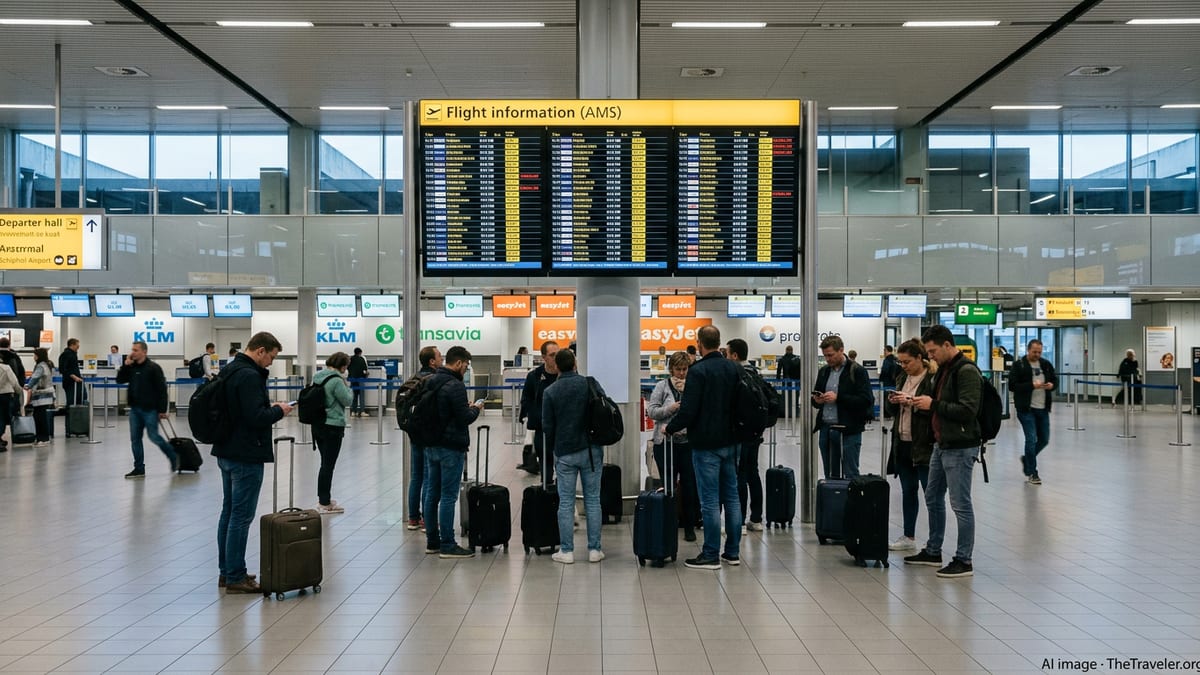
Major European Hubs Struggle With Fresh Wave of Disruptions
According to publicly available operational data and industry trackers, the latest disruption has concentrated around key European hubs including Paris, London, Amsterdam, Frankfurt and Stockholm, with knock-on effects across regional airports. The pattern mirrors recent days in which flight boards across France, the United Kingdom, the Netherlands, Germany and Sweden have shown an elevated number of late departures and cancellations for short and medium haul routes.
Reports indicate that airlines such as Air France, KLM, Lufthansa, SAS, BA CityFlyer and Transavia France have together accounted for at least 83 cancellations and 381 delayed services within a single operating window, cutting capacity on routes that link major capitals with smaller regional cities. The numbers, drawn from aggregated airport and airline statistics, show a concentration of problems on intra-European connections serving business and leisure travelers at the start of the main summer travel period.
In Paris, disruption has primarily affected departures from the city’s main international airport system, impacting flights to and from major European partners in Germany, the United Kingdom, the Netherlands and Scandinavia. In London and Amsterdam, late-running feeder flights have triggered missed connections for long haul journeys to North America, the Middle East and Asia, multiplying the impact for connecting passengers.
In Germany and Sweden, regional and continental services have also recorded higher than usual delay levels, especially on routes operated by network carriers and their regional partners. Publicly available flight boards and delay statistics show that even where cancellations remain relatively limited at individual airports, the high volume of delays has stretched airport infrastructure and created long queues at check in, security and rebooking desks.
Weather, Congestion and Operational Constraints Drive Delays
Industry monitoring platforms attribute the disruption to a combination of adverse weather patterns, en route air traffic flow restrictions and local operational challenges. Recent overviews from European air traffic management bodies highlight weather as a leading cause of airspace delays in France and Germany, with thunderstorms and low visibility slowing traffic flows and forcing aircraft to hold or reroute.
When airspace capacity is reduced, airlines are required to space flights further apart, which quickly feeds into departure delays at busy hubs. Once early morning services run late, late departures ripple through the day, pushing back turnaround times and causing crews and aircraft to miss subsequent rotations. This form of reactionary delay has been visible across several hubs, particularly in Amsterdam and London, where tightly timed schedules leave little room for recovery.
Operational constraints at airlines and airports have also played a role. Several carriers, including Air France, KLM, Lufthansa, SAS and their regional brands, continue to operate close to pre-pandemic capacity with staffing levels that leave little reserve for irregular operations. Publicly available coverage notes that even modest staffing shortfalls in ground handling, security or air traffic control can magnify the impact of weather or technical issues, prompting airlines to preemptively cancel a portion of flights to stabilize their schedules.
In some cases, carriers have concentrated cancellations on high-frequency routes, such as services between Paris, Amsterdam, Frankfurt and London, to consolidate passengers onto remaining flights. While this approach helps maintain connectivity, it can leave individual departures heavily oversubscribed and lengthen waiting times for travelers who need to be rebooked.
Travelers Face Missed Connections, Overnight Stays and Rebooking Backlogs
The operational figures translate into tangible disruption for travelers across Europe and beyond. With 83 flights removed from schedules and 381 running late, thousands of passengers have encountered missed connections, missed events and the need to reorganize ground transport and accommodation at short notice.
At large hubs such as Paris Charles de Gaulle, Amsterdam Schiphol and London Heathrow, late arrival of feeder flights has been particularly problematic for passengers connecting to long haul services. When inbound flights from regional cities in France, the United Kingdom, Germany, Sweden or the Netherlands arrive late, minimum connection times can no longer be met, forcing travelers to be rebooked onto later departures, often the following day during peak periods.
Publicly available travel reports from recent disruption events across these hubs indicate that queues at airline service desks have at times stretched for hundreds of meters as travelers seek alternative routings, hotel vouchers or clarification on their rights. Some passengers have reported being rerouted via third countries or additional intermediate stops, significantly extending travel times in order to reach final destinations.
For those departing from smaller regional airports served by carriers such as BA CityFlyer, SAS or Transavia France, options can be more limited when a flight is cancelled outright. In such cases, travelers may be transferred to rail services, bus links to larger hubs or placed on flights operated by partner airlines, which can add several hours or more to already complex journeys.
Rights and Options Under EU261 and UK261 Rules
For affected passengers, European and UK consumer protection frameworks offer a degree of support. Under EU261 in the European Union and equivalent UK261 regulations in the United Kingdom, travelers on qualifying flights may be entitled to assistance and, in certain circumstances, financial compensation when flights are cancelled or significantly delayed.
These regulations generally require airlines to offer a choice between a refund and rerouting when a flight is cancelled. They also establish thresholds at which carriers must provide meals, refreshments, communication access and, when necessary, hotel accommodation and transport between the airport and lodging. The precise entitlements depend on flight distance, length of delay and the cause of the disruption.
Compensation payments, which are distinct from duty of care obligations, apply only when disruptions are within the airline’s control and not attributable to extraordinary circumstances such as severe weather or certain types of air traffic control restrictions. Publicly available legal guidance and passenger advocacy resources recommend that travelers retain boarding passes, booking confirmations, receipts and any written communication from airlines in order to support potential claims.
In practice, determining whether a specific flight qualifies can be complex, particularly on days when multiple causes intersect. Travelers whose flights with Air France, BA CityFlyer, SAS, KLM, Lufthansa or Transavia France have been affected are encouraged by advocacy groups to use official claim channels or recognized dispute resolution services rather than third party agencies that may charge a significant commission.
What Travelers Can Do During Ongoing Irregular Operations
With summer travel in full swing and air traffic management data indicating persistent pressure on European airspace, passengers planning to travel through hubs such as Paris, London, Amsterdam, Frankfurt and Stockholm are being urged by consumer organizations and travel advisors to prepare for the possibility of disruption.
Recommendations compiled from passenger rights organizations and travel industry advisories suggest several practical steps. Travelers are advised to monitor airline apps and airport flight information screens frequently in the 24 hours before departure, as last minute schedule changes remain common during periods of congestion and unsettled weather.
Arriving at the airport earlier than usual, particularly for early morning departures that set the tone for the day’s operations, can help reduce the impact of unexpected queues at check in or security. Where possible, carrying essential items such as medications, chargers and a change of clothes in hand luggage can provide a buffer if checked bags are delayed or overnight stays become necessary due to missed connections.
Finally, experts in passenger rights highlight the importance of knowing one’s entitlements in advance. Understanding when airlines must provide care, rerouting or compensation can help travelers make informed decisions at the airport, whether that involves accepting a proposed reroute, requesting accommodation or documenting events for a potential claim once they return home.