


More news on this day
An American Airlines Boeing 737 operating Flight AAL1189 from Washington to Chicago diverted to Indianapolis on August 9, according to live flight-tracking data and media reports, temporarily stranding passengers and prompting rebookings across the carrier’s network.
Get the latest news straight to your inbox!
What Happened During Flight AAL1189 on August 9
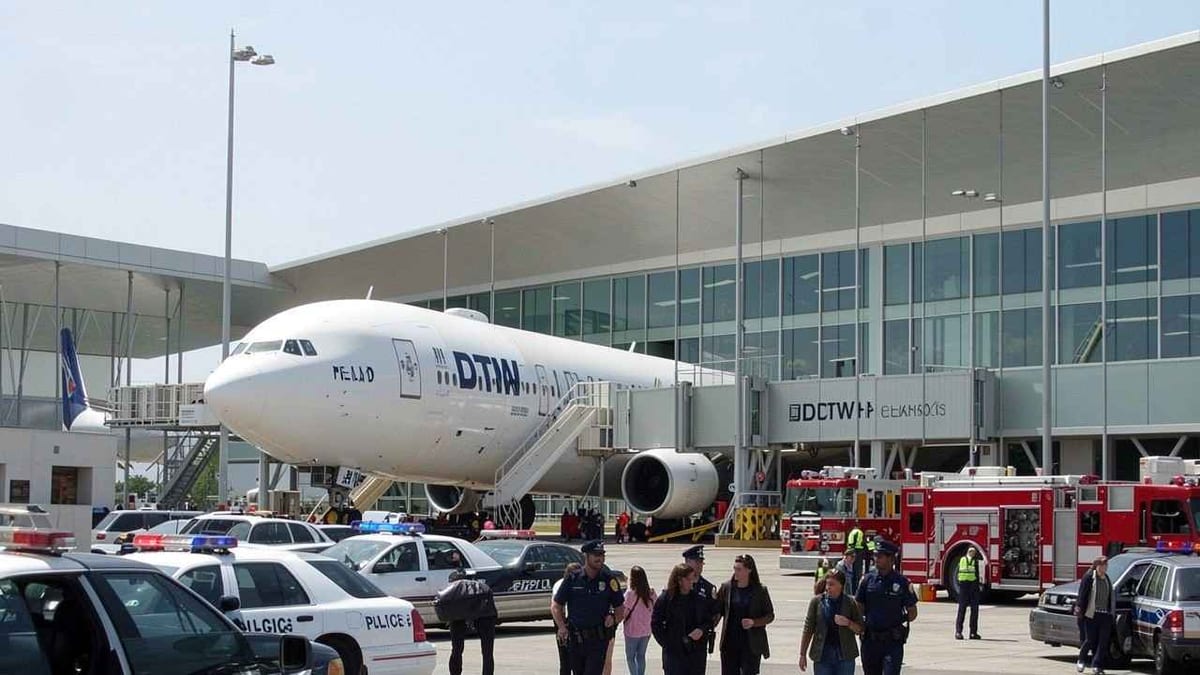
Publicly available flight-tracking information shows that American Airlines Flight AAL1189 departed the Washington area on August 9 bound for Chicago but did not complete its scheduled route. Instead, the Boeing 737 diverted en route and landed at Indianapolis International Airport, cutting short the original sector to Chicago.
Data from tracking services indicates that the aircraft initially followed a standard routing from the Washington region toward the Midwest before turning toward Indianapolis. The diversion extended the total travel time and created uncertainty for passengers who had planned to arrive in Chicago or connect onward the same day.
Published coverage describes the event as an unscheduled diversion rather than a cancellation at the gate, meaning passengers were already airborne when the decision was made to proceed to Indianapolis instead of Chicago. The aircraft landed safely, and there were no immediate reports of injuries.
At the time of writing, reports available in the public domain do not single out a specific causal factor such as weather, technical issues, or a medical situation. The decision appears consistent with standard airline and aviation procedures that prioritize a safe and timely landing at an alternate airport when continuing to the original destination is no longer advisable.
Conditions in the Midwestern Air Travel Network
The diversion occurred amid a broader pattern of summer operational pressures in the United States, where airlines contend with congested airspace, convective weather systems, and tight crew and aircraft utilization. Research on U.S. flight delays highlights that disruptions often cluster around major hubs, including Chicago, when storms or air traffic flow restrictions arise in busy corridors.
Industry analyses of flight operations show that carriers sometimes use nearby airports in the same general region as alternates when arrival rates are reduced at large hubs. In the case of Chicago-bound flights, Indianapolis can function as a practical alternate because it offers suitable runway length, established airline operations, and ground handling capacity for large narrowbody aircraft such as the Boeing 737.
Reports and historical data from Indianapolis International Airport indicate that American Airlines maintains a regular schedule of flights there, typically as part of a network feeding larger hubs. This existing presence helps streamline the handling of diverted aircraft, allowing ground teams to support refueling, basic maintenance checks, and passenger services when irregular operations occur.
For travelers, such diversions can add hours of delay, especially when crews face duty time constraints or when connecting flights at the original destination are missed. While each event is specific, the overall pattern reflects the complexity of managing large-scale airline networks during peak travel seasons.
Impact on Passengers and Onward Travel
Passengers on Flight AAL1189 experienced an unscheduled arrival in Indianapolis rather than Chicago, which can pose practical challenges ranging from missed connections to unexpected overnight stays. According to publicly available guidance and traveler accounts from similar events, rebooking after a diversion typically depends on seat availability from both the diversion airport and the original destination.
In many cases, airlines aim to either continue the same aircraft to the planned destination once conditions allow or to place travelers on alternative flights operated by the same carrier or its partners. When a diversion brings an aircraft into a non-hub city like Indianapolis, the number of onward options may be more limited compared with larger hubs, increasing the likelihood of longer delays.
Travelers who were due to connect in Chicago to other cities may have been rebooked via later departures from Chicago or rerouted entirely through different hubs once they were back in the airline’s regular schedule. Passenger experiences in previous American Airlines diversions suggest that outcomes can vary widely, from same-day arrivals to substantial disruptions that ripple through the remainder of a trip.
Reports shared on public forums about comparable diversions indicate that passengers often receive updates via the airline’s mobile app and airport displays, while in-person assistance at the diversion airport can depend on staffing levels and the time of day. The mix of automated and in-person support typically shapes how quickly travelers obtain new boarding passes or confirm overnight arrangements if required.
How American Airlines Typically Handles Diversions
American Airlines’ published customer information explains that diversions may be triggered by operational needs, including weather along the route, air traffic control constraints, or non-routine events involving the aircraft or passengers. When this happens, the priority is to land safely at an appropriate airport, after which rebooking and customer service measures begin.
For domestic flights, publicly available policies across the industry indicate that airlines are not legally required to provide hotel or meal vouchers in every diversion scenario, particularly when the underlying cause is outside the airline’s direct control, such as weather or air traffic restrictions. However, airlines sometimes provide discretionary assistance, including hotel accommodations or transportation, depending on the circumstances and internal guidelines.
In cases similar to Flight AAL1189, passengers can usually expect the airline to focus first on determining whether the aircraft can continue to the original destination the same day. If this is not feasible due to crew duty limits, maintenance inspections, or airport curfews, rebooking onto other departures becomes the primary solution. Some travelers may accept ground transportation if the diversion airport is within driving distance of their final destination.
Advisories and travel tips published by aviation and consumer organizations emphasize that travelers who face a diversion should retain boarding passes and receipts for any expenses incurred, such as hotels or meals, in case partial reimbursement or travel credit is later available. Using the airline’s app and monitoring flight status tools can also help passengers understand when a diverted aircraft is expected to depart again.
What Travelers Can Learn From the AAL1189 Diversion
The diversion of Flight AAL1189 from Washington to Chicago on August 9 illustrates how quickly a routine domestic sector can become an unplanned stopover, even when the underlying issue is managed safely and in line with established procedures. For passengers, the main effect is usually time lost, but the operational implications for the airline can extend across multiple flights using the same crew and aircraft.
Travel analysts often point out that diversions like this are built into contingency planning across major U.S. carriers. Crews are trained to coordinate with dispatchers and air traffic controllers to identify viable alternates, fuel requirements, and ground handling capabilities en route. While the experience is inconvenient for travelers, it is a normal part of modern commercial aviation risk management.
Frequent flyers and consumer advocates recommend that passengers build some buffer time into itineraries that rely on tight same-day connections through weather-sensitive hubs such as Chicago. Purchasing flexible or refundable tickets, where feasible, and considering travel insurance with interruption coverage can also mitigate the financial and logistical impact if a diversion or extended delay occurs.
For those aboard Flight AAL1189, the unexpected arrival in Indianapolis turned a straightforward Washington to Chicago journey into a more complicated travel day. The event underscores how shifting weather patterns, airspace constraints, and operational decisions can reshape even short domestic flights, making preparation and flexibility important tools for today’s air travelers.